Elena Pontiggia - Böcker
Visar alla böcker från författaren Elena Pontiggia. Handla med fri frakt och snabb leverans.
5 produkter
5 produkter
2 284 kr
Kommande
330 kr
Tillfälligt slut
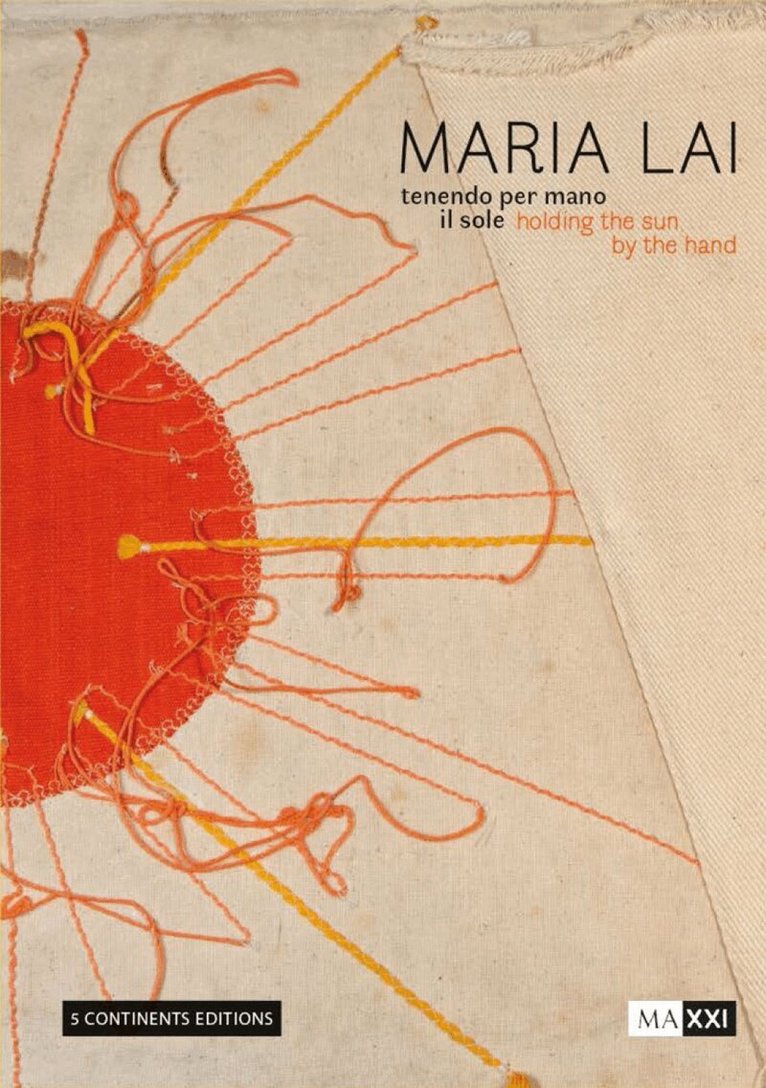
Maria Lai (Ulassai, September 27, 1919 - Cardedu, April 16, 2013) is without doubt one of the leading figures in the history of contemporary Italian art. Not only on account of the content of her works, but also thanks to the diversity of her artistic approach, ranging as it does across many media - public art, embroidery, weaving, sculpture, drawing, and writing: all are grist for her poetics. The book is published to coincide with the exhibition at the MAXXI Museum in Rome, which is presenting to the general public over one hundred works by the Sardinian artist, from the early 1960s to her very last works, and explores the various themes dear to the artist with the contributions of experts in their fields: the locations, the creation, and publication of art books, her public art events and her relationship with the written word and her own writing. Her entire oeuvre is distinguished by its powerful visual impact, revealing a 'way of doing art' that is nothing other than an instrument of thought. The book's structure reflects the exhibition's own sections, arranged by theme, whose titles are paradigmatic of Lai's oeuvre as a whole: Essere è tessere. Cucire e ricucire; L'arte è il gioco degli adulti. Giocare e raccontare; Disseminare e condividere; Il viaggiatore astrale. Immaginare l'altrove; L'arte ci prende per mano. Incontrare e partecipare. Published to accompany an exhibition at the MAXXI Museum, Rome, 19 June 2019-12 January 2020.Text in English and Italian.
390 kr
Skickas inom 7-10 vardagar
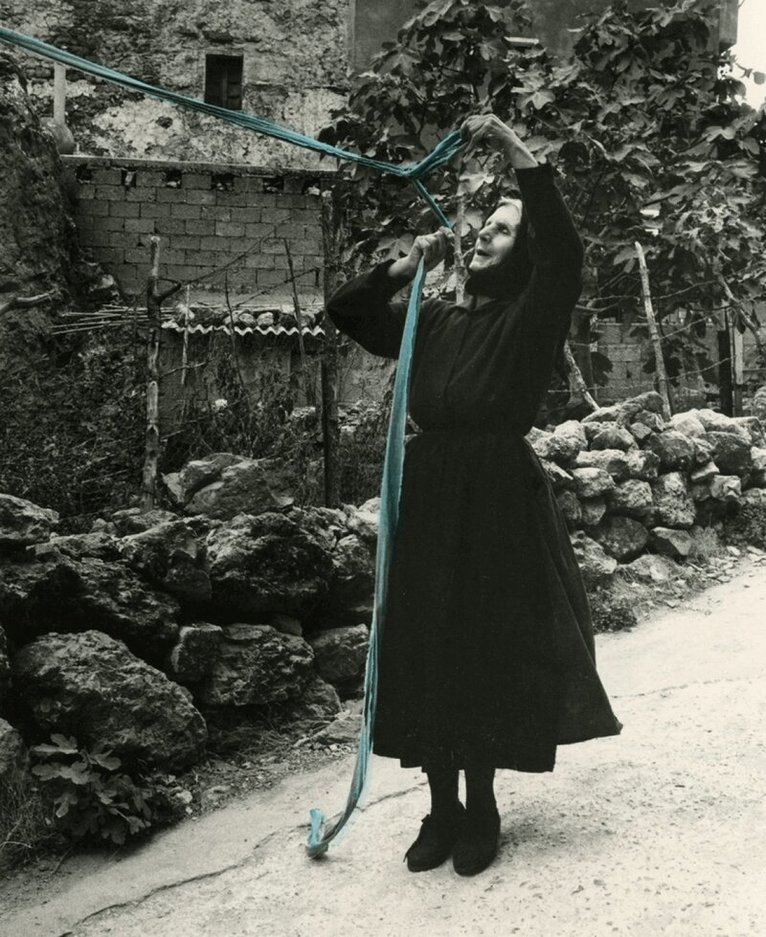
The inhabitants of Italian artist Maria Lai’s hometown of Ulassai live surrounded by mountains and a theatre of rocks, far from Sardinia’s famous coastline. This book documents Lai’s best-known large-scale collective art project, Legarsi alla Montagna (Bound to the Mountain) which took place over 3 days beginning on September 8th, 1981. Harkening back to a Sardinian legend of a young girl saved from death by chasing a blue ribbon out of a cave, the artist convinced the residents of Ulassai to tie their homes and the mountain together with 17 miles of blue ribbon. A symbolic act of communal unity, the process was tempered by personal conflicts and ancient family feuds, resulting in ribbon that was knotted (for friendship), wrapped tightly (for conflict), or hung with bread (for love). This combination of land art, performance art, and sculpture was captured at the time by renowned photographer Piero Berengo Gardin, in images that the artist has worked with watercolours and markers. Art historian Elena Pontiggia has contributed the text.Text in English and Italian.
398 kr
Skickas inom 5-8 vardagar
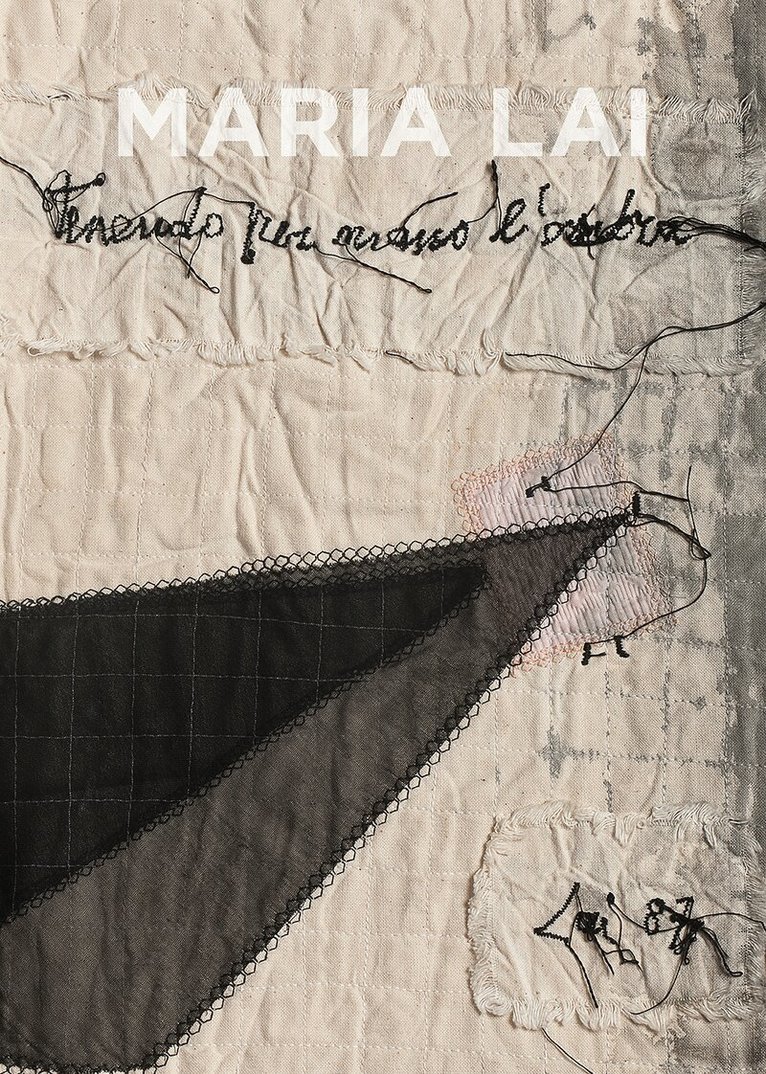
Maria Lai always had a special relationship with fairy tales. She considered them a metaphor for art and a way of communicating with the public in a simple, straightforward way. Starting in the 1980s, fairy tales became central to her art. Tenendo per mano il sole, Tenendo per mano l’ombra, Curiosape and Maria Pietra, are her most famous “sewn fairy tales” – books created by the artist using castoff textiles.Maria Lai’s fairy tales are not merely children’s stories, but profound reflections on life and what it means to be a human being. They are often inspired by Sardinian myths and legends, to which the artist gives a personal twist, adding autobiographical details and philosophical reflections. This edition of Tenendo per mano l'ombra is a printed version of Maria Lai’s 1987 tale. The original consists of fabric pages sewn together and collages of dyed textiles, on which the artist has embroidered geometric figures, yarn and other materials. The fairy tale tells the story of a human being (and his double) who must learn to accept shadows, the dark part of the world and of himself. The figure’s shadow, in Maria Lai’s fairy tale, is not a negative element to be rejected, but an integral part of his personality. To live an untroubled and complete life, one must learn to accept and live with it.Elena Pontiggia’s concluding essay accompanies the reader in a fascinating page by page interpretation of the fable, and discusses Lai’s artistic and stylistic approach in the context of an extensive network of philosophical, literary and artistic references: from Kant and Manzoni to Klee and Malevič.Text in English and Italian.
223 kr
Skickas