Elena Sahin – författare
Visar alla böcker från författaren Elena Sahin. Handla med fri frakt och snabb leverans.
2 produkter
2 produkter
Del 13 - Islamicate Intellectual History
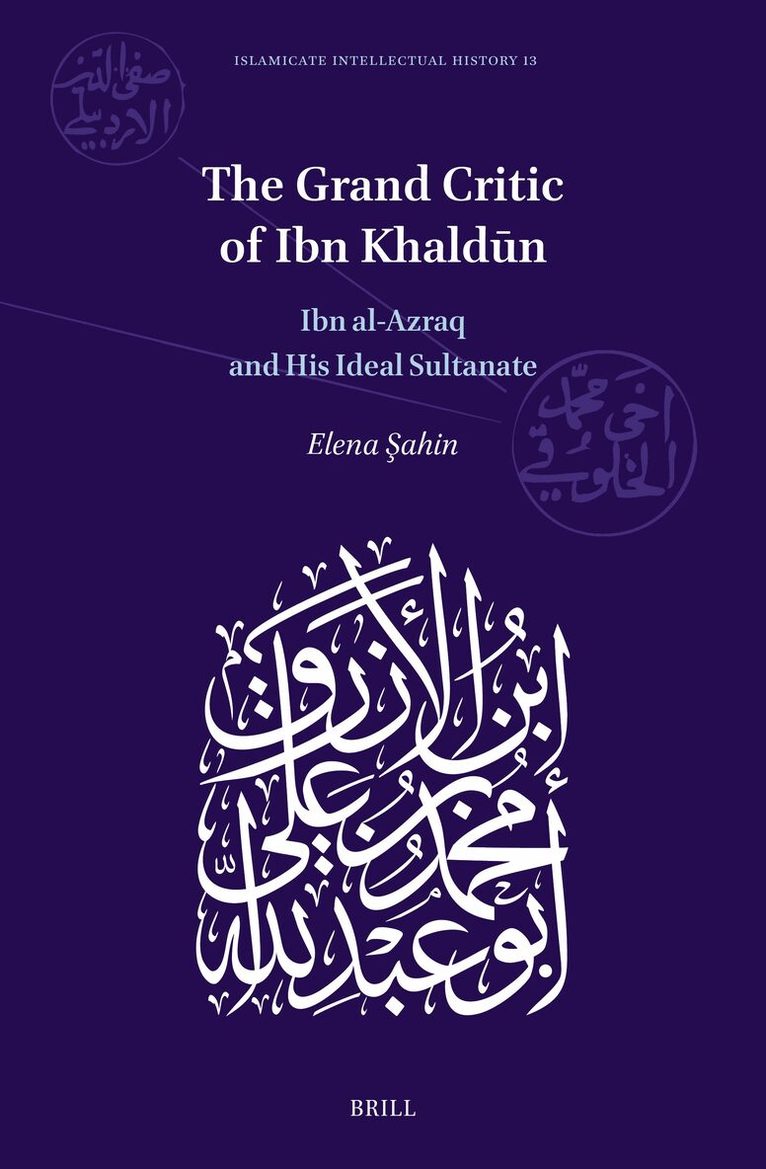
Grand Critic of Ibn Khaldūn
Ibn al-Azraq and His Ideal Sultanate
Inbunden, Engelska, 2024
1 903 kr
Skickas inom 3-6 vardagar
Ibn al-Azraq (d. 896/1491) was a renowned Andalusian jurist (faqīh) and statesman who lived during the final period of the Nasrid emirate of Granada. His most famous work, Badāʾiʿ al-Silk fī Ṭabāʾiʿ al-Mulk (Unprecedented Lines about the Nature of Political Rule), is a political treatise that builds upon Ibn Khaldūn’s (d. 808/1406) social theory (Ꜥilm al-Ꜥumrān). In The grand critic of Ibn Khaldūn Elena Şahin critically analyses the major aspects of Ibn al-Azraq’s political thought.In this contribution on the field of the history of Islamic political thought, Elena Şahin demonstrates that while Ibn al-Azraq integrates the thrust of Ibn Khaldūn’s approach, Ibn al-Azraq’s work should be regarded as part of a larger conversation amongst various scholars, engaging, for example with the Andalusian jurist al-Shāṭibī’s (d. 790/1388) theory of Maqāṣid al-Sharīʿa. Widening the analysis of Ibn al-Azraq’s work illuminates that Ibn al-Azraq’s political theory was in opposition to that of Ibn Khaldūn, and thus gives us a better understanding of the dynamic debates within Andalusian political thought.
E-bok
PDF, Engelska, 20241 804 kr
Läs direkt efter köp
Ibn al-Azraq (d. 896/1491) was a renowned Andalusian jurist (faqih) and statesman who lived during the final period of the Nasrid emirate of Granada. His most famous work, Bada?i? al-Silk fi Taba?i? al-Mulk (Unprecedented Lines about the Nature of Political Rule), is a political treatise that builds upon Ibn Khaldun's (d. 808/1406) social theory (?ilm al-?umran). In The grand critic of Ibn Khaldun Elena Sahin critically analyses the major aspects of Ibn al-Azraq's political thought. In this contribution on the field of the history of Islamic political thought, Elena Sahin demonstrates that while Ibn al-Azraq integrates the thrust of Ibn Khaldun's approach, Ibn al-Azraq's work should be regarded as part of a larger conversation amongst various scholars, engaging, for example with the Andalusian jurist al-Shatibi's (d. 790/1388) theory of Maqasid al-Shari?a. Widening the analysis of Ibn al-Azraq's work illuminates that Ibn al-Azraq's political theory was in opposition to that of Ibn Khaldun, and thus gives us a better understanding of the dynamic debates within Andalusian political thought.