Eli J. Finkel – författare
Visar alla böcker från författaren Eli J. Finkel. Handla med fri frakt och snabb leverans.
6 produkter
6 produkter
Häftad, Engelska, 2019
186 kr
Skickas
Inbunden, Engelska, 2019
1 973 kr
Skickas inom 5-8 vardagar
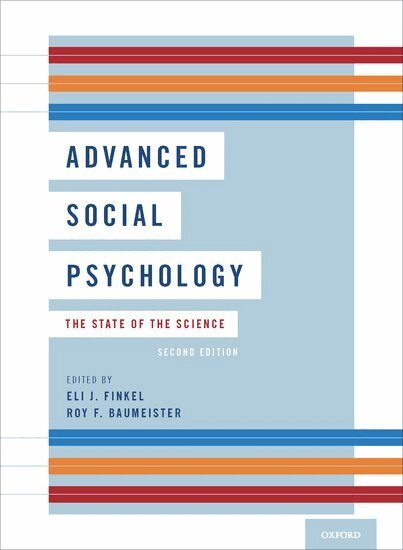
Social psychology uses clever, even ingenious, research methods to explore the most essential questions of the human psyche: Why do we help some people and harm others? Why do we pay so much more attention to high-powered people than they pay to us? If humans evolved from great apes, why are human selves so much more elaborate? How does our attachment to our parents when we are infants influence the success or failure of our romantic relationships when we are adults? Can behaving morally "license" us to behave immorally shortly afterward? How do social relationships make us more versus less prone toward physical illness? This volume -- an update to the original, 2010 edition -- provides a graduate-level introduction to social psychology. The target audience consists of first-year graduate students (MA or PhD) in social psychology and related disciplines (marketing, organizational behavior, etc.), although it is also appropriate for upper-level undergraduate courses. The authors are world-renowned leaders on their topic, and they have written state-of-the-art overviews of the discipline's major research domains. The chapters are not only scientifically rigorous, but also accessible and engaging. They convey the joy, excitement, and promise of scientific investigations into human sociality.
E-bok
PDF, Engelska, 20191 152 kr
Läs direkt efter köp
Social psychology uses clever, even ingenious, research methods to explore the most essential questions of the human psyche: Why do we help some people and harm others? Why do we pay so much more attention to high-powered people than they pay to us? If humans evolved from great apes, why are human selves so much more elaborate? How does our attachment to our parents when we are infants influence the success or failure of our romantic relationships when we are adults? Can behaving morally "license" us to behave immorally shortly afterward? How do social relationships make us more versus less prone toward physical illness? This volume -- an update to the original, 2010 edition -- provides a graduate-level introduction to social psychology. The target audience consists of first-year graduate students (MA or PhD) in social psychology and related disciplines (marketing, organizational behavior, etc.), although it is also appropriate for upper-level undergraduate courses. The authors are world-renowned leaders on their topic, and they have written state-of-the-art overviews of the discipline''s major research domains. The chapters are not only scientifically rigorous, but also accessible and engaging. They convey the joy, excitement, and promise of scientific investigations into human sociality.
E-bok
Engelska, 20191 162 kr
Läs direkt efter köp
Social psychology uses clever, even ingenious, research methods to explore the most essential questions of the human psyche: Why do we help some people and harm others? Why do we pay so much more attention to high-powered people than they pay to us? If humans evolved from great apes, why are human selves so much more elaborate? How does our attachment to our parents when we are infants influence the success or failure of our romantic relationships when we are adults? Can behaving morally "license" us to behave immorally shortly afterward? How do social relationships make us more versus less prone toward physical illness? This volume -- an update to the original, 2010 edition -- provides a graduate-level introduction to social psychology. The target audience consists of first-year graduate students (MA or PhD) in social psychology and related disciplines (marketing, organizational behavior, etc.), although it is also appropriate for upper-level undergraduate courses. The authors are world-renowned leaders on their topic, and they have written state-of-the-art overviews of the discipline''s major research domains. The chapters are not only scientifically rigorous, but also accessible and engaging. They convey the joy, excitement, and promise of scientific investigations into human sociality.
E-bok
Engelska, 2017130 kr
Läs direkt efter köp
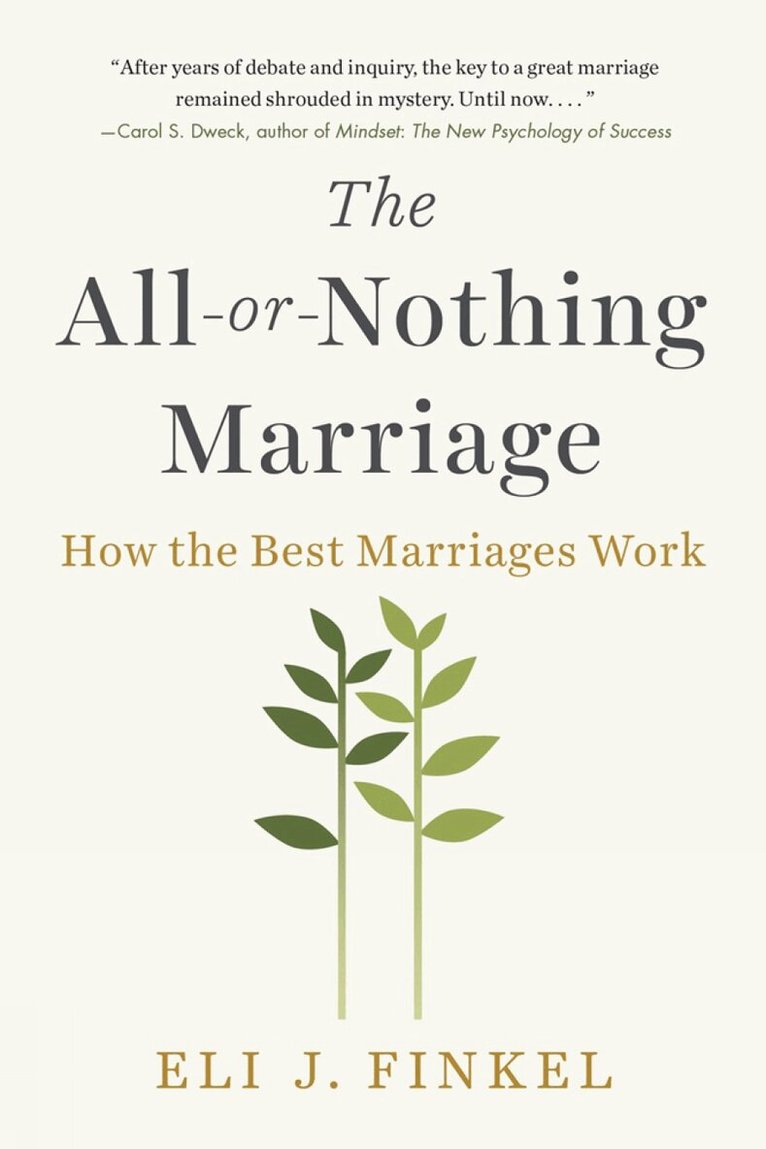
“After years of debate and inquiry, the key to a great marriage remained shrouded in mystery. Until now...”—Carol Dweck, author of Mindset: The New Psychology of SuccessEli J. Finkel''s insightful and ground-breaking investigation of marriage clearly shows that the best marriages today are better than the best marriages of earlier eras. Indeed, they are the best marriages the world has ever known. He presents his findings here for the first time in this lucid, inspiring guide to modern marital bliss.The All-or-Nothing Marriage reverse engineers fulfilling marriages—from the “traditional” to the utterly nontraditional—and shows how any marriage can be better.The primary function of marriage from 1620 to 1850 was food, shelter, and protection from violence; from 1850 to 1965, the purpose revolved around love and companionship. But today, a new kind of marraige has emerged, one oriented toward self-discover, self-esteem, and personal growth. Finkel combines cutting-edge scientific research with practical advice; he considers paths to better communication and responsiveness; he offers guidance on when to recalibrate our expectations; and he even introduces a set of must-try “lovehacks.”This is a book for the newlywed to the empty nester, for those thinking about getting married or remarried, and for anyone looking for illuminating advice that will make a real difference to getting the most out of marriage today.
Inbunden, Engelska, 2006
881 kr
Skickas inom 3-6 vardagar
This volume brings together leading investigators who integrate two distinct research domains in social psychology--people's internal worlds and their close relationships. Contributors present compelling findings on the bidirectional interplay between internal processes, such as self-esteem and self-regulation, and relationship processes, such as how positively partners view each other, whether they are dependent on each other, and the level of excitement in the relationship. Methodological challenges inherent in studying these complex issues are described in depth, as are implications for understanding broader aspects of psychological functioning and well-being.