Elías Palti – författare
Visar alla böcker från författaren Elías Palti. Handla med fri frakt och snabb leverans.
3 produkter
3 produkter
Inbunden, Engelska, 2017
1 000 kr
Skickas inom 5-8 vardagar
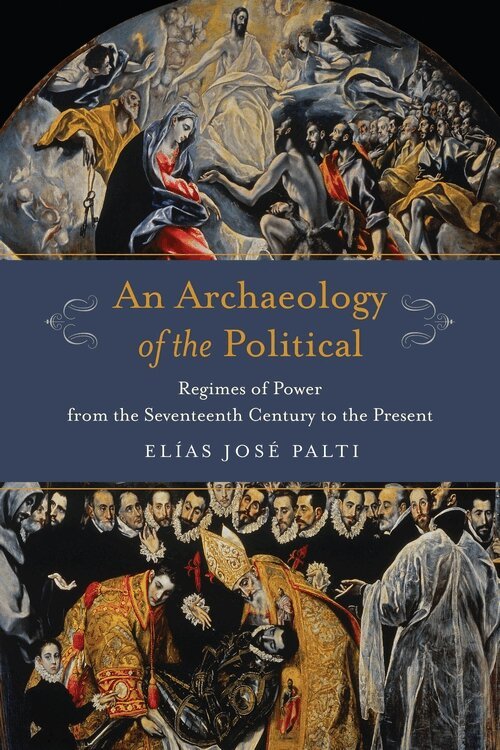
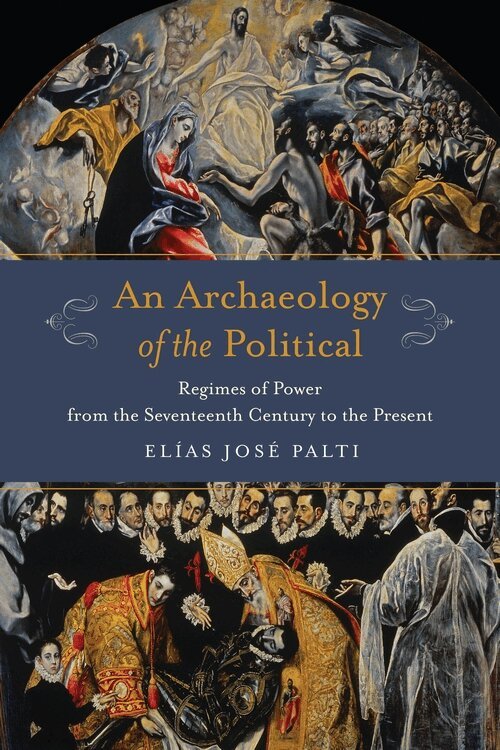
In the past few decades, much political-philosophical reflection has been dedicated to the realm of "the political." Many of the key figures in contemporary political theory-Jacques Ranciere, Alain Badiou, Reinhart Koselleck, Giorgio Agamben, Ernesto Laclau, and Slavoj Zizek, among others-have dedicated themselves to explaining power relations, but in many cases they take the concept of the political for granted, as if it were a given, an eternal essence. In An Archaeology of the Political, Elias Jose Palti argues that the dimension of reality known as the political is not a natural, transhistorical entity. Instead, he claims that the horizon of the political arose in the context of a series of changes that affirmed the power of absolute monarchies in seventeenth-century Europe and was successively reconfigured from this period up to the present. Palti traces this series of redefinitions accompanying alterations in regimes of power, thus describing a genealogy of the concept of the political.Perhaps most important, An Archaeology of the Political brings to theoretical discussions a sound historical perspective, illuminating the complex influences of both theology and secularization on our understanding of the political in the contemporary world.
Häftad, Engelska, 2020
255 kr
Skickas inom 5-8 vardagar
In the past few decades, much political-philosophical reflection has been dedicated to the realm of "the political." Many of the key figures in contemporary political theory—Jacques Rancière, Alain Badiou, Reinhart Koselleck, Giorgio Agamben, Ernesto Laclau, and Slavoj iek, among others—have dedicated themselves to explaining power relations, but in many cases they take the concept of the political for granted, as if it were a given, an eternal essence.In An Archaeology of the Political, Elías José Palti argues that the dimension of reality known as the political is not a natural, transhistorical entity. Instead, he claims that the horizon of the political arose in the context of a series of changes that affirmed the power of absolute monarchies in seventeenth-century Europe and was successively reconfigured from this period up to the present. Palti traces this series of redefinitions accompanying alterations in regimes of power, thus describing a genealogy of the concept of the political. Perhaps most important, An Archaeology of the Political brings to theoretical discussions a sound historical perspective, illuminating the complex influences of both theology and secularization on our understanding of the political in the contemporary world.
E-bok
Spanska, 202256 kr
Läs direkt efter köp
Carl Schmitt propuso el concepto de lo político para referirse a la instancia soberana, definida como aquella "que decide en el estado de excepción". Lo político remitiría entonces a un plano previo a lo legal, que escapa a toda normatividad y, en definitiva, la funda. Esta idea, inicialmente vilipendiada por sus derivas irracionalistas, se convirtió en una de las claves para la comprensión de la democracia moderna y fue retomada por pensadores como Lefort, Agamben, Rancière, Koselleck, Esposito y Laclau, entre otros.Una arqueología de lo político dialoga con estos autores enfatizando el carácter histórico del concepto. Así, lo político no es considerado una entidad natural, transhistórica, sino el resultado de una inflexión crucial que tuvo lugar en Occidente en el siglo XVII, acompañando una serie de cambios en los regímenes de poder producidos con el surgimiento de las monarquías absolutas.Este abordaje histórico le permite a Elías Palti examinar el sustrato político que subyace a las grandes mutaciones epistémicas señaladas por Michel Foucault, reconstruir los distintos nichos político-conceptuales en los que se desplegaron los diferentes regímenes de ejercicio de poder y trazar un mapa de las transformaciones que experimentaron, así como las diversas constelaciones histórico-conceptuales a que dieron lugar.Reconstrucción arqueológica del largo ciclo de la emergencia, transformación y disolución de lo político, el presente libro inscribe el pensamiento político en una perspectiva histórico-intelectual más amplia apelando a diversos recursos culturales e instrumentos heurísticos con el fin de trascender la historia de las ideas políticas y recomponer aquellos procesos históricos por los cuales se rearticula sucesivamente la estructura misma del campo de lo político.