Elisa Muzzini - Böcker
Visar alla böcker från författaren Elisa Muzzini. Handla med fri frakt och snabb leverans.
3 produkter
3 produkter
286 kr
Skickas inom 10-15 vardagar
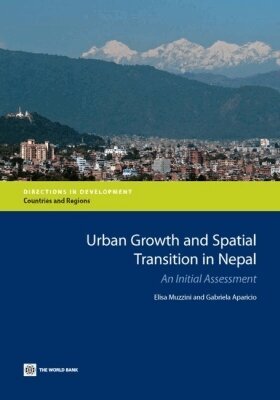
This book carries out an initial assessment of Nepal’s urban growth and spatial transformation, with a focus on spatial demographic and economic trends, economic growth drivers and infrastructure requirements of Nepal’s urban regions. It notes that Nepal is one of the fastest urbanizing countries in South Asia. The spatial transformation is characterized by rapid growing population density in the Kathmandu Valley - Nepal’s largest urban conurbation -, along the main highways and close to the border with India, and clustering of economic production in the Kathmandu Valley and in the Eastern and Western Tarai. Yet, urbanization has been less correlated with economic growth in Nepal than in other countries in South Asia. In spite of its remarkable progress in alleviating poverty, Nepal is caught up in a cycle of political instability and economic stagnation, with economic growth below 4 percent per annum over the last decade. Urban areas have distinct comparative advantage in cultural tourism services, crafts, and agro-processing, but they have not been able to turn them into competitive advantages. Lack of effective planning and inadequate infrastructure are a major constraint for urban growth and competitiveness. Nepal needs to foster the sustainable growth of its urban regions, promote the development and regeneration of the Kathmandu Valley Metropolitan Region and enhance the competitiveness of strategic urban clusters - first and foremost tourism, agro-processing and handicrafts - to unlock urban-based growth and ensure the sustainability of the spatial transformation. The study aims to stimulate evidence-based policy dialogue on Nepal’s urban transition, and assist those working in the critical area for Nepal’s economic development – the Government, the private sector, civil society and the donor communities – in framing policies and interventions for addressing the challenges, and seizing the benefits of rapid urbanization.
336 kr
Skickas inom 10-15 vardagar
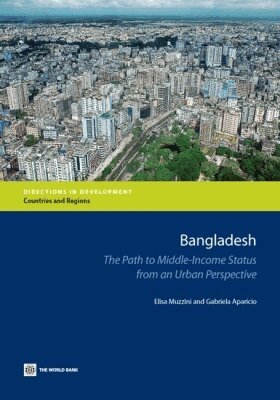
Bangladesh seeks to attain middle-income status by 2021, the 50th anniversary of its independence. To accelerate growth enough to do so, Bangladesh needs to build a competitive urban space that is innovative, connected and liveable. Bangladesh's urban areas have to take proactive measures to improve and sustain all three drivers of competitiveness - innovation, connectivity and liveability. The results of a survey of 1,000 garment firms - conducted to provide a lens through which to investigate urban competitiveness - reveal that Dhaka City is the most productive location for garment firms in Bangladesh. It is falling behind in accessibility and liveability because of high congestion and severe constraints in land and housing markets, however. And it needs to gain a competitive edge in higher value-added products and services. Peri-urban areas of Dhaka are emerging as competitive manufacturing centres, but they suffer from Dhaka City's congestion and have less access to infrastructure. Chittagong City has failed to capitalise on its comparative advantage as the country's largest seaport city. Strategically located export processing zones are higher-productivity, higher-cost locations that are partially shielded from the inefficiencies of urban areas. Medium-size and small cities are uncompetitive 'distant places', which need to foster local entrepreneurship to find their comparative advantages. Strengthening competitiveness across Bangladesh's cities calls for coordinated and multipronged interventions encompassing infrastructure, institutions, and incentives to transform Dhaka into a globally competitive metropolitan region, leverage Chittagong City's natural comparative advantage as a port city, promote strategically located export processing zones to foster industry competitiveness and spearhead urban reforms, and create the enabling environment for local economic development in medium-size and small cities.
433 kr
Skickas inom 10-15 vardagar
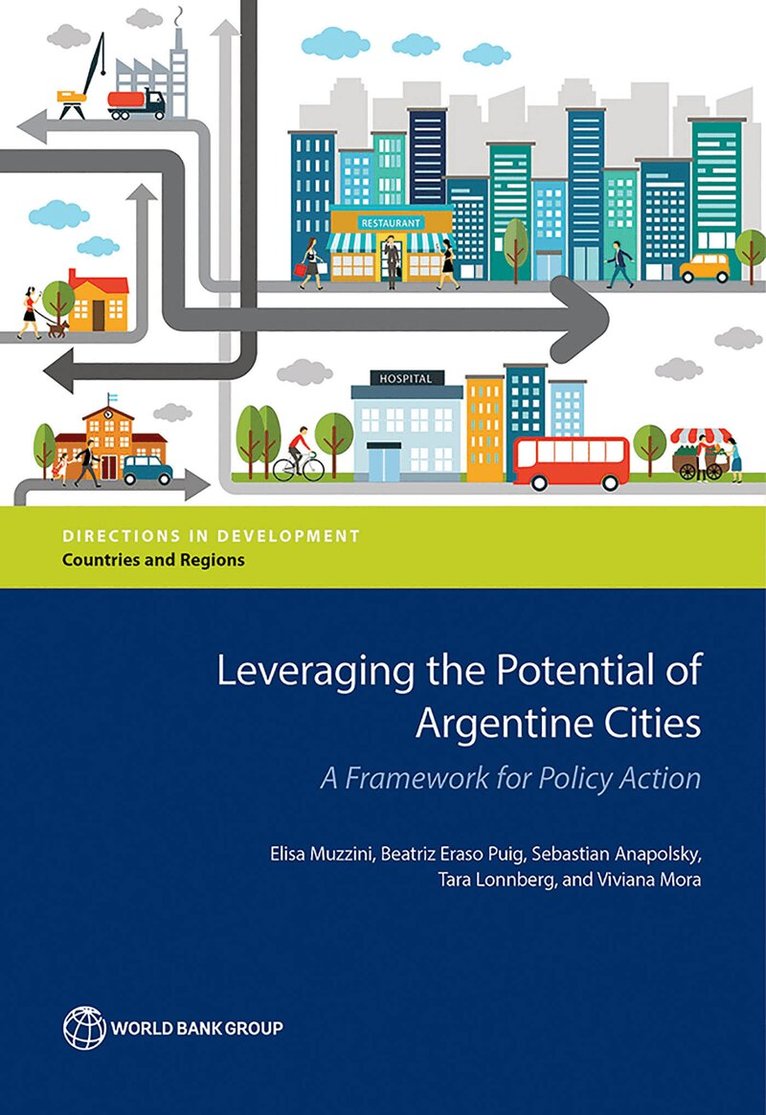
Argentina is one of the most urbanized countries in Latin America. Its path to economic prosperity is through efficient, sustainable and economically thriving cities. This book provides a conceptual framework, empirical data, and strategic directions for leveraging the potential of Argentine cities.