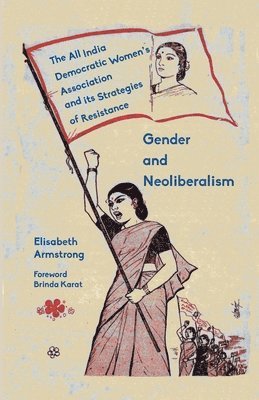
This book describes the changing landscape of women’s politics for equality and liberation during the rise of neoliberalism in India. Between 1991 and 2006, the doctrine of liberalization guided Indian politics and economic policy. These neoliberal measures vastly reduced poverty alleviation schemes, price supports for poor farmers, and opened India’s economy to the unpredictability of global financial fluctuations. During this same period, the All India Democratic Women’s Association, which directly opposed the ascendance of neoliberal economics and policies, as well as the simultaneous rise of violent casteism and anti-Muslim communalism, grew from roughly three million members to over ten million. Beginning in the late 1980s, AIDWA turned its attention to women’s lives in rural India. Using a method that began with activist research, the organization developed a sectoral analysis of groups of women who were hardest hit in the new neoliberal order, including Muslim women, and Dalit (oppressed caste) women. AIDWA developed what leaders called inter-sectoral organizing, that centered the demands of the most vulnerable women into the heart of its campaigns and its ideology for social change. Through long-term ethnographic research, predominantly in the northern state of Haryana and the southern state of Tamil Nadu, this book shows how a socialist women’s organization built its oppositional strength by organizing the women most marginalized by neoliberal policies and economics.
Offers critical assessments of feminism from the 1960s to the present.Using books, articles, unpublished letters, political manifestos, posters, and other such ephemeral remainders, The Retreat from Organization offers critical assessments of feminism from the 1960s to the present. These materials reveal paths left unexplored and organization efforts still unfinished to suggest new possibilities for present feminist politics. Debates about the second wave women's movement revolve around the identity and the identification of the subject of feminism and rarely ask, as this book does, how feminism operates as a collective movement. Armstrong attempts to complicate how we disagree over feminism by asking questions about identity and organization, the subject and the movement, and ultimately, what "feminism" should be in our present context of passionate indeterminacy.