Eliseo Pérez-Álvarez – författare
Visar alla böcker från författaren . Handla med fri frakt och snabb leverans.
5 produkter
5 produkter
Häftad, Engelska, 2011
286 kr
Skickas inom 5-8 vardagar
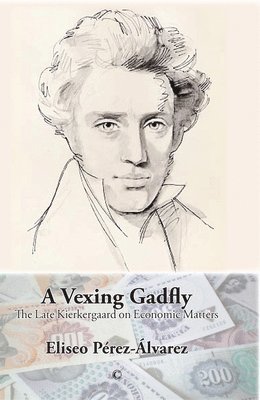
A thought-provoking study of Søren Kierkegaard's less well known writings on economic and political affairs, analysed from a theological perspective.This essay on Søren Kierkegaard and economic matters from a theological perspective is well grounded in the Dane's journals. In these writings, the late nineteenth-century thinker shows his solidarity with rural residents (90 percent of the population) and urbanite menial workers. Topics include the option for the poor; the ideology of impotence; the denouncing of a competitive society; the correlation of wealth and poverty; media, church, university, and theatre as social institutions shaping reality; Christendom; and the retribution doctrine.

Häftad, Spanska, 2008
290 kr
Skickas inom 3-6 vardagar
Inbunden, Engelska, 2009
465 kr
Skickas inom 5-8 vardagar
Häftad, Engelska, 2009
307 kr
Skickas inom 5-8 vardagar
E-bok
Engelska, 2009470 kr
Läs direkt efter köp
This essay on Soren Kierkegaard and economic matters from a theological perspective is well grounded in the Dane''s journals. In these writings, the late nineteenth-century thinker shows his solidarity with rural residents (90 percent of the population) and urbanite menial workers. Topics include the option for the poor; the ideology of impotence; the denouncing of a competitive society; the correlation of wealth and poverty; media, church, university, and theater as social institutions shaping reality; Christendom; and the retribution doctrine.A Vexing Gadfly develops the theological themes within the timeframe of Golden Age Denmark (1800-1860), which includes the period of Denmark''s colonial activities. The historical approach adds flesh to the bones of abstract thought and ahistorical doctrines. Contrary to common belief, Kierkegaard did articulate economic issues through structural categories such as the age, the pyramid, the building, the external revolution, the Fire Chief, and his diagnosis of society. Ironically, the domestication of Kierkegaard''s economic thought took place from the time of his death on November 11, 1855. His eulogy took place at the most important church of the country, the Church of Our Lady in Copenhagen; his burial at Assistens Cemetery was with full pomp; and by 1971, his statue joined the select club of Mynster, Martensen, Grundvigt, et al., as they surround the wealthy Marble Church.