Elizabeth A. Meadows – författare
Visar alla böcker från författaren Elizabeth A. Meadows. Handla med fri frakt och snabb leverans.
2 produkter
2 produkter
Häftad, Engelska, 2000
1 123 kr
Skickas inom 10-15 vardagar
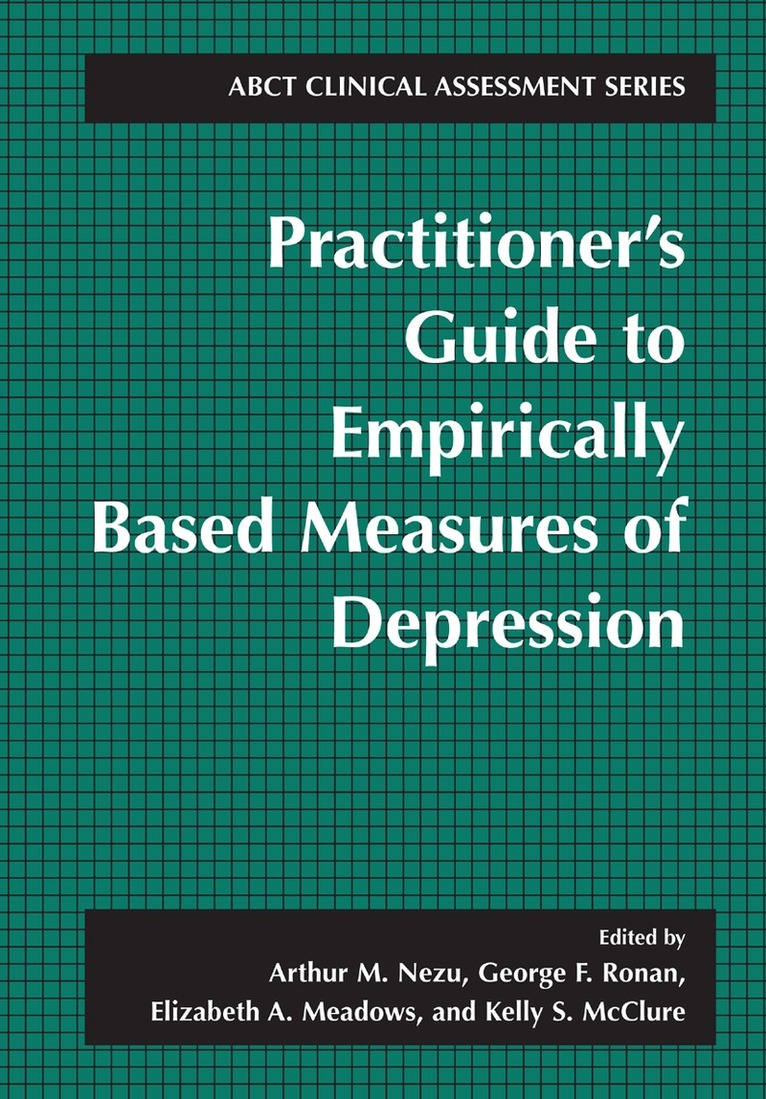
Practitioner's Guide to Empirically-Based Measures to Depression, the first volume in a series of clinical assessment handbooks, is intended to guide clinicians and researchers in choosing practical tools relevant for clinical assessment, intervention, and/or research in this area. This volume provides critical overviews of key assessment issues and available assessment tools in depression. It provides summary tables comparing and contrasting different instruments in terms of their time requirements, suitability, costs, administration, reliability, and validity. These `quick view grids' provide a rapid method of identifying and comparing potentially useful measures. Sample copies of 25 instruments in the public domain are included; for instruments commercially available, samples of instrument content and information about how to purchase them are provided. This remarkable compendium of information should serve as a valuable resource to practicing clinicians and to researchers who wish to develop state-of-the-science assessment strategies for clinical problems and to make informed choices about which devices best suit their purposes.
E-bok
PDF, Engelska, 20061 408 kr
Läs direkt efter köp
Practitioner''s Guide to Empirically-Based Measures to Depression, the first volume in a series of clinical assessment handbooks, is intended to guide clinicians and researchers in choosing practical tools relevant for clinical assessment, intervention, and/or research in this area. This volume provides critical overviews of key assessment issues and available assessment tools in depression. It provides summary tables comparing and contrasting different instruments in terms of their time requirements, suitability, costs, administration, reliability, and validity. These `quick view grids'' provide a rapid method of identifying and comparing potentially useful measures. Sample copies of 25 instruments in the public domain are included; for instruments commercially available, samples of instrument content and information about how to purchase them are provided. This remarkable compendium of information should serve as a valuable resource to practicing clinicians and to researchers who wish to develop state-of-the-science assessment strategies for clinical problems and to make informed choices about which devices best suit their purposes.