Elizabeth Connor – författare
638 kr
Skickas inom 5-8 vardagar
1 818 kr
Skickas inom 10-15 vardagar
1 358 kr
Skickas inom 10-15 vardagar
1 703 kr
Skickas inom 10-15 vardagar
1 754 kr
Skickas inom 10-15 vardagar
750 kr
Skickas inom 10-15 vardagar
425 kr
Skickas inom 10-15 vardagar
1 084 kr
Skickas inom 10-15 vardagar
529 kr
Skickas inom 5-8 vardagar
2 136 kr
Skickas inom 10-15 vardagar
776 kr
Skickas inom 10-15 vardagar
1 400 kr
Skickas inom 10-15 vardagar
437 kr
Skickas inom 5-8 vardagar
883 kr
Läs direkt efter köp
Quickly and easilyfind anti-aging and health strategies on the Internet Even the most sophisticated Web surfer can become frustrated searching for specific health information on the Internet. The Internet Guide to Anti-Aging and Longevity tackles this problem by providing a comprehensive compilation of annotated links on health,
841 kr
Läs direkt efter köp
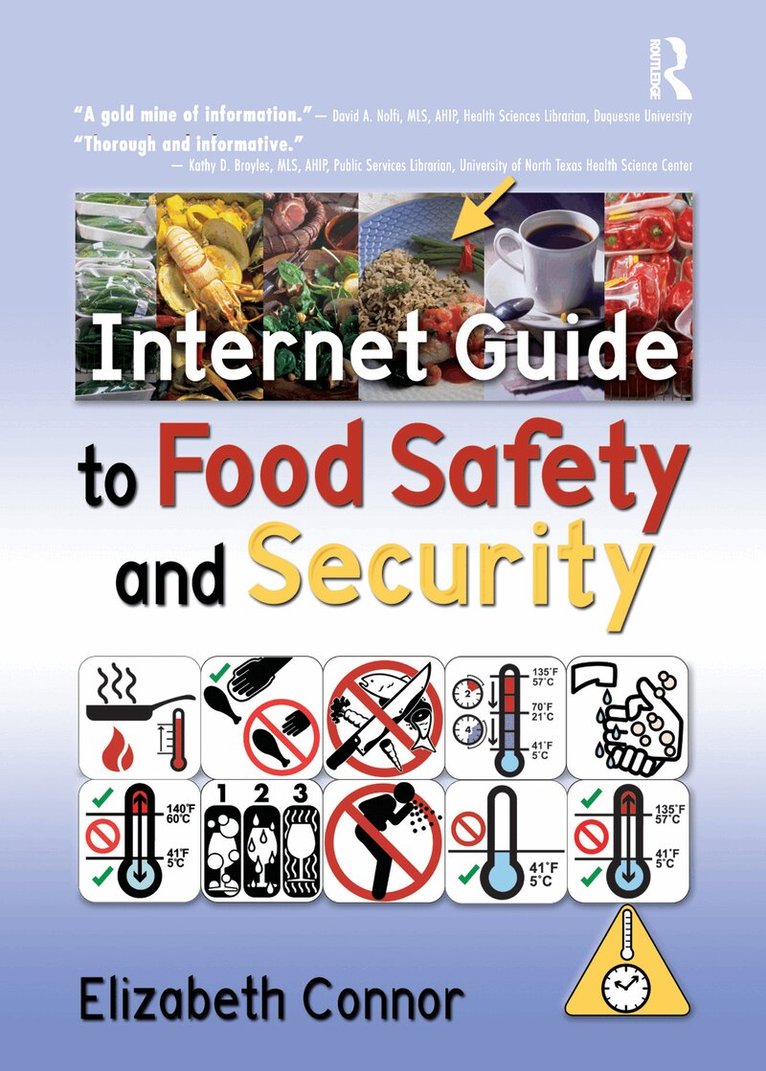
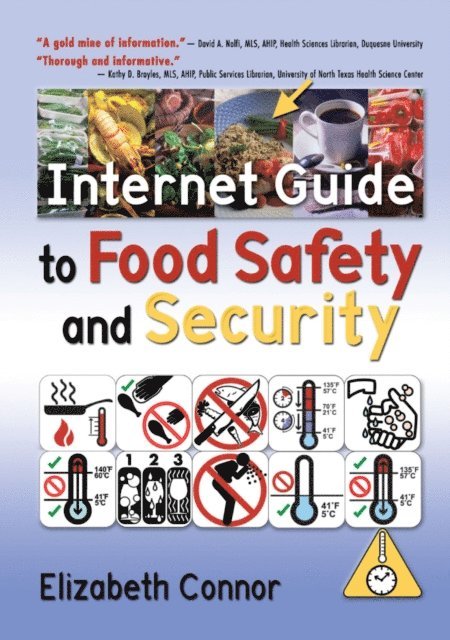
Learn what you need to know about foodborne illness—from comprehensive Web sites! The Internet Guide to Food Safety and Security puts a wealth of food safety and security information at your fingertips. This comprehensive compilation of annotated links goes beyond simple listing of Web addresses to tell you which sites have original content, what sites hold specific safety and security information you are searching for, and how to find all types of vital information you need to prevent foodborne illness and disease to stay healthy. Easy-to-use, thorough, and accurate, this guide to the Internet will become your all-in-one source for food and health information. Includes a helpful glossary!
605 kr
Läs direkt efter köp
605 kr
Läs direkt efter köp
606 kr
Läs direkt efter köp
Discover the best Web sites for you and your family’s well-being while traveling! The Internet Guide to Travel Health is your one-stop resource for when you need authoritative, reliable, and up-to-date information for preventing or dealing with illness and injury while traveling in the United States and abroad. For persons traveling near or far, this useful, easy-to-consult guide identifies dependable Web sites with advice, tips, and accurate facts on health issues that can affect your travel plans. You’ll save time and effort when researching the planning, preparation, and preventive measures necessary to stay healthy while traveling. In the Internet Guide to Travel Health, you will discover a wealth of information for maintaining your health and safety throughout your trip. This book offers you Web sites to keep you informed on the latest life-threatening situations occurring throughout the world, such as disease outbreaks, epidemics, and natural disasters. With Internet addresses for what health documents to keep with you at all times, how to find doctors and clinics at your destination, and even what to do in case of a death far from home, this informative guide helps you stay organized, even in an emergency. The Internet Guide to Travel Health provides you with reliable information on:
elective and compulsory immunizations, vaccinations, and examinations safety concerns with specific modes of travelautomotive, railways, air travel, cruise ships travel recommendations and accommodations for people with disabilities, seniors, children, people with HIV, and pets specific diseases, conditions, and ailments that can affect travel or be encountered while travelingfrom air rage and allergies to West Nile Virus and Yellow Fever interactive tools and real-time travel advicedriving distance calculators, air flight arrival/departure delays, and traffic reportsIn addition to the Web site listings, the Internet Guide to Travel Health provides numerous screen shots of key Internet resources and an understandable glossary of health- and Internet-related terms. With the myriad of health and safety risks associated with traveling both nationally and internationally, this book is essential for vacationers, business travelers, explorers, and health care professionals who want to stay informed and prepared.
606 kr
Läs direkt efter köp
Discover the best Web sites for you and your family’s well-being while traveling! The Internet Guide to Travel Health is your one-stop resource for when you need authoritative, reliable, and up-to-date information for preventing or dealing with illness and injury while traveling in the United States and abroad. For persons traveling near or far, this useful, easy-to-consult guide identifies dependable Web sites with advice, tips, and accurate facts on health issues that can affect your travel plans. You’ll save time and effort when researching the planning, preparation, and preventive measures necessary to stay healthy while traveling. In the Internet Guide to Travel Health, you will discover a wealth of information for maintaining your health and safety throughout your trip. This book offers you Web sites to keep you informed on the latest life-threatening situations occurring throughout the world, such as disease outbreaks, epidemics, and natural disasters. With Internet addresses for what health documents to keep with you at all times, how to find doctors and clinics at your destination, and even what to do in case of a death far from home, this informative guide helps you stay organized, even in an emergency. The Internet Guide to Travel Health provides you with reliable information on:
elective and compulsory immunizations, vaccinations, and examinations safety concerns with specific modes of travelautomotive, railways, air travel, cruise ships travel recommendations and accommodations for people with disabilities, seniors, children, people with HIV, and pets specific diseases, conditions, and ailments that can affect travel or be encountered while travelingfrom air rage and allergies to West Nile Virus and Yellow Fever interactive tools and real-time travel advicedriving distance calculators, air flight arrival/departure delays, and traffic reportsIn addition to the Web site listings, the Internet Guide to Travel Health provides numerous screen shots of key Internet resources and an understandable glossary of health- and Internet-related terms. With the myriad of health and safety risks associated with traveling both nationally and internationally, this book is essential for vacationers, business travelers, explorers, and health care professionals who want to stay informed and prepared.
514 kr
Läs direkt efter köp
An indispensable resource for librarians of all roles, the case studies in An Introduction to Staff Development in Academic Libraries demonstrate the necessity and value of integrating the library''s mission statement and strategic plan with bold approaches to staff orientation, training, mentoring, and development.
514 kr
Läs direkt efter köp
An indispensable resource for librarians of all roles, the case studies in An Introduction to Staff Development in Academic Libraries demonstrate the necessity and value of integrating the library''s mission statement and strategic plan with bold approaches to staff orientation, training, mentoring, and development.
928 kr
Läs direkt efter köp
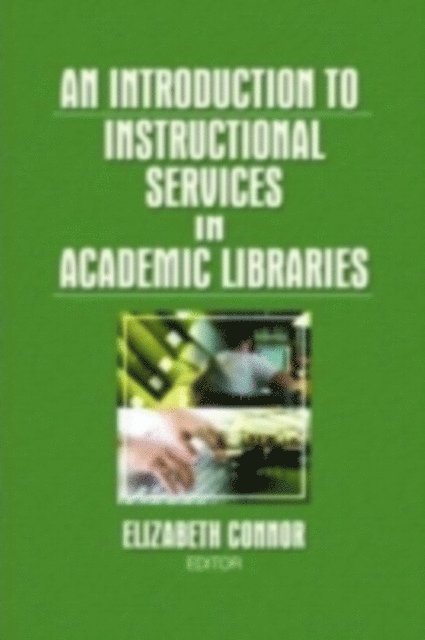
More than ever before, librarians are being called upon to contribute considerable energy, knowledge, and leadership to fostering the academic success of students through information literacy. Unique in its expansive breadth and in-depth approach, An Introduction to Instructional Services in Academic Libraries explores the latest methods and ideas for planning, delivering, and evaluating effective instructional sessions.
Providing librarians with informative, real-world case studies culled from over three dozen prominent librarian-instructors from across the US and Canada, An Introduction to Instructional Services in Academic Libraries comprehensively covers the topics of experiential learning, hybrid models of library instruction, interdisciplinary inquiry through collaboration, introducing primary documents to undergrads, using case studies in credit-bearing library courses, teaching information literacy to ESL students, information literature for the non-traditional student, preparing an advanced curriculum for graduate students, librarians in the online classroom, and teaching distance education students. An Introduction to Instructional Services in Academic Libraries features numerous planning documents, survey instruments, handouts, active learning exercises, and extensive references which make it an ideal resource for educators and librarians everywhere.
928 kr
Läs direkt efter köp
More than ever before, librarians are being called upon to contribute considerable energy, knowledge, and leadership to fostering the academic success of students through information literacy. Unique in its expansive breadth and in-depth approach, An Introduction to Instructional Services in Academic Libraries explores the latest methods and ideas for planning, delivering, and evaluating effective instructional sessions.
Providing librarians with informative, real-world case studies culled from over three dozen prominent librarian-instructors from across the US and Canada, An Introduction to Instructional Services in Academic Libraries comprehensively covers the topics of experiential learning, hybrid models of library instruction, interdisciplinary inquiry through collaboration, introducing primary documents to undergrads, using case studies in credit-bearing library courses, teaching information literacy to ESL students, information literature for the non-traditional student, preparing an advanced curriculum for graduate students, librarians in the online classroom, and teaching distance education students. An Introduction to Instructional Services in Academic Libraries features numerous planning documents, survey instruments, handouts, active learning exercises, and extensive references which make it an ideal resource for educators and librarians everywhere.
544 kr
Läs direkt efter köp
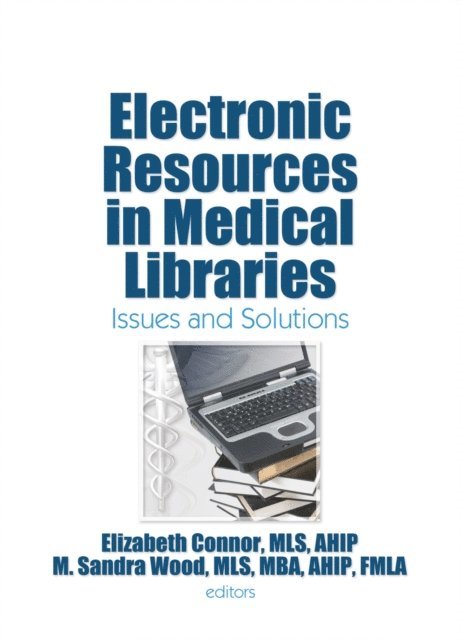
Give your patrons access to the digital content they need Electronic Resources in Medical Libraries is an essential guide to the challenges of acquiring, licensing, and managing the electronic access and use of books and journals. Medical librarians working in a variety of settings, including academic health centers, hospital libraries, and government health associations, provide entry-level, mid-career, and experienced librarians with comprehensive information and advice on dealing with electronic resources. This invaluable resource examines a wide range of issues, including collection development, pricing, open access, licensing, remote access, statistics, publisher liability, and the Semantic Web. As healthcare professionals, researchers, educators, and students rely more and more on digital content, medical libraries spend more and more time dealing with the complexities surrounding the use of e-resources. Electronic Resources in Medical Libraries examines the issues they face everyday, including the shift from print to electronic materials, off-campus and cross-campus access, usage statistics, journal pricing, open-access publishing, licensing, collection development, and much more. Topics addressed in Electronic Resources in Medical Libraries include:
how to negotiate consortial packages how to use an electronic resource management (ERM) system how to create a portal to share electronic resources how to consolidate costs and provide wide access how open access affects pricing how to establish and maintain access to licensed e-resources how to develop a combined e-journal Web page how off-campus students interact with a full-service document delivery option for electronic journals how to integrate e-resources into an online catalog how to apply emerging Semantic Web technologies to digital libraries and much moreElectronic Resources in Medical Libraries is an invaluable professional guide for medical and academic librarians, and a helpful classroom resource for faculty and students in library schools.
564 kr
Läs direkt efter köp
Give your patrons access to the digital content they need Electronic Resources in Medical Libraries is an essential guide to the challenges of acquiring, licensing, and managing the electronic access and use of books and journals. Medical librarians working in a variety of settings, including academic health centers, hospital libraries, and government health associations, provide entry-level, mid-career, and experienced librarians with comprehensive information and advice on dealing with electronic resources. This invaluable resource examines a wide range of issues, including collection development, pricing, open access, licensing, remote access, statistics, publisher liability, and the Semantic Web. As healthcare professionals, researchers, educators, and students rely more and more on digital content, medical libraries spend more and more time dealing with the complexities surrounding the use of e-resources. Electronic Resources in Medical Libraries examines the issues they face everyday, including the shift from print to electronic materials, off-campus and cross-campus access, usage statistics, journal pricing, open-access publishing, licensing, collection development, and much more. Topics addressed in Electronic Resources in Medical Libraries include:
how to negotiate consortial packages how to use an electronic resource management (ERM) system how to create a portal to share electronic resources how to consolidate costs and provide wide access how open access affects pricing how to establish and maintain access to licensed e-resources how to develop a combined e-journal Web page how off-campus students interact with a full-service document delivery option for electronic journals how to integrate e-resources into an online catalog how to apply emerging Semantic Web technologies to digital libraries and much moreElectronic Resources in Medical Libraries is an invaluable professional guide for medical and academic librarians, and a helpful classroom resource for faculty and students in library schools.
464 kr
Läs direkt efter köp
464 kr
Läs direkt efter köp
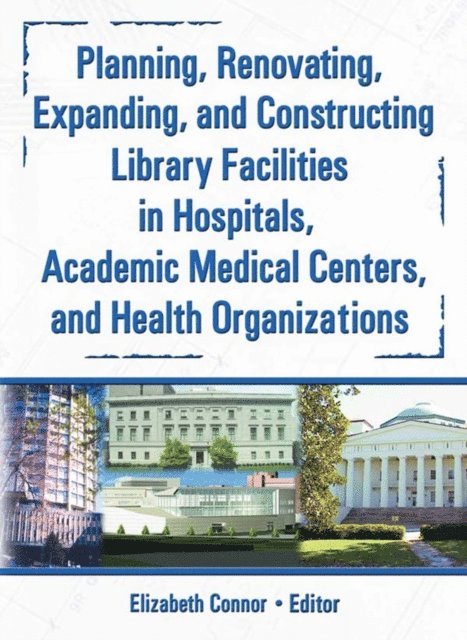
Get the tools to meet the challenge of building or renovating a library!The challenge of renovating or constructing a library requires organizational skill, resourcefulness, creativity, and willingness to compromise. Planning, Renovating, Expanding, and Constructing Library Facilities in Hospitals, Academic Medical Centers, and Health Organizations presents thirteen insightful case studies revealing how many libraries have been have been built or renovated using innovations designed to meet a specific organization''s needs. Each study plainly highlights objectives, methods, results, and conclusions, and reviews the design of the completed library. Ideas and approaches are presented clearly, showing the designing, refurbishing, and refurnishing of existing library space; the merging of library collections and services; and the construction of multimillion dollar library buildingswith each study explaining proven strategies which can be used or adapted to fit the reader’s own circumstances. Planning, Renovating, Expanding, and Constructing Library Facilities in Hospitals, Academic Medical Centers, and Health Organizations explains the steps in the planning process, including needs analysis, goal setting, and public relations, as well as the practical considerations of packing and unpacking. The contributors are noted library authorities intimately involved in every facet of the construction procedure and cost accounting, and the book includes helpful photographs, illustrations, tables, and appendices to clarify and help practicing librarians and library students alike fully understand the strategies needed to create a functional library facility that fulfills expectations.Planning, Renovating, Expanding, and Constructing Library Facilities in Hospitals, Academic Medical Centers, and Health Organizations includes case studies of:
a resource library moved into a basement renovations to the Osler Library at McGill University, Montreal, Quebec construction of the Booker Health Services Library at the Jersey Shore University Medical Center a merger of two libraries at Trinitas Hospital, Elizabeth, New Jersey the renovation of a small hospital library designing a new library in a historic naval hospital the Hope Fox Eccles Clinical Library Renovation Project expansion and renovation of the Welch Medical Library at Johns Hopkins University and much more!Planning, Renovating, Expanding, and Constructing Library Facilities in Hospitals, Academic Medical Centers, and Health Organizations is an insightful resource for educators, students, and librarians of all types.
464 kr
Läs direkt efter köp
Get the tools to meet the challenge of building or renovating a library!The challenge of renovating or constructing a library requires organizational skill, resourcefulness, creativity, and willingness to compromise. Planning, Renovating, Expanding, and Constructing Library Facilities in Hospitals, Academic Medical Centers, and Health Organizations presents thirteen insightful case studies revealing how many libraries have been have been built or renovated using innovations designed to meet a specific organization''s needs. Each study plainly highlights objectives, methods, results, and conclusions, and reviews the design of the completed library. Ideas and approaches are presented clearly, showing the designing, refurbishing, and refurnishing of existing library space; the merging of library collections and services; and the construction of multimillion dollar library buildingswith each study explaining proven strategies which can be used or adapted to fit the reader’s own circumstances. Planning, Renovating, Expanding, and Constructing Library Facilities in Hospitals, Academic Medical Centers, and Health Organizations explains the steps in the planning process, including needs analysis, goal setting, and public relations, as well as the practical considerations of packing and unpacking. The contributors are noted library authorities intimately involved in every facet of the construction procedure and cost accounting, and the book includes helpful photographs, illustrations, tables, and appendices to clarify and help practicing librarians and library students alike fully understand the strategies needed to create a functional library facility that fulfills expectations.Planning, Renovating, Expanding, and Constructing Library Facilities in Hospitals, Academic Medical Centers, and Health Organizations includes case studies of:
a resource library moved into a basement renovations to the Osler Library at McGill University, Montreal, Quebec construction of the Booker Health Services Library at the Jersey Shore University Medical Center a merger of two libraries at Trinitas Hospital, Elizabeth, New Jersey the renovation of a small hospital library designing a new library in a historic naval hospital the Hope Fox Eccles Clinical Library Renovation Project expansion and renovation of the Welch Medical Library at Johns Hopkins University and much more!Planning, Renovating, Expanding, and Constructing Library Facilities in Hospitals, Academic Medical Centers, and Health Organizations is an insightful resource for educators, students, and librarians of all types.
663 kr
Läs direkt efter köp
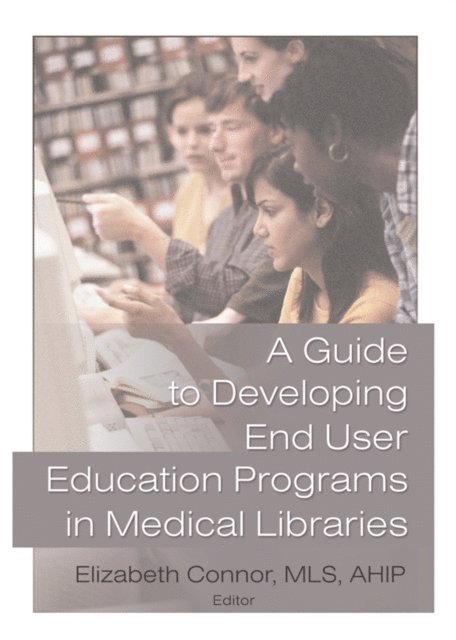
Explore a wealth of ideas, insights, and approaches that can be used or adapted by any medical library!Curricular changes in the health professions, coupled with a growing acceptance of the Internet as a tool for daily living, have contributed to a climate of change and opportunity for health sciences libraries. A Guide to Developing End User Education Programs in Medical Libraries will help graduate students in library science, entry-level medical librarians, and experienced educators to understand best practices and to build, expand, and improve medical library-sponsored educational programs. A Guide to Developing End User Education Programs in Medical Libraries is designed to aid and inform professionals who develop, teach, or evaluate end-user education programs in health sciences libraries. Eighteen case studies represent the ideas and approaches of more than fifteen private and public institutions in the United States and the Caribbean. The studies focus on effective end-user programs for medical information electives, veterinary medicine programs, health care informatics, and evidence-based medicine, plus instructional programs for teaching residents, ThinkPad-facilitated instruction, and more. The guide also examines how several medical libraries have created and expanded their end-user education programs.The contributors to A Guide to Developing End User Education Programs in Medical Libraries are health sciences librarians from teaching hospitals, medical/dental/veterinary schools, and health professions-focused universities in a dozen U.S. states and the West Indies. Each of them is involved in designing, teaching, and evaluating user education. This book will help you educate students of medicine, pharmacy, physical therapy, dentistry, and veterinary medicine, plus residents and practicing health professionals. The educational objectives and approaches in the case studies include:
clinical medical librarianship integrating informatics objectives into curricula developing credit and non-credit coursework distance learning using new and emerging technologies to improve instructionThe case studies in A Guide to Developing End User Education Programs in Medical Libraries follow a format similar to that of the structured abstract, including introduction, setting, educational approaches, evaluation methods, future plans, conclusion, and references. Some are illustrated with tables and figures. Several are supplemented by material in chapter-specific appendixes. Further information about specific classes, programs, or teaching philosophies is made available via Web sites featured in the book.Let this valuable guide help youand your institutiontake advantage of the opportunities available at this exciting time in the evolution of library science!
663 kr
Läs direkt efter köp
Explore a wealth of ideas, insights, and approaches that can be used or adapted by any medical library!Curricular changes in the health professions, coupled with a growing acceptance of the Internet as a tool for daily living, have contributed to a climate of change and opportunity for health sciences libraries. A Guide to Developing End User Education Programs in Medical Libraries will help graduate students in library science, entry-level medical librarians, and experienced educators to understand best practices and to build, expand, and improve medical library-sponsored educational programs. A Guide to Developing End User Education Programs in Medical Libraries is designed to aid and inform professionals who develop, teach, or evaluate end-user education programs in health sciences libraries. Eighteen case studies represent the ideas and approaches of more than fifteen private and public institutions in the United States and the Caribbean. The studies focus on effective end-user programs for medical information electives, veterinary medicine programs, health care informatics, and evidence-based medicine, plus instructional programs for teaching residents, ThinkPad-facilitated instruction, and more. The guide also examines how several medical libraries have created and expanded their end-user education programs.The contributors to A Guide to Developing End User Education Programs in Medical Libraries are health sciences librarians from teaching hospitals, medical/dental/veterinary schools, and health professions-focused universities in a dozen U.S. states and the West Indies. Each of them is involved in designing, teaching, and evaluating user education. This book will help you educate students of medicine, pharmacy, physical therapy, dentistry, and veterinary medicine, plus residents and practicing health professionals. The educational objectives and approaches in the case studies include:
clinical medical librarianship integrating informatics objectives into curricula developing credit and non-credit coursework distance learning using new and emerging technologies to improve instructionThe case studies in A Guide to Developing End User Education Programs in Medical Libraries follow a format similar to that of the structured abstract, including introduction, setting, educational approaches, evaluation methods, future plans, conclusion, and references. Some are illustrated with tables and figures. Several are supplemented by material in chapter-specific appendixes. Further information about specific classes, programs, or teaching philosophies is made available via Web sites featured in the book.Let this valuable guide help youand your institutiontake advantage of the opportunities available at this exciting time in the evolution of library science!