Elizabeth Duquette - Böcker
Visar alla böcker från författaren Elizabeth Duquette. Handla med fri frakt och snabb leverans.
4 produkter
4 produkter
1 286 kr
Skickas inom 5-8 vardagar
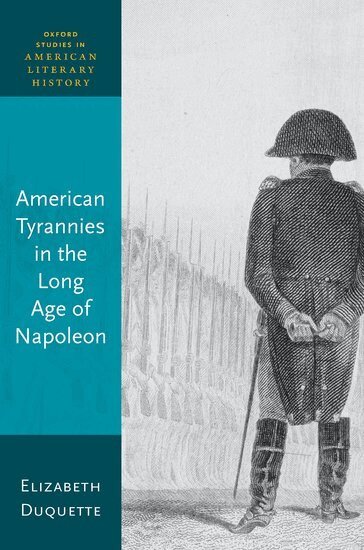
What if the American experiment is twofold, encompassing both democracy and tyranny? That is the question at the core of this book, which traces some of ways that Americans across the nineteenth century understood the perversions tyranny introduced into both their polity and society. While some informed their thinking with reference to classical texts, which comprehensively consider tyranny's dangers, most drew on a more contemporary source--Napoleon Bonaparte, the century's most famous man and its most notorious tyrant. Because Napoleon defined tyranny around the nineteenth-century Atlantic world--its features and emergence, its relationship to democratic institutions, its effects on persons and peoples--he provides a way for nineteenth-century Americans to explore the parameters of tyranny and their complicity in its cruelties. Napoleon helps us see the decidedly plural forms of tyranny in the US, bringing their fictions into focus. At the same time, however, there are distinctly American modes of tyranny. From the tyrannical style of the American imagination to the usurping potential of American individualism, Elizabeth Duquette shows that tyranny is as American as democracy.
361 kr
Skickas inom 10-15 vardagar
The well-educated daughter of a minister, Elizabeth Stuart Phelps (1844–1911) was introduced to writing at a young age, as both her mother and father were published writers. In 1868 she published her first major novel, The Gates Ajar. An international success, the novel sold more than six hundred thousand copies, making it one of the best-selling American works of the nineteenth century. Through the next four decades Phelps published hundreds of essays, tales, and poems, which appeared in every major American periodical, while also writing novels, including Beyond the Gates (1883) and The Gates Between (1887).Phelps's legacy as an important American writer, however, has been hurt by the seeming contradictions between her life and work. For example, she was an ardent advocate for women's rights both inside and outside marriage, but her stories seem to glorify the sort of extreme self-sacrifice associated with the most conservative domestic ideology. In this collection, the editors seek to restore Phelps's reputation by bringing together a diverse collection from the entire body of her lifetime of work. From arguments for suffrage to harrowing tales of Reconstruction, these essays, along with short fiction and poetry, provide a new perspective on a major American writer from the later nineteenth century.
Loyal Subjects
Bonds of Nation, Race, and Allegiance in Nineteenth-Century America
Inbunden, Engelska, 2010
1 432 kr
Skickas inom 5-8 vardagar
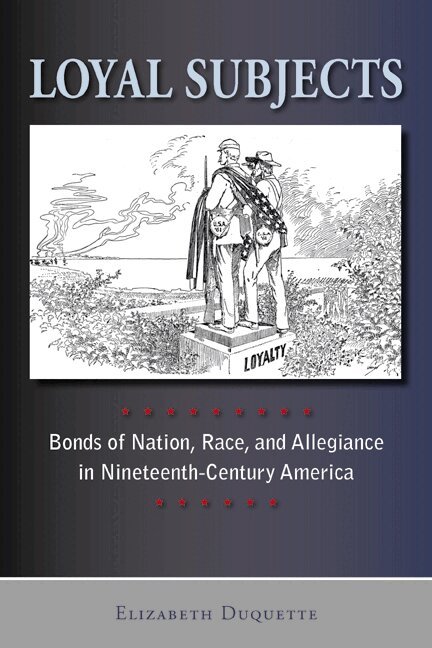
When one nation becomes two, or when two nations become one, what does national affiliation mean or require? Elizabeth Duquette answers this question by demonstrating how loyalty was used during the U.S. Civil War to define proper allegiance to the Union. For Northerners during the war, and individuals throughout the nation after Appomattox, loyalty affected the construction of national identity, moral authority, and racial characteristics.Loyal Subjects considers how the Civil War complicated the cultural value of emotion, especially the ideal of sympathy. Through an analysis of literary works written during and after the conflict-from Nathaniel Hawthorne's "Chiefly About War Matters" through Henry James's The Bostonians and Charles Chestnutt's "The Wife of His Youth," to the Pledge of Allegiance and W.E.B. Du Bois's John Brown, among many others-Duquette reveals that although American literary criticism has tended to dismiss the Civil War's impact, postwar literature was profoundly shaped by loyalty.
Loyal Subjects
Bonds of Nation, Race, and Allegiance in Nineteenth-Century America
Häftad, Engelska, 2010
381 kr
Skickas inom 5-8 vardagar
When one nation becomes two, or when two nations become one, what does national affiliation mean or require? Elizabeth Duquette answers this question by demonstrating how loyalty was used during the U.S. Civil War to define proper allegiance to the Union. For Northerners during the war, and individuals throughout the nation after Appomattox, loyalty affected the construction of national identity, moral authority, and racial characteristics.Loyal Subjects considers how the Civil War complicated the cultural value of emotion, especially the ideal of sympathy. Through an analysis of literary works written during and after the conflict-from Nathaniel Hawthorne's "Chiefly About War Matters" through Henry James's The Bostonians and Charles Chestnutt's "The Wife of His Youth," to the Pledge of Allegiance and W.E.B. Du Bois's John Brown, among many others-Duquette reveals that although American literary criticism has tended to dismiss the Civil War's impact, postwar literature was profoundly shaped by loyalty.