Elizabeth Heger Boyle – författare
Visar alla böcker från författaren Elizabeth Heger Boyle. Handla med fri frakt och snabb leverans.
3 produkter
3 produkter
1 557 kr
Skickas inom 7-10 vardagar
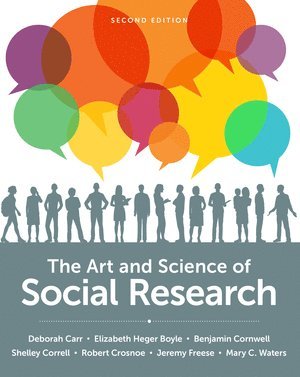
Written by a team of renowned sociologists with experience in both the field and the classroom, The Art and Science of Social Research offers authoritative, accessible and balanced coverage of the methods used to study the social world. The authors highlight the challenges of investigating the unpredictable topic of human lives while providing insights into what really happens in the field, the laboratory and the survey call centre. A streamlined Second Edition is now accompanied by three new InQuizitive activities and writing tutorials that help students master the building blocks of research and hone key writing skills.
513 kr
Skickas inom 7-10 vardagar
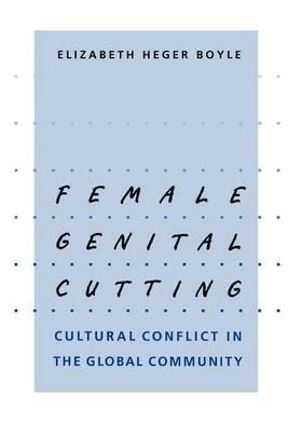
The practice of female genital cutting, sometimes referred to as female circumcision and common in a number of African states, has attracted increasing attention in recent years and mobilized strong international opposition. While it typically produces a visceral response of horror and revulsion in Westerners, the practice is widely regarded in some cultures as essential for proper development into womanhood and is defended by women who have themselves experienced it and who have had the procedure performed on their own daughters. It is also perceived in many Islamic communities as religiously prescribed, although most Islamic clerics do not condone the practice. In this study, sociologist Elizabeth Boyle examines this controversial issue from the perspectives of the international system, governments, and individuals. Drawing on previous scholarship, records of international organizations, demographic surveys, and the popular media, Boyle examines how the issue is perceived and acted upon at international, national, and individual levels.Grounding her work in the sociological theory of neoinstitutionalism, Boyle describes how the choices made by governments and individual women are influenced by the often conflicting principles of individual human rights and sovereign autonomy. She concludes that while globalization may exacerbate such conflicts, it can ultimately lead to social change.
344 kr
Skickas inom 7-10 vardagar
The practice of female genital cutting, sometimes referred to as female circumcision and common in a number of African states, has attracted increasing attention in recent years and mobilized strong international opposition. While it typically produces a visceral response of horror and revulsion in Westerners, the practice is widely regarded in some cultures as essential for proper development into womanhood and is defended by women who have themselves experienced it and who have had the procedure performed on their own daughters. It is also perceived in many Islamic communities as religiously prescribed, although most Islamic clerics do not condone the practice. In this study, sociologist Elizabeth Boyle examines this controversial issue from the perspectives of the international system, governments, and individuals. Drawing on previous scholarship, records of international organizations, demographic surveys, and the popular media, Boyle examines how the issue is perceived and acted upon at international, national, and individual levels.Grounding her work in the sociological theory of neoinstitutionalism, Boyle describes how the choices made by governments and individual women are influenced by the often conflicting principles of individual human rights and sovereign autonomy. She concludes that while globalization may exacerbate such conflicts, it can ultimately lead to social change.