Elizabeth Hutton Turner - Böcker
Visar alla böcker från författaren Elizabeth Hutton Turner. Handla med fri frakt och snabb leverans.
2 produkter
2 produkter
476 kr
Skickas inom 3-6 vardagar
This publication sets the precedent for the next generation of Lawrence scholars and studies in modern and contemporary discourse. The American Struggle explores Jacob Lawrence's radical way of transforming history into art by looking at his thirty panel series of paintings, Struggle . . . from the History of the American People (1954–56). Essays by Steven Locke, Elizabeth Hutton Turner, Austen Barron Bailly, and Lydia Gordon mark the historic reunion of this series—seen together in this exhibition for the first time since 1958. In entries on the panels, a multitude of voices responds to the episodes representing struggle from American history that Lawrence chose to activate in his series. The American Struggle reexamines Lawrence's lost narrative and its power for twenty-first century audiences by including contemporary art and artists. Derrick Adams, Bethany Collins, and Hank Willis Thomas invite us to reconsider history through themes of struggle in ways that resonate with Lawrence's artistic invention. Statements by these artists amplify how they and Lawrence view history not as distant period of the past but as an active imaginative space that is continuously questioned in the present tense and for future audiences.
434 kr
Tillfälligt slut
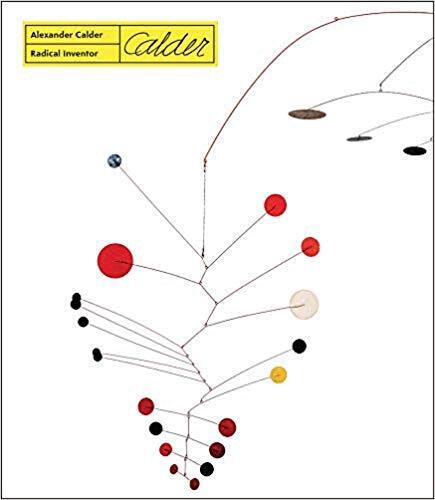
Alexander Calder (1898-1976) was a radical inventor: an artist who discarded convention and disrupted hierarchies, overturning the traditional basis of culture while revolutionising the way people perceive and interact with art. Calder's 'new line' was not simply an evolution of forms and styles. From the start, it was quite clear to all who witnessed him at work that - in his way of drawing attention and gaining notoriety - he was doing something radically new. This catalogue shows how Calder's work emerged from expectations of change in American popular culture. Calder, who was initially attracted by the structure and functions of the circus, looked for alternative models to triumph over respectability, public decorum, and the ambitions of industry. The catalogue, with twelve essays from major contributors, will examine how Calder, among the first college-trained artists, found techniques and inspiration in many disciplines and their development: technology, engineering, architecture, physics, and astronomy, among others. All these contributed to the development of his wire sculptures, mobiles, and stabiles. More than 100 works and comparative illustrations will guide the reader through this innovative and unique path.