Elizabeth L. Eisenstein – författare
Visar alla böcker från författaren Elizabeth L. Eisenstein. Handla med fri frakt och snabb leverans.
6 produkter
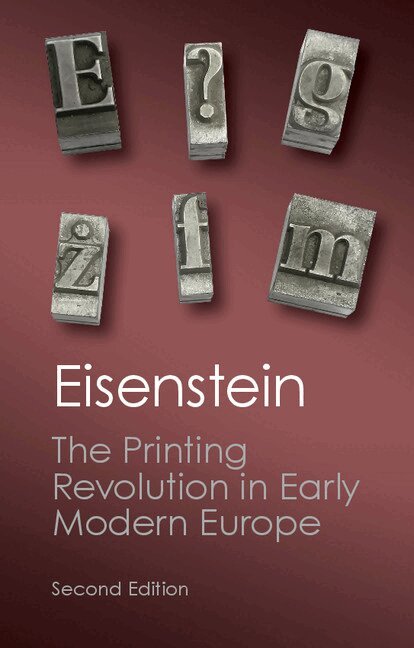
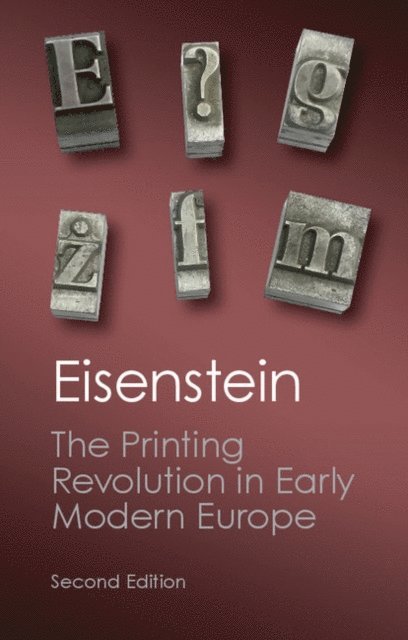
The Printing Revolution in Early Modern Europe
Häftad, 2012
330 kr
Lägg i varukorg
In 1979 Elizabeth Eisenstein provided the first full-scale treatment of the fifteenth-century printing revolution in the West in her monumental two-volume work, The Printing Press as an Agent of Change. This abridged edition, after summarising the initial changes introduced by the establishment of …
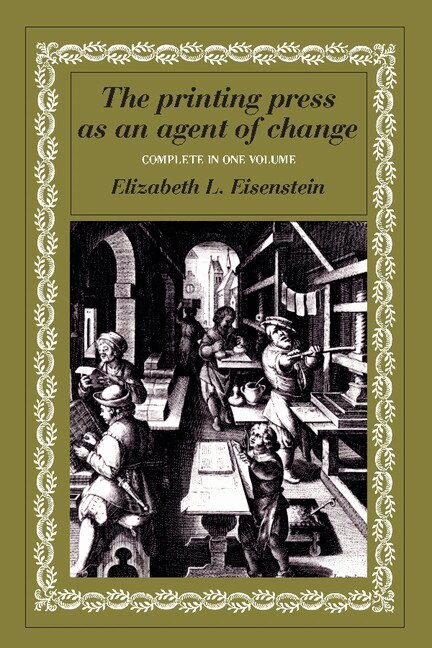
The Printing Press as an Agent of Change
Häftad, 1980
637 kr
Lägg i varukorg
Originally published in two volumes in 1980, The Printing Press as an Agent of Change is now issued in a paperback edition containing both volumes. The work is a full-scale historical treatment of the advent of printing and its importance as an agent of change. Professor Eisenstein begins by …
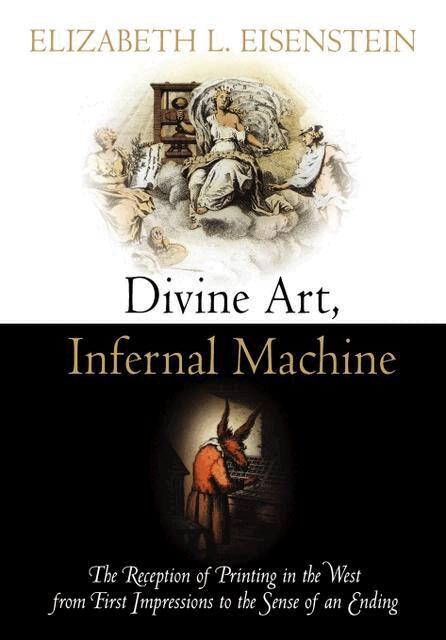
Divine Art, Infernal Machine
The Reception of Printing in the West from First Impressions to the Sense of an Ending
E-bok, 2011
489 kr
Lägg i varukorg
There is a longstanding confusion of Johann Fust, Gutenberg's one-time business partner, with the notorious Doctor Faustus. The association is not surprising to Elizabeth L. Eisenstein, for from its very early days the printing press was viewed by some as black magic. For the most part, however, it …
Divine Art, Infernal Machine
The Reception of Printing in the West from First Impressions to the Sense of an Ending
Häftad, 2012
385 kr
Lägg i varukorg
There is a longstanding confusion of Johann Fust, Gutenberg's one-time business partner, with the notorious Doctor Faustus. The association is not surprising to Elizabeth L. Eisenstein, for from its very early days the printing press was viewed by some as black magic. For the most part, however, it …
Printing Revolution in Early Modern Europe
E-bok, 2012
353 kr
Lägg i varukorg
In 1979 Elizabeth Eisenstein provided the first full-scale treatment of the fifteenth-century printing revolution in the West in her monumental two-volume work, The Printing Press as an Agent of Change. This abridged edition, after summarising the initial changes introduced by the establishment of …
Printing Revolution in Early Modern Europe
E-bok, 2012
345 kr
Lägg i varukorg
In 1979 Elizabeth Eisenstein provided the first full-scale treatment of the fifteenth-century printing revolution in the West in her monumental two-volume work, The Printing Press as an Agent of Change. This abridged edition, after summarising the initial changes introduced by the establishment of …