Elizabeth Leake – författare
Visar alla böcker från författaren Elizabeth Leake. Handla med fri frakt och snabb leverans.
3 produkter
3 produkter
1 195 kr
Skickas inom 5-8 vardagar
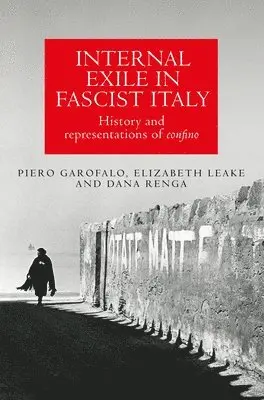
This study offers a clear, concise introduction to the Fascist-era practice, know as confino, of exiling antifascist dissidents to parts of Italy far from the dissidents’ homes, often on islands or in tiny inland villages. The book is organised in two sections. Part one provides a case study of the political colony on the island of Lipari and a historical overview of internal exile. Part two focuses on representations of confinement in literature and film. It examines the varieties of self-expression (e.g. memoirs, letters and literature) used by prisoners to describe their experiences, investigates how filmmakers interpret these events, places and people, and explores how film portrays the repression of homosexuality. A timely examination of the birthplace of European federalism, the book also contributes to our understanding of the legacy of confinement from both national and European perspectives.
870 kr
Skickas inom 5-8 vardagar
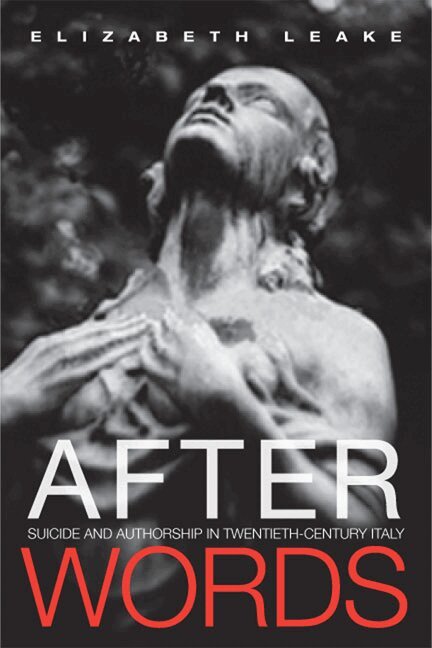
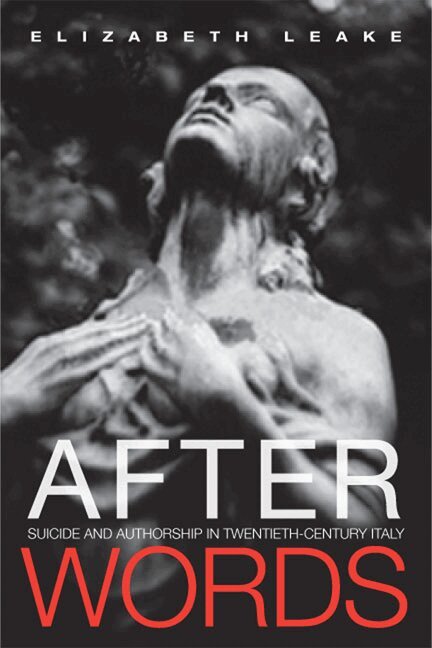
After Words investigates the ways in which the suicide of a writer informs critical interpretations of his or her works. Suicide is a revision as well as a form of authorship, both on the part of the author, who has written his/her final scene and revised the 'natural' course of his/her life, and on the part of the reader, who must make sense of this final act of writing. Focusing on four twentieth-century Italian writers (Guido Morselli, Amelia Rosselli, Cesare Pavese, and Primo Levi), Elizabeth Leake examines their personal correspondence, diaries, and obituaries as well as popular and academic commemorative writings about them and their works in order to elucidate the ramifications of their suicides for their readership. Arguing that authorial suicide points to the limitations of those critical stances that exclude the author from the practice of reading, Leake's insightful re-reading of these authors and their texts shows that in the aftermath of suicide, an author's life and death themselves become texts to be read.
368 kr
Skickas
This study offers a clear, concise introduction to the Fascist-era practice, know as confino, of exiling antifascist dissidents to parts of Italy far from the dissidents’ homes, often on islands or in tiny inland villages. The book is organised in two sections. Part one provides a case study of the political colony on the island of Lipari and a historical overview of internal exile. Part two focuses on representations of confinement in literature and film. It examines the varieties of self-expression (e.g. memoirs, letters and literature) used by prisoners to describe their experiences, investigates how filmmakers interpret these events, places and people, and explores how film portrays the repression of homosexuality. A timely examination of the birthplace of European federalism, the book also contributes to our understanding of the legacy of confinement from both national and European perspectives.