Elizabeth Siew-Kuan Ng - Böcker
Visar alla böcker från författaren Elizabeth Siew-Kuan Ng. Handla med fri frakt och snabb leverans.
4 produkter
4 produkter
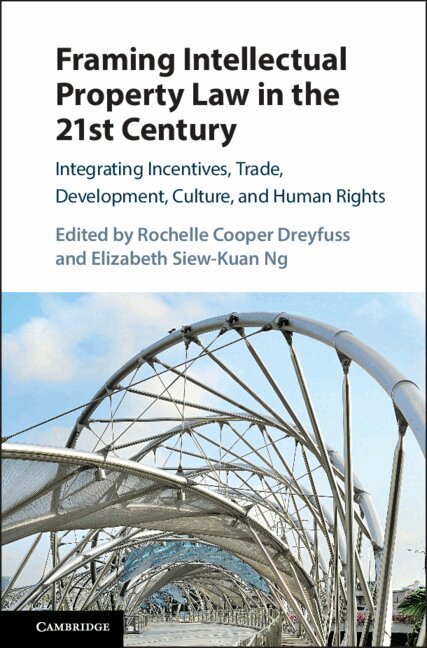
Framing Intellectual Property Law in the 21st Century
Integrating Incentives, Trade, Development, Culture, and Human Rights
Inbunden, Engelska, 2018
903 kr
Skickas inom 7-10 vardagar
As knowledge production has become a more salient part of the economy, intellectual property laws have expanded. From a backwater of specialists in patent, copyright, and trademark law, intellectual property has become linked to trade through successive international agreements, and appreciated as key to both economic and cultural development. Furthermore, law has begun to engage the interest of economists, political theorists, and human rights advocates. However, because each discipline sees intellectual property in its own way, legal scholarship and practice have diverged, and the debate over intellectual property law has become fragmented. This book is aimed at bringing this diverse scholarship and practice together. It examines intellectual property through successive lenses (incentive theory, trade, development, culture, and human rights) and ends with a discussion of whether and how these fragmented views can be reconciled and integrated.
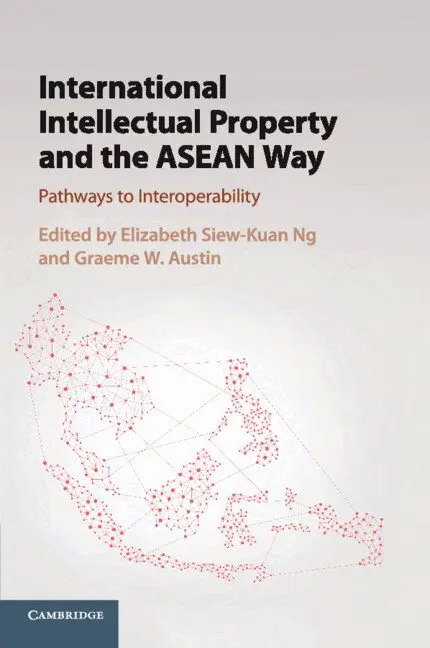
International Intellectual Property and the ASEAN Way
Pathways to Interoperability
Inbunden, Engelska, 2017
1 266 kr
Skickas inom 7-10 vardagar
The Association of Southeast Asian Nations (ASEAN) is actively seeking ways for member countries to enhance their individual economic development within the context of overall regional advancement. Central to this is the creation of a regional intellectual property framework. This book examines the efforts to move beyond sovereign protections of intellectual property rights and establish meaningful inter-state cooperation on intellectual property issues. Rather than aim for IP harmonization, ASEAN recognizes its internal diversity and pursues an agenda of 'IP Interoperability'. The essays in this collection examine the unique dynamics of 'interoperability', analyzing the administration of intellectual property in a part of the world that is of increasing importance. The book enables the reader to compare and contrast the ASEAN model to other approaches in regional cooperation, such as Europe and Latin America, and also explores private international law as a potential vehicle for interoperability.
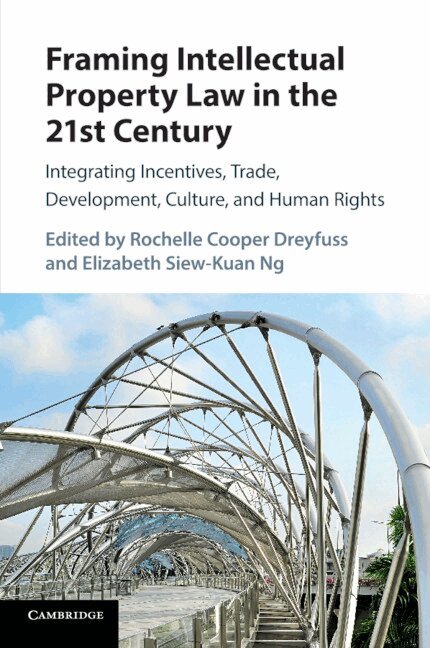
Framing Intellectual Property Law in the 21st Century
Integrating Incentives, Trade, Development, Culture, and Human Rights
Häftad, Engelska, 2019
467 kr
Skickas inom 7-10 vardagar
As knowledge production has become a more salient part of the economy, intellectual property laws have expanded. From a backwater of specialists in patent, copyright, and trademark law, intellectual property has become linked to trade through successive international agreements, and appreciated as key to both economic and cultural development. Furthermore, law has begun to engage the interest of economists, political theorists, and human rights advocates. However, because each discipline sees intellectual property in its own way, legal scholarship and practice have diverged, and the debate over intellectual property law has become fragmented. This book is aimed at bringing this diverse scholarship and practice together. It examines intellectual property through successive lenses (incentive theory, trade, development, culture, and human rights) and ends with a discussion of whether and how these fragmented views can be reconciled and integrated.
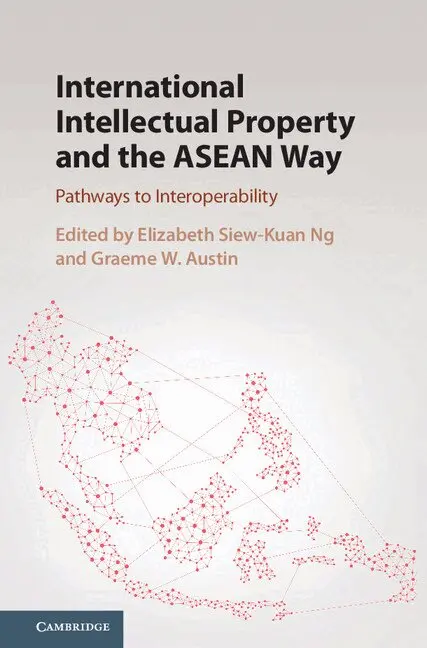
International Intellectual Property and the ASEAN Way
Pathways to Interoperability
Häftad, Engelska, 2018
467 kr
Skickas inom 7-10 vardagar
The Association of Southeast Asian Nations (ASEAN) is actively seeking ways for member countries to enhance their individual economic development within the context of overall regional advancement. Central to this is the creation of a regional intellectual property framework. This book examines the efforts to move beyond sovereign protections of intellectual property rights and establish meaningful inter-state cooperation on intellectual property issues. Rather than aim for IP harmonization, ASEAN recognizes its internal diversity and pursues an agenda of 'IP Interoperability'. The essays in this collection examine the unique dynamics of 'interoperability', analyzing the administration of intellectual property in a part of the world that is of increasing importance. The book enables the reader to compare and contrast the ASEAN model to other approaches in regional cooperation, such as Europe and Latin America, and also explores private international law as a potential vehicle for interoperability.