Ellen Reichel – författare
Visar alla böcker från författaren Ellen Reichel. Handla med fri frakt och snabb leverans.
3 produkter
3 produkter
E-bok
PDF, Engelska, 20191 170 kr
Läs direkt efter köp
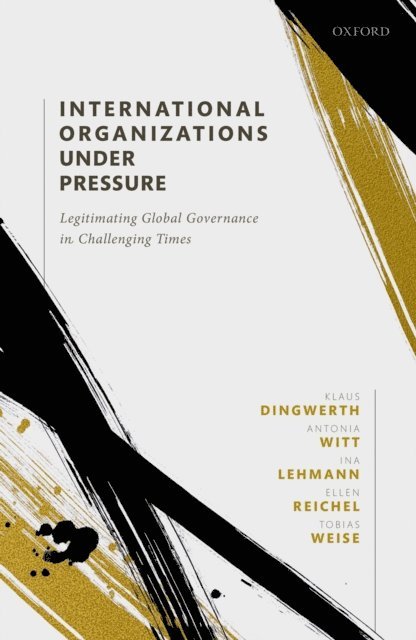
International organizations like the United Nations, the International Monetary Fund, or the European Union are a defining feature of contemporary world politics. In recent years, many of them have also become heavily politicized.In this book, we examine how the norms and values that underpin the evaluations of international organizations have changed over the past 50 years. Looking at five organizations in depth, we observe two major trends. Taken together, both trends make the legitimation of international organizations more challenging today. First, people-based legitimacy standards are on the rise: international organizations are increasingly asked to demonstrate not only what they do for their member states, butalso for the people living in these states. Second, procedural legitimacy standards gain ground: international organizations are increasingly evaluated not only based on what they accomplish, but also based on how they arrive at decisions, manage themselves, or coordinate with other organizations inthe field. In sum, the study thus documents how the list of expectations international organizations need to fulfil to count as ''legitimate'' has expanded over time. The sources of this expansion are manifold. Among others, they include the politicization of expanded international authority and the rise of non-state actors as new audiences from which international organizations seek legitimacy.
E-bok
Engelska, 20191 180 kr
Läs direkt efter köp
International organizations like the United Nations, the International Monetary Fund, or the European Union are a defining feature of contemporary world politics. In recent years, many of them have also become heavily politicized.In this book, we examine how the norms and values that underpin the evaluations of international organizations have changed over the past 50 years. Looking at five organizations in depth, we observe two major trends. Taken together, both trends make the legitimation of international organizations more challenging today. First, people-based legitimacy standards are on the rise: international organizations are increasingly asked to demonstrate not only what they do for their member states, butalso for the people living in these states. Second, procedural legitimacy standards gain ground: international organizations are increasingly evaluated not only based on what they accomplish, but also based on how they arrive at decisions, manage themselves, or coordinate with other organizations inthe field. In sum, the study thus documents how the list of expectations international organizations need to fulfil to count as ''legitimate'' has expanded over time. The sources of this expansion are manifold. Among others, they include the politicization of expanded international authority and the rise of non-state actors as new audiences from which international organizations seek legitimacy.
Inbunden, Engelska, 2019
1 104 kr
Skickas inom 5-8 vardagar
International organizations like the United Nations, the International Monetary Fund, or the European Union are a defining feature of contemporary world politics. In recent years, many of them have also become heavily politicized. In this book, we examine how the norms and values that underpin the evaluations of international organizations have changed over the past 50 years. Looking at five organizations in depth, we observe two major trends. Taken together, both trends make the legitimation of international organizations more challenging today. First, people-based legitimacy standards are on the rise: international organizations are increasingly asked to demonstrate not only what they do for their member states, but also for the people living in these states. Second, procedural legitimacy standards gain ground: international organizations are increasingly evaluated not only based on what they accomplish, but also based on how they arrive at decisions, manage themselves, or coordinate with other organizations in the field. In sum, the study thus documents how the list of expectations international organizations need to fulfil to count as 'legitimate' has expanded over time. The sources of this expansion are manifold. Among others, they include the politicization of expanded international authority and the rise of non-state actors as new audiences from which international organizations seek legitimacy.