Elof Axel Carlson - Böcker
Visar alla böcker från författaren Elof Axel Carlson. Handla med fri frakt och snabb leverans.
11 produkter
11 produkter
391 kr
Skickas inom 10-15 vardagar
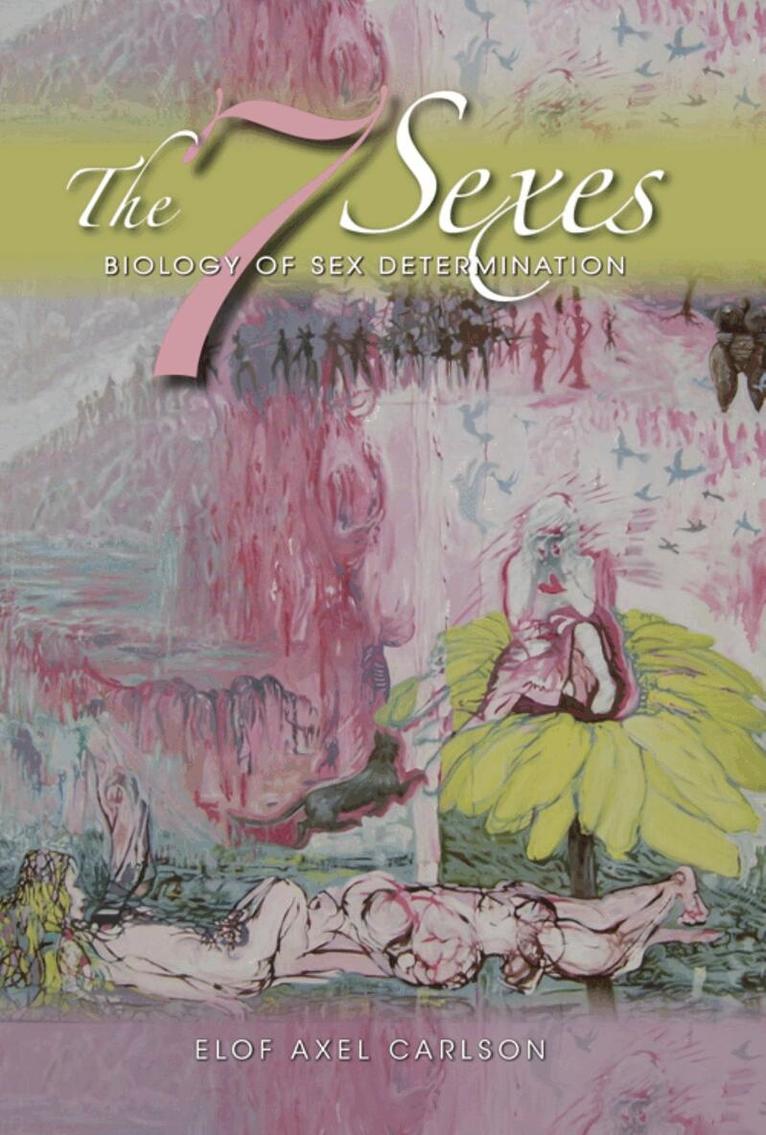
Few of us know much about the biology of sex determination, but what could be more interesting than to discover how we are shaped into males and females? In this book, Elof Carlson tells the incredible story of the difficult quest to understand how the body forms girls and boys. Carlson's history takes us from antiquity to the present day to detail how each component of human reproduction and sexuality was identified and studied, how this knowledge enlarged our understanding of sex determination, and how it was employed to interpret such little understood aspects of human biology as the origin of intersex births.
400 kr
Skickas inom 7-10 vardagar
251 kr
Skickas inom 7-10 vardagar
335 kr
Tillfälligt slut
404 kr
Skickas inom 3-6 vardagar
518 kr
Tillfälligt slut
696 kr
Skickas inom 5-8 vardagar
495 kr
Skickas inom 7-10 vardagar
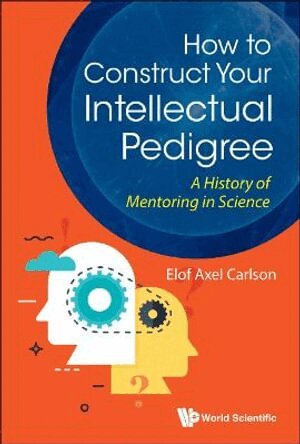
How To Construct Your Intellectual Pedigree: A History Of Mentoring In Science
Inbunden, Engelska, 2020
1 370 kr
Skickas inom 3-6 vardagar
This is a handbook that shows the reader how to construct an intellectual pedigree. It is also a history of science monograph because the completed intellectual pedigrees can be used individually or collectively to trace the influences of mentoring in the life sciences. The author uses Hermann Joseph Muller (1890-1967) (which includes his own intellectual pedigree) to show how knowledge was shifted from Italy to Germany and England, to France, and then to the American Colonies. Through Muller, the author goes in two directions, one leading to Huxley, Darwin, and Newton. The second leads to Agassiz, Malpighi, Borelli, and Galileo. The author also shows, from comparing 60 additional intellectual pedigrees, that about one third go to Newton, one third to Galileo and the rest to other icons of the past (e.g., Linnaeus, Lavoisier, Gay-Loussac, Leibniz). It shows how small was the pool of available scientists in the universities before the mid-19th century.This book will stimulate graduate students and faculty to construct their own intellectual pedigrees. It will also be of interest to historians and philosophers of science. The book discusses the role of mentoring, dividing this into inputs of intellectual development as well as outputs of development, using timelines arranged as circles. For each mentor, a brief account is given of that person's work and relation to the subject of the pedigree.
844 kr
Skickas inom 3-6 vardagar
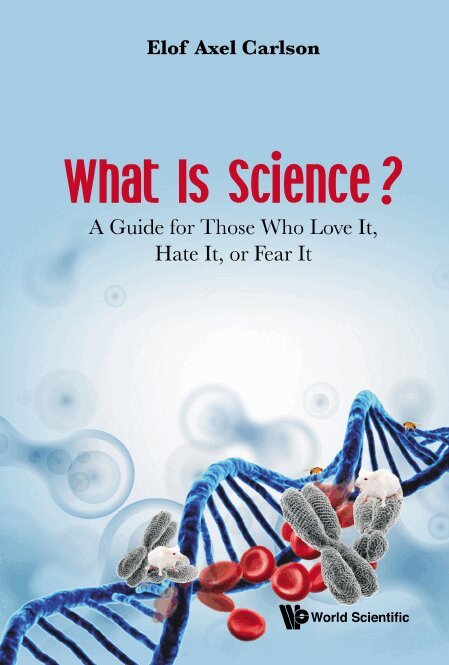
What is Science? A Guide for Those Who Love It, Hate It, or Fear It, provides the reader with ways science has been done through discovery, exploration, experimentation and other reason-based approaches. It discusses the basic and applied sciences, the reasons why some people hate science, especially its rejection of the supernatural, and others who fear it for human applications leading to environmental degradation, climate change, nuclear war, and other outcomes of sciences applied to society.The author uses anecdotes from interviews and associations with many scientists he has encountered in his career to illustrate these features of science and their personalities and habits of thinking or work. He also explores the culture wars of science and the humanities, values involved in doing science and applying science, the need for preventing unexpected outcomes of applied science, and the ways our world view changes through the insights of science. This book will provide teachers lots of material for discussion about science and its significance in our lives. It will also be helpful for those starting out their interest in science to know the worst and best features of science as they develop their careers.
402 kr
Skickas inom 5-8 vardagar
What is Science? A Guide for Those Who Love It, Hate It, or Fear It, provides the reader with ways science has been done through discovery, exploration, experimentation and other reason-based approaches. It discusses the basic and applied sciences, the reasons why some people hate science, especially its rejection of the supernatural, and others who fear it for human applications leading to environmental degradation, climate change, nuclear war, and other outcomes of sciences applied to society.The author uses anecdotes from interviews and associations with many scientists he has encountered in his career to illustrate these features of science and their personalities and habits of thinking or work. He also explores the culture wars of science and the humanities, values involved in doing science and applying science, the need for preventing unexpected outcomes of applied science, and the ways our world view changes through the insights of science. This book will provide teachers lots of material for discussion about science and its significance in our lives. It will also be helpful for those starting out their interest in science to know the worst and best features of science as they develop their careers.