Elvira Tarr - Böcker
Visar alla böcker från författaren Elvira Tarr. Handla med fri frakt och snabb leverans.
2 produkter
2 produkter
1 039 kr
Skickas inom 10-15 vardagar
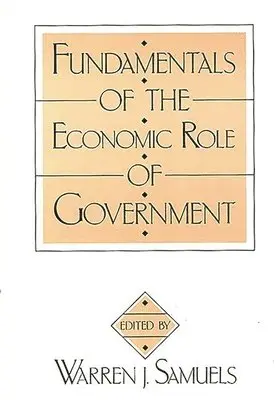
This study brings an original slant to the complex and much-debated question of the proper role of government in the economic sphere. Representing a broad range of disciplinary and ideological approaches, the authors identify and explore the most fundamental propositions concerning the economic role of government, as well as the generalizations, major themes, and conclusions that can be drawn from them. The essays focus on the deep levels of political and economic organization and on the values and underlying assumptions that are the bases of the institution of government.Written by a distinguished group of specialists, the work approaches the issue multidimensionally--from the standpoint of social science, history, law, and philosophy. Not mere ideological exercises, the essays focus on the deep levels of political and economic organization and on the values and underlying assumptions that are the bases of the institution of government. Connections between the government's economic role and ideology, free enterprise, power politics, and group interests are considered together with the constitutional implications of governmental economic powers. Other issues addressed include the changing economic role of government, contradictions and ambiguities in the government's economic functions, rules governing economic activity, and the role of economists in government. Providing a diversity of viewpoints and a wealth of fresh insights, this book can be used in graduate and undergraduate courses in economics, political science, philosophy, and law, and will appeal to the informed general worker.
980 kr
Skickas inom 10-15 vardagar
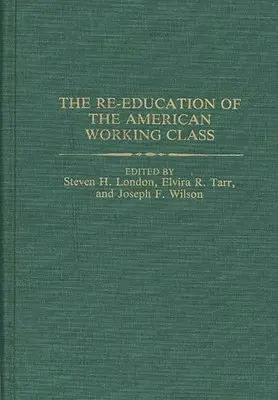
This work brings together articles and papers by union leaders, activists, social scientists, and educators to provide an overview of the field of worker education. Along with presenting the major historical models of worker education, the book addresses the present issues confronting worker educators today. The book's final sections present alternative models of worker education that illustrate a variety of approaches currently being employed. All selections found in this volume represent original contributions not published elsewhere.The first section of the book considers the field of worker education from four levels of social determinism: institutional, ideological, pedagogical, and personal. The second part focuses on three historical stages of worker education. The articles cover the early radical phase of worker education, the period of union-university cooperation, and the current, dominant union-sponsored model of worker education. The third section considers issues which have risen from worker education's history, institutional configurations, and worker education's place in modern American society. The final section of the book presents evaluations of working alternatives to the dominant models of worker education. The authors not only discuss specific programs and institutions, but they do so in the context of the historical models outlined in the first two sections and the issues raised in Part 3. This book will be of value to students of the social science and education disciplines, adult and labor educators, trade unionists, and others interested in this burgeoning field.