Emad Aboelela – författare
Visar alla böcker från författaren Emad Aboelela. Handla med fri frakt och snabb leverans.
4 produkter
4 produkter
E-bok
PDF, Engelska, 2003225 kr
Läs direkt efter köp
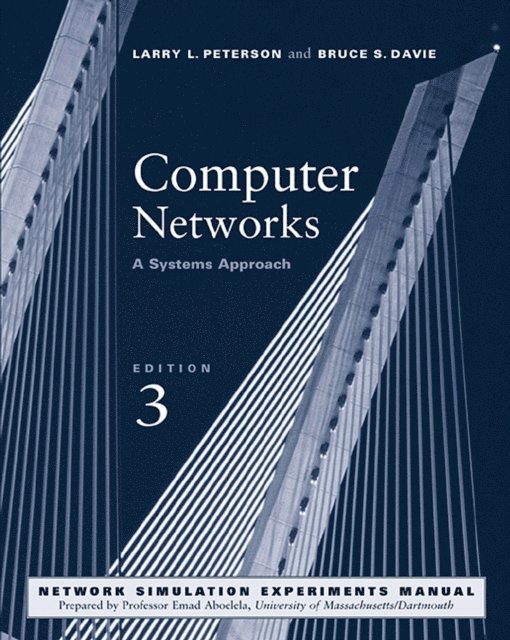
The lab exercises contained in the network simulation experiments manual are based on the OPNET simulator (v. 9), a network simulation tool that was originally developed at M.I.T. It provides networking professionals with the option of implementing experiments from their homes or workplaces and the lab manual comes with directions for downloading the free easy-to-install software (special version to this book only--see system requirements below). These labs run through simulations closely tied to the material in the text so that you can visualize the discussions covering core network topologies. Various scenarios are presented within each topology, and review questions and a lab report exercise accompany each lab experiment. The experiments also follows the organization of Computer Networks, Third Edition, by Larry Peterson and Bruce Davie.System requirements for using the OPNET IT Guru Academic Edition release 9.1:-Intel Pentium III, 4 or compatible (500 MHz or better)-256 MB RAM-400 MB disk space-Display: 1024 x 768 or higher resolution, 256 or more colors-The English language version of the following operating systems are supported:Microsoft Windows NT (Service Pack 3, 5, or 6a)Windows 2000 (Service Pack 1 and 2 are supported but not required)Windows XP (Service Pack 1 is required)*Written by an instructor who has used OPNET simulation tools in his classroom for numerous demonstrations and real-world scenarios. *Software download based on an award-winning product made by OPNET Technologies, Inc., whose software is used by thousands of commercial and government organizations worldwide, and by over 500 universities. *Useful experimentation for professionals in the workplace who are interested in learning & demonstrating the capability of evaluating different commercial networking products, i.e., Cisco routers. *Covers the core networking topologies and includes assignments on the ethernet, token rings, ATM, Switched LANs, Network Design, RIP, TCP, Queuing Disciplines, QoS, etc. *Instructors can download the solutions manual to the exercises in the Network Simulation Experiments Manual by clicking on the "Instructors" resource link in the upper right corner of the screen and searching for author "Aboelela."
E-bok
PDF, Engelska, 2007310 kr
Läs direkt efter köp
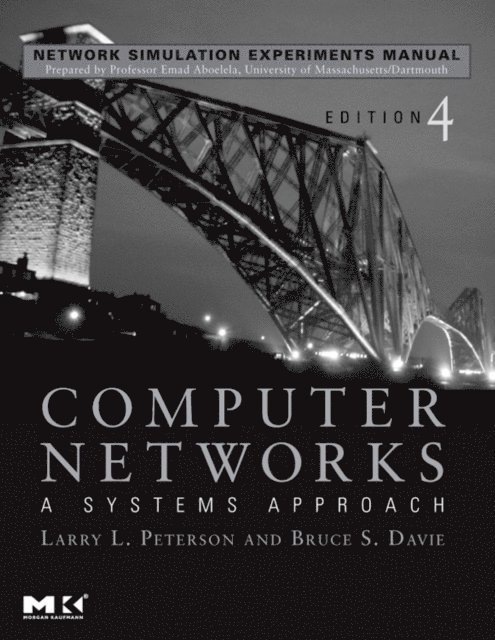
Network Simulation Experiments Manual, Second Edition, enables networking professional to visualize how networks work by providing free access to easy-to-install OPNET software. This software provides a virtual environment for modeling, analyzing, and predicting the performance of IT infrastructures, including applications, servers, and networking technologies.The book also goes a step further by providing detailed experiments on core networking topologies for use in this simulation environment. Each experiment is also accompanied by review questions, a lab report, and exercises.This book is recommended for graduate students and networking designers and professionals.- Useful experimentation for professionals in the workplace who are interested in learning and demonstrating the capability of evaluating different commercial networking products- The experiments in this manual are closely tied to Peterson/Davie: Computer Networks, fourth edition (a best-selling Morgan Kaufmann title), making it a perfect companion book.
Häftad, Engelska, 2011
311 kr
Skickas inom 10-15 vardagar
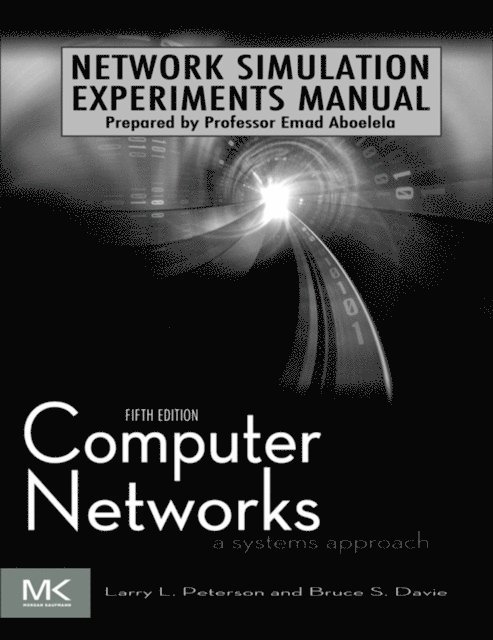
Network Simulation Experiments Manual, Third Edition, is a practical tool containing detailed, simulation-based experiments to help students and professionals learn about key concepts in computer networking. It allows the networking professional to visualize how computer networks work with the aid of a software tool called OPNET to simulate network function. OPNET provides a virtual environment for modeling, analyzing, and predicting the performance of IT infrastructures, including applications, servers, and networking technologies. It can be downloaded free of charge and is easy to install.The book's simulation approach provides a virtual environment for a wide range of desirable features, such as modeling a network based on specified criteria and analyzing its performance under different scenarios. The experiments include the basics of using OPNET IT Guru Academic Edition; operation of the Ethernet network; partitioning of a physical network into separate logical networks using virtual local area networks (VLANs); and the basics of network design. Also covered are congestion control algorithms implemented by the Transmission Control Protocol (TCP); the effects of various queuing disciplines on packet delivery and delay for different services; and the role of firewalls and virtual private networks (VPNs) in providing security to shared public networks. Each experiment in this updated edition is accompanied by review questions, a lab report, and exercises.Networking designers and professionals as well as graduate students will find this manual extremely helpful. Updated and expanded by an instructor who has used OPNET simulation tools in his classroom for numerous demonstrations and real-world scenarios Software download based on an award-winning product made by OPNET Technologies, Inc., whose software is used by thousands of commercial and government organizations worldwide, and by over 500 universities. Useful experimentation for professionals in the workplace who are interested in learning and demonstrating the capability of evaluating different commercial networking products, i.e., Cisco routers Covers the core networking topologies and includes assignments on Switched LANs, Network Design, CSMA, RIP, TCP, Queuing Disciplines, Web Caching, etc.
E-bok
Engelska, 2011318 kr
Läs direkt efter köp
Network Simulation Experiments Manual, Third Edition, is a practical tool containing detailed, simulation-based experiments to help students and professionals learn about key concepts in computer networking. It allows the networking professional to visualize how computer networks work with the aid of a software tool called OPNET to simulate network function. OPNET provides a virtual environment for modeling, analyzing, and predicting the performance of IT infrastructures, including applications, servers, and networking technologies. It can be downloaded free of charge and is easy to install.The book''s simulation approach provides a virtual environment for a wide range of desirable features, such as modeling a network based on specified criteria and analyzing its performance under different scenarios. The experiments include the basics of using OPNET IT Guru Academic Edition; operation of the Ethernet network; partitioning of a physical network into separate logical networks using virtual local area networks (VLANs); and the basics of network design. Also covered are congestion control algorithms implemented by the Transmission Control Protocol (TCP); the effects of various queuing disciplines on packet delivery and delay for different services; and the role of firewalls and virtual private networks (VPNs) in providing security to shared public networks. Each experiment in this updated edition is accompanied by review questions, a lab report, and exercises.Networking designers and professionals as well as graduate students will find this manual extremely helpful.- Updated and expanded by an instructor who has used OPNET simulation tools in his classroom for numerous demonstrations and real-world scenarios- Software download based on an award-winning product made by OPNET Technologies, Inc., whose software is used by thousands of commercial and government organizations worldwide, and by over 500 universities.- Useful experimentation for professionals in the workplace who are interested in learning and demonstrating the capability of evaluating different commercial networking products, i.e., Cisco routers- Covers the core networking topologies and includes assignments on Switched LANs, Network Design, CSMA, RIP, TCP, Queuing Disciplines, Web Caching, etc.