Emanuela Patti - Böcker
Visar alla böcker från författaren Emanuela Patti. Handla med fri frakt och snabb leverans.
4 produkter
4 produkter
730 kr
Skickas inom 10-15 vardagar
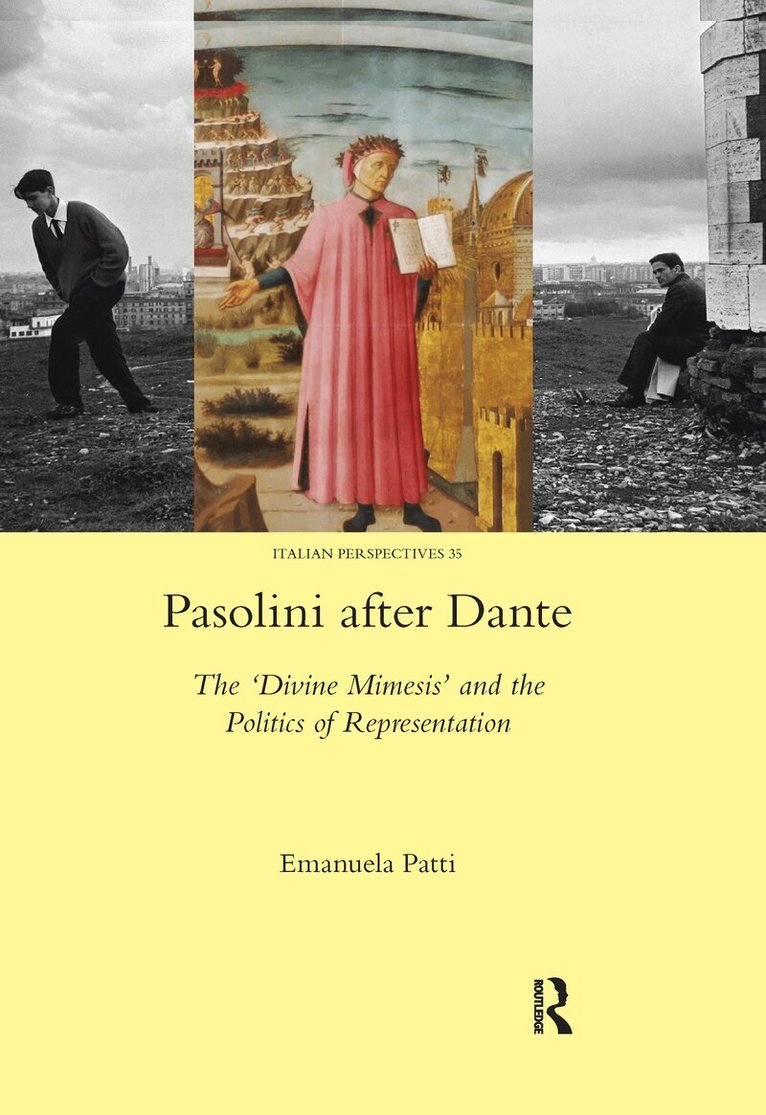
What role did Dante play in the work of Pier Paolo Pasolini (1922-1975)? His unfinished and fragmented imitation of the Comedia, La Divina Mimesis, is only one outward sign of what was a sustained dialogue with Dante on representation begun in the early 1950s. During this period, the philologists Gianfranco Contini (1912-1990) and Erich Auerbach (1892-1957) played a crucial role in Pasolini’s re-thinking of ‘represented reality’, suggesting Dante as the best literary, authorial and political model for a generation of postwar Italian writers. This emerged first as ‘Dantean realism’ in Pasolini’s prose and poetry, after Contini’s interpretation of Dante and of his plurilingualism, and then as ‘figural realism’ in his cinema, after Auerbach’s concepts of Dante’s figura and ‘mingling of styles’. Following the evolution of Pasolini’s mimetic ideal from these formative influences through to La Divina Mimesis, Emanuela Patti explores Pasolini’s politics of representation in relation to the ‘national-popular’, the ‘questione della lingua’ and the Italian post-war debates on neorealism, while also providing a new interpretation of some of his major literary and cinematic works.
1 144 kr
Kommande
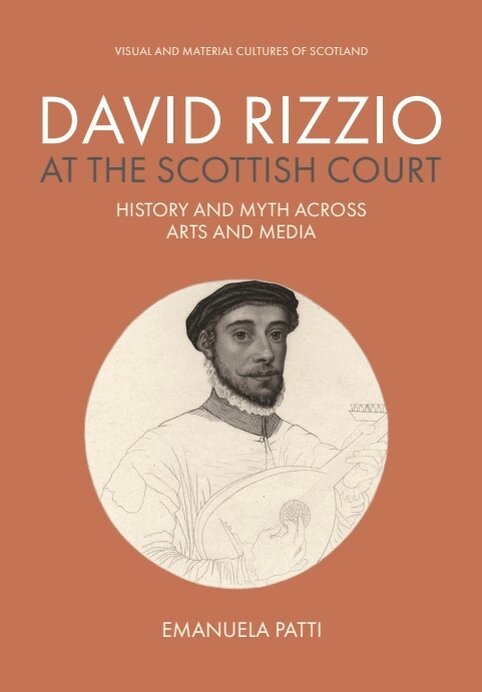
This book studies the multifaceted impact of David Rizzio (c. 1533-1566), the Italian musician and courtier whose murder at the Palace of Holyroodhouse reshaped the destiny of Mary, Queen of Scots. Remembered as a figure of scandal and romance, Rizzio has inspired fascination for over 450 years. This book traces his many reimaginings across Britain and continental Europe, from early diplomatic newsletters to various art forms including painting, literature and music. By following his story across Scotland, England, France, Italy, Germany and Spain, chapters in the book highlight the strikingly transnational reach of his legend. They show how Rizzio became a cultural icon and reassess his enduring significance in Scottish/British cultural memory and identity and their wider European contexts.
Del 39 - Italian Modernities
Opera aperta
Italian Electronic Literature from the 1960s to the Present
Häftad, Engelska, 2022
774 kr
Skickas inom 5-8 vardagar
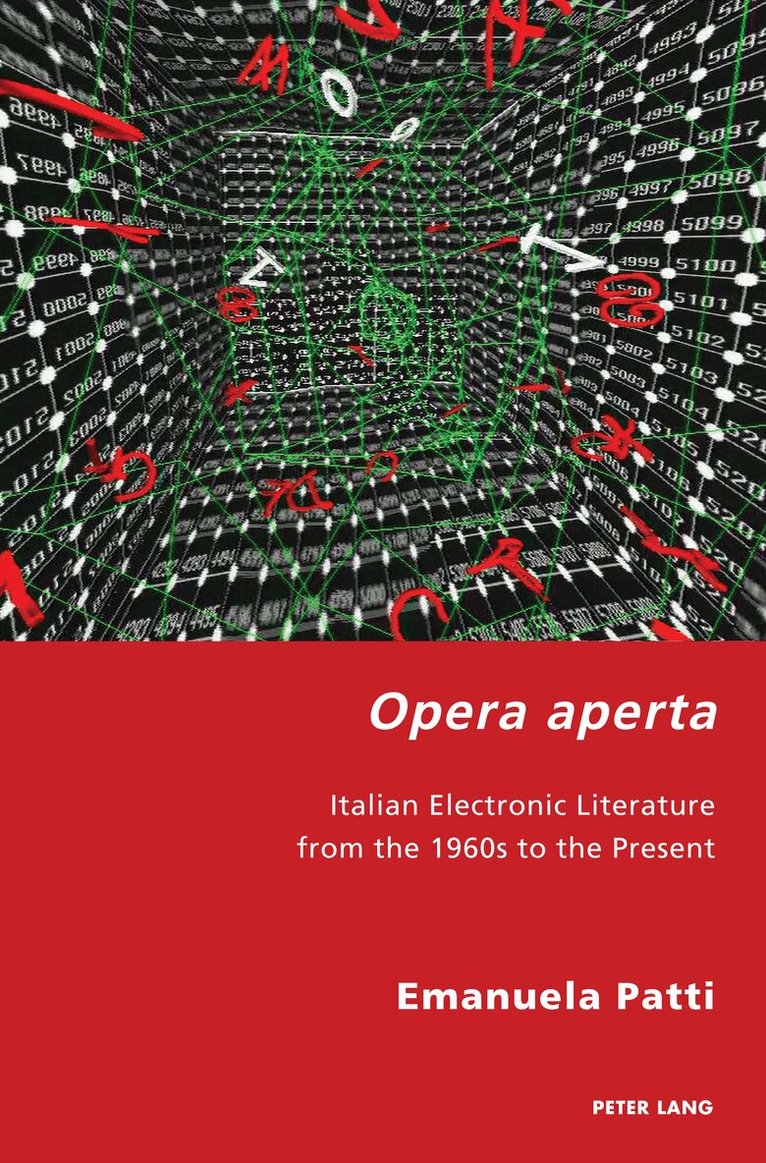
Runner-up in the 2023 N. Katherine Hayles Award for Criticism of Electronic Literature from the Electronic Literature Organization«At last, here is a book written by an Italian about the homeopathic but essential role that Italian artists, and among them, important writers, have played to introduce the digital transformation to Italians. Long before government or business, and least of all educators, took notice, artists, as was their wont for centuries, were the first to reveal the potential of the new technologies. Emanuela Patti not only pays them a long overdue tribute, but along the way revisits with care and engaging style the key features of that transformation. A wonderful read!» (Professor Derrick de Kerckhove, University of Toronto)«We were missing a systematic survey of e-literary arts in Italy. Emanuela Patti has filled that void. Indeed, her study is much more than a survey: it brilliantly connects semiotic theories of open textuality to the profound techno-cultural transformations of socio-political life from the 1960s to the present, from experimental writing to popular culture.» (Professor Massimo Riva, Brown University)In 1962, Umberto Eco published Opera aperta, setting the ground for a new wave of creative experimentation across the arts and media. The concept of «open work» – informed by systems theory, cybernetics, relativism, pragmatism and other influential disciplines of the time – was used by Eco to reconsider the work of art as a site for interactivity, collaboration and intermediality. Starting from this perspective, this book reconstructs the history of Italian electronic literature, looking at creative practices across literature, electronic and digital media from the early days of computers to the social media age. It examines how Italian writers, poets, literary critics and intellectuals have responded to each phase of the digital revolution, by enacting «poetics of openness» and «politics of intermediality». Case studies include Nanni Balestrini, Gianni Toti, Italo Calvino, Caterina Davinio, Wu Ming, Michela Murgia, Francesco Pecoraro, Roberto Saviano, Tommaso Pincio, Fabio Viola, Fabrizio Venerandi and Enrico Colombini. In some cases, literary experimentation with new technologies has taken a clear polemical stance towards mass media, globalisation, information society and late capitalism, in order to challenge and/or reconfigure artistic or social ontologies. In others, digital technologies have been used to enhance and extend the parameters and «languages» of literature.
2 029 kr
Skickas inom 10-15 vardagar
What role did Dante play in the work of Pier Paolo Pasolini (1922-1975)? His unfinished and fragmented imitation of the Comedia, La Divina Mimesis, is only one outward sign of what was a sustained dialogue with Dante on representation begun in the early 1950s. During this period, the philologists Gianfranco Contini (1912-1990) and Erich Auerbach (1892-1957) played a crucial role in Pasolini’s re-thinking of ‘represented reality’, suggesting Dante as the best literary, authorial and political model for a generation of postwar Italian writers. This emerged first as ‘Dantean realism’ in Pasolini’s prose and poetry, after Contini’s interpretation of Dante and of his plurilingualism, and then as ‘figural realism’ in his cinema, after Auerbach’s concepts of Dante’s figura and ‘mingling of styles’. Following the evolution of Pasolini’s mimetic ideal from these formative influences through to La Divina Mimesis, Emanuela Patti explores Pasolini’s politics of representation in relation to the ‘national-popular’, the ‘questione della lingua’ and the Italian post-war debates on neorealism, while also providing a new interpretation of some of his major literary and cinematic works.