Emanuele E Intagliata - Böcker
Visar alla böcker från författaren Emanuele E Intagliata. Handla med fri frakt och snabb leverans.
3 produkter
3 produkter
Economic Circularity in the Roman and Early Medieval Worlds
New Perspectives on Invisible Agents and Dynamics
Inbunden, Engelska, 2023
685 kr
Skickas
Economic circularity is the ability of a society to reduce waste by recycling, reusing, and repairing raw materials and finished products. This concept has gained momentum in academia, in part due to contemporary environmental concerns. Although the blurry conceptual boundaries of this term are open to a wide array of interpretations, the scholarly community generally perceives circular economy as a convenient umbrella definition that encompasses a vast array of regenerative and preservative processes. Despite the recent surge of interest, economic circularity has not been fully addressed as a macrophenomenon by historical and archaeological studies. The limitations of data and the relatively new formulation of targeted research questions mean that several processes and agents involved in ancient circular economies are still invisible to the eye of modern scholarship. Examples include forms of curation, maintenance, and repair, which must have had an influence on the economic systems of premodern societies but are rarely accounted for. Moreover, the people behind these processes, such as collectors and scavengers, are rarely investigated and poorly understood. Even better-studied mechanisms, like reuse and recycling, are not explored to their full potential within the broader picture of ancient urban economies. This volume stems from a conference held at Moesgaard Museum supported by the Carlsberg Foundation and the Centre for Urban Networks Evolutions (UrbNet) at Aarhus University. To enhance our understanding of circular economic processes, the contributions in this volume expand the framework of the discussion by exploring circular economy over the longue durée and by integrating an interdisciplinary perspective. Furthermore, the volume gives prominence to classes of material, processes, agents, and methodologies generally overlooked or ignored in modern scholarship.
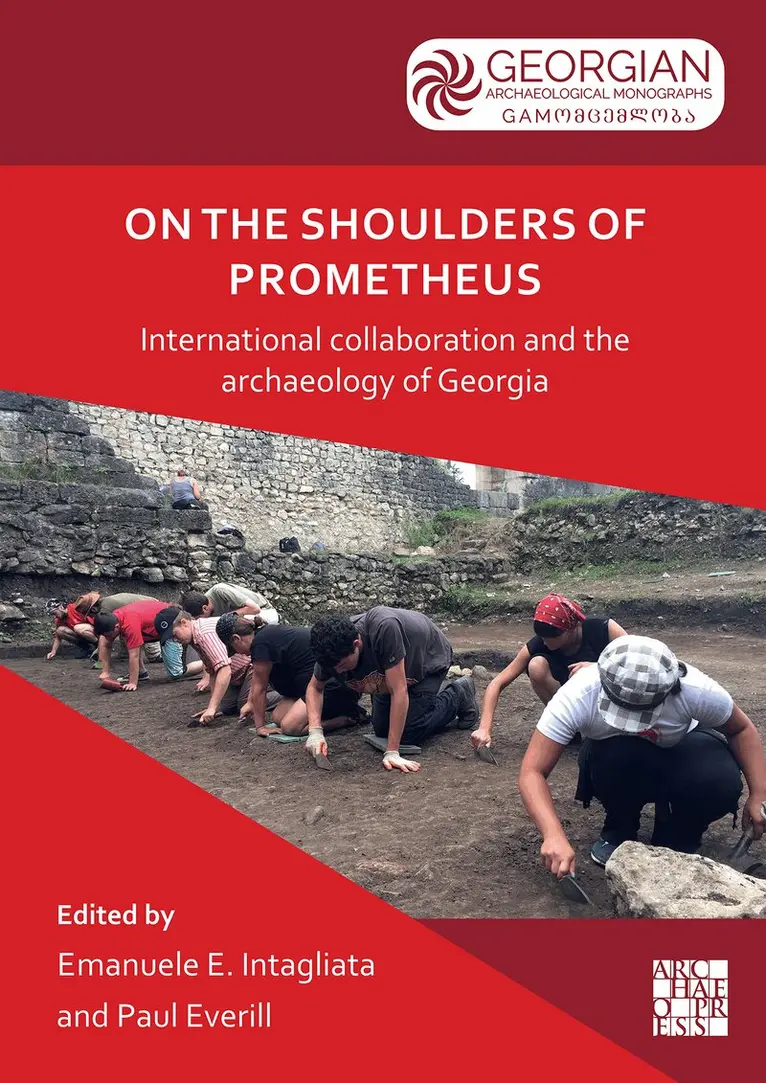
On the Shoulders of Prometheus: International Collaboration and the Archaeology of Georgia
International Collaboration and the Archaeology of Georgia
Häftad, Engelska, 2023
531 kr
Skickas
Despite some high-profile exceptions, the archaeology of the South Caucasus (present-day Georgia, Armenia, and Azerbaijan) remains marginalised and often overlooked – not receiving the wider exposure it deserves. This situation is partly a consequence of decades of occupation and academic isolation, and partly because of an unfortunate (and incorrect) perception that the South Caucasus is simply peripheral to the archaeologies of Europe and Asia.The chapters collected in this volume demonstrate the diversity and vibrancy of international research collaboration in the archaeology of Georgia, while all underline the enormous potential of the country’s archaeological resource. The importance of seeing the South Caucasus in its unique context, rather than as peripheral to Europe or Asia, is evident throughout. The increasing application of scientific techniques to archaeological research and landscape archaeology features prominently in many of these chapters. However, the key element is the multidisciplinary nature of much of the work, which allows specialists drawn from a wide range of backgrounds and scholarly traditions to contribute to the better understanding and appreciation of the Georgian historic environment.
833 kr
Skickas inom 5-8 vardagar
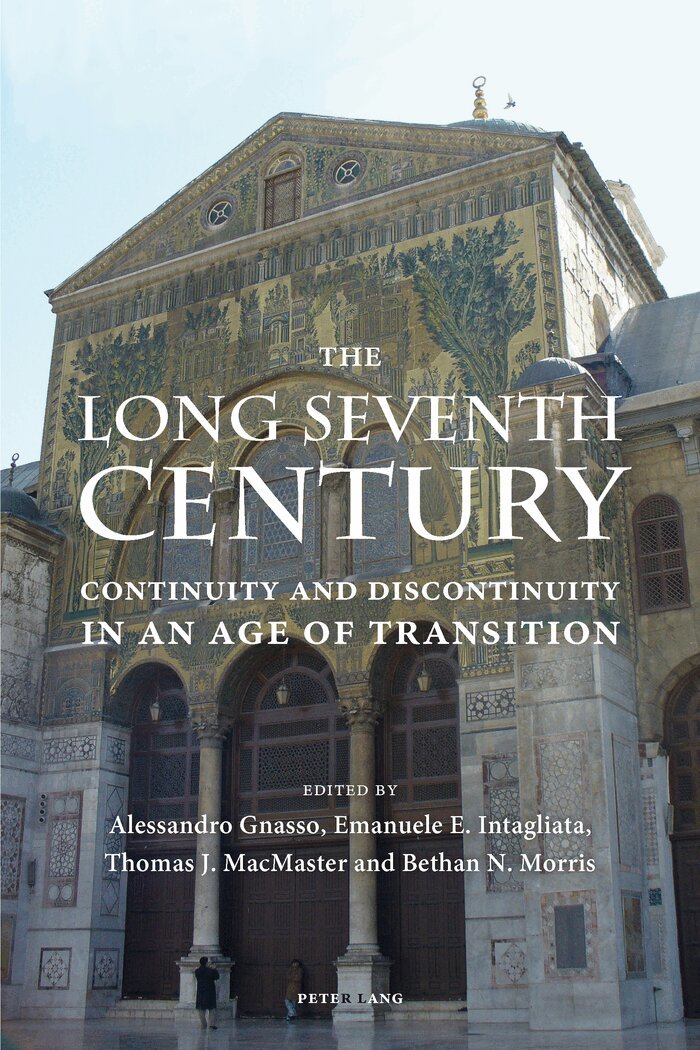
This volume represents a selection of papers presented at the 2013 Edinburgh Seventh Century Colloquium, showcasing the latest scholarship from a rising generation of academics. The volume traverses the globe from Iran to the Atlantic and from Sweden to the Sahara and ranges from the establishment of the early Islamic state to the beginnings of English Christianity. Topics include the transmission of high culture across time, settlement patterns in a rapidly changing world and the formation of new and emerging identities. The essays also bring into dialogue a wide range of disciplinary and methodological perspectives, including archaeology, literature, history, art, papyrology and economics. Together, they generate valuable new insights into the still uncharted territories of the long seventh century.