Emilia M. Bruck – författare
Visar alla böcker från författaren Emilia M. Bruck. Handla med fri frakt och snabb leverans.
7 produkter
7 produkter
Inbunden, Tyska, 2020
545 kr
Skickas inom 10-15 vardagar
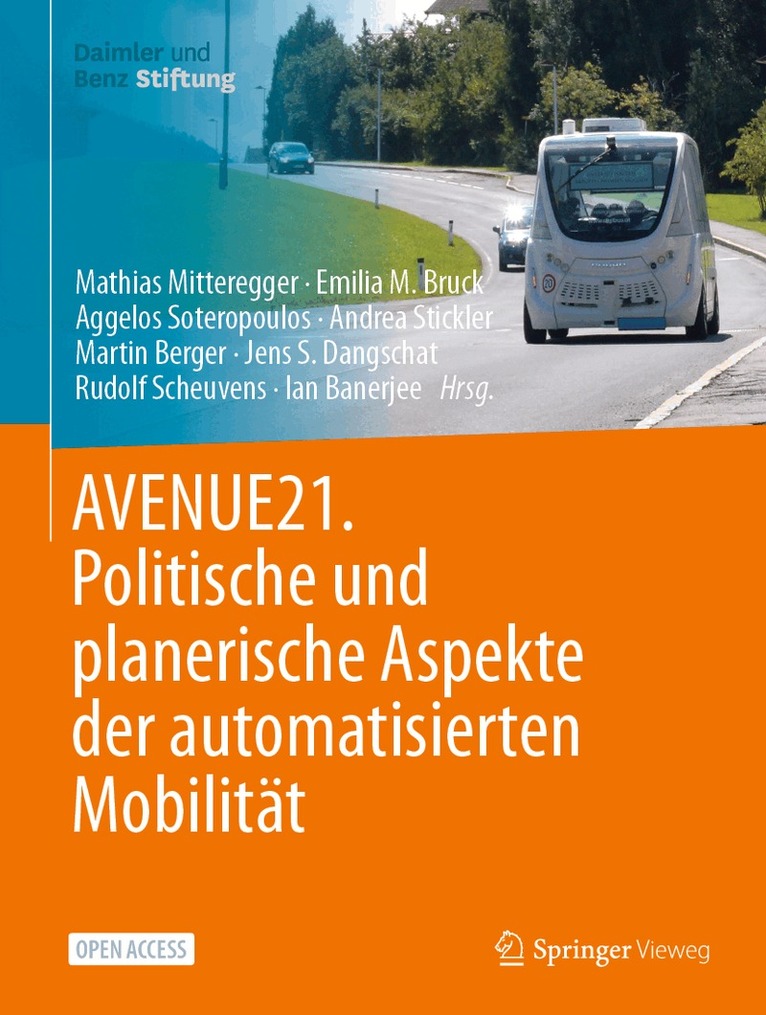
Gegenstand dieser Open Access Publikation sind die Auswirkungen automatisierter und vernetzter Fahrzeuge auf die Europäische Stadt sowie die Voraussetzungen, unter denen diese Technologie einen positiven Beitrag zur Stadtentwicklung leisten kann. Dabei vertreten die Autorinnen und Autoren zwei Thesen, die im wissenschaftlichen Diskurs bislang wenig Beachtung fanden: Automatisierte und vernetzte Fahrzeuge werden sich für lange Zeit nicht in allen Teilräumen der Stadt durchsetzen. Dies hat zur Folge, dass bislang angenommene Wirkungen - von der Verkehrssicherheit bis zur Verkehrsleistung sowie räumliche Effekte - neu bewertet werden müssen.Um einen positiven Beitrag dieser Technologie zur Mobilität der Zukunft sicherzustellen, müssen verkehrs- und siedlungspolitische Regulationen weiterentwickelt werden. Etablierte territoriale, institutionelle und organisatorische Grenzen sind zeitnah zu hinterfragen. Trotz oder wegen der bestehenden großen Unsicherheiten befinden wir uns am Beginn einer Phase des Gestaltens - in der Technologieentwicklung, aber eben auch in der Politik, Stadtplanung, Verwaltung und der Zivilgesellschaft. Die Autorinnen und AutorenEin interdisziplinäres Team an der Fakultät für Architektur und Raumplanung der TU Wien hat die vorliegenden Forschungsergebnisse gemeinsam erarbeitet. Das Projekt wurde als Ladenburger Kolleg von der Daimler und Benz Stiftung gefördert.
Inbunden, Tyska, 2021
545 kr
Skickas inom 10-15 vardagar
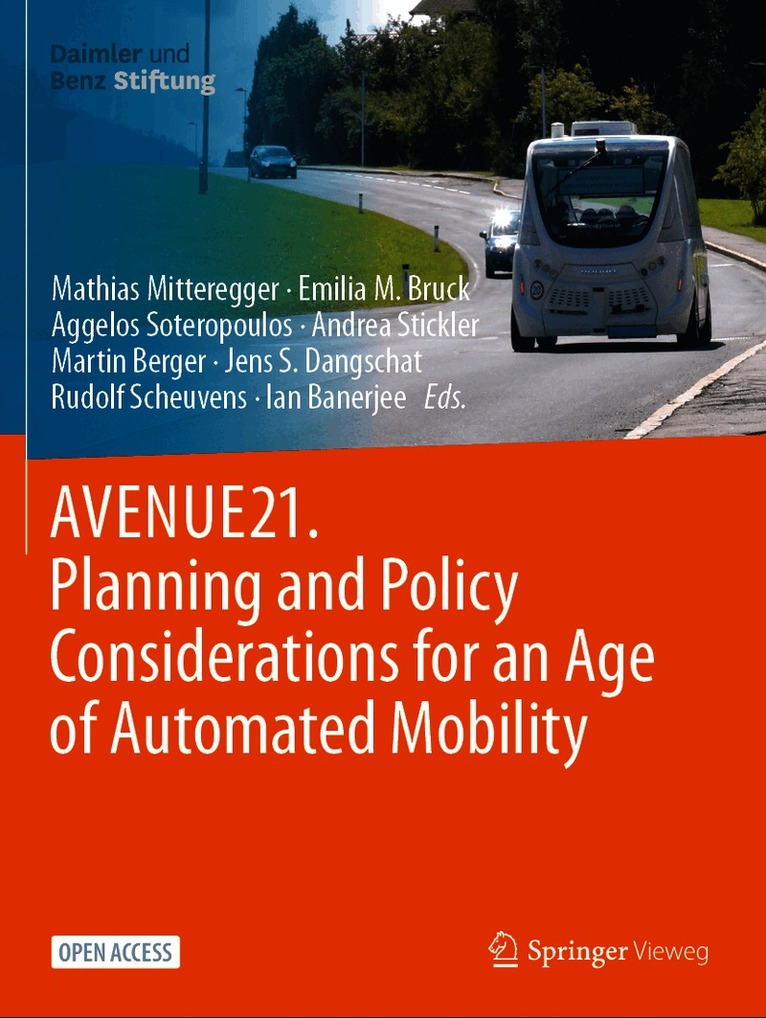
Gegenstand dieser Open Access Publikation sind die Auswirkungen automatisierter und vernetzter Fahrzeuge auf die Europäische Stadt sowie die Voraussetzungen, unter denen diese Technologie einen positiven Beitrag zur Stadtentwicklung leisten kann. Dabei vertreten die Autorinnen und Autoren zwei Thesen, die im wissenschaftlichen Diskurs bislang wenig Beachtung fanden:Automatisierte und vernetzte Fahrzeuge werden sich für lange Zeit nicht in allen Teilräumen der Stadt durchsetzen. Dies hat zur Folge, dass bislang angenommene Wirkungen - von der Verkehrssicherheit bis zur Verkehrsleistung sowie räumliche Effekte - neu bewertet werden müssen.Um einen positiven Beitrag dieser Technologie zur Mobilität der Zukunft sicherzustellen, müssen verkehrs- und siedlungspolitische Regulationen weiterentwickelt werden. Etablierte territoriale, institutionelle und organisatorische Grenzen sind zeitnah zu hinterfragen.Trotz oder wegen der bestehenden großen Unsicherheiten befinden wir uns am Beginn einer Phase des Gestaltens - in der Technologieentwicklung, aber eben auch in der Politik, Stadtplanung, Verwaltung und der Zivilgesellschaft.
Inbunden, Engelska, 2021
545 kr
Skickas inom 10-15 vardagar
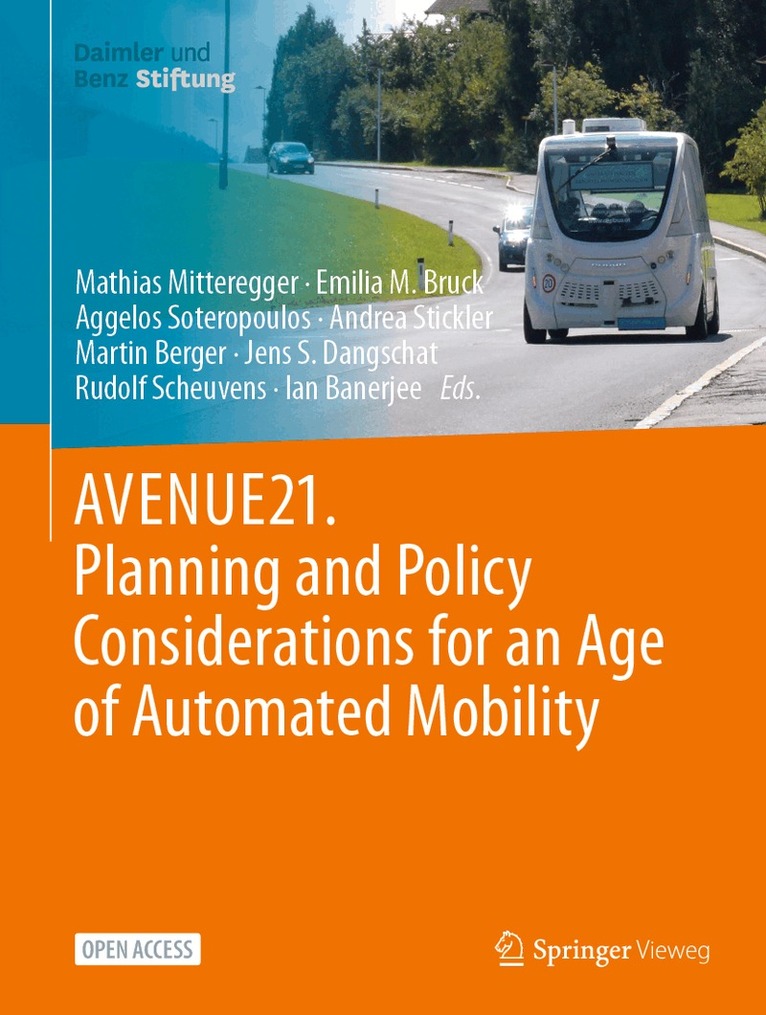
This open access publication examines the impact of connected and automated vehicles on the European city and the conditions that can enable this technology to make a positive contribution to urban development. The authors argue for two theses that have thus far received little attention in scientific discourse: as connected and automated vehicles will not be ready for use in all parts of the city for a long time, previously assumed effects – from traffic safety to traffic performance as well as spatial effects – will need to be re-evaluated. To ensure this technology has a positive impact on the mobility of the future, transport and settlement policy regulations must be adapted and further developed. Established territorial, institutional and organizational boundaries must be investigated and challenged quickly. Despite – or, indeed, because of – the many uncertainties, we find ourselves at the beginning of a new design phase, not only in terms of technology development, but also regarding politics, urban planning, administration and civil society.
Häftad, Engelska, 2021
437 kr
Skickas inom 10-15 vardagar
This open access publication examines the impact of connected and automated vehicles on the European city and the conditions that can enable this technology to make a positive contribution to urban development. The authors argue for two theses that have thus far received little attention in scientific discourse: as connected and automated vehicles will not be ready for use in all parts of the city for a long time, previously assumed effects – from traffic safety to traffic performance as well as spatial effects – will need to be re-evaluated. To ensure this technology has a positive impact on the mobility of the future, transport and settlement policy regulations must be adapted and further developed. Established territorial, institutional and organizational boundaries must be investigated and challenged quickly. Despite – or, indeed, because of – the many uncertainties, we find ourselves at the beginning of a new design phase, not only in terms of technology development, but also regarding politics, urban planning, administration and civil society.
Inbunden, Engelska, 2023
545 kr
Skickas inom 10-15 vardagar
The subject of this open-access publication is the impact of connected and automated vehicles on the European city and the conditions under which this technology can make a positive contribution to urban development. The authors put forward two theses that have received little attention in the scientific discourse so far: Connected and automated vehicles will not become fully established in all sub-areas of the city for a long time. As a result, previously assumed effects - from traffic safety to traffic performance as well as spatial effects - will have to be reevaluated.To ensure a positive contribution of this technology to the mobility of the future, transport and settlement policy regulations must be further developed. Established territorial, institutional and organizational boundaries need to be challenged in a timely manner.Despite or because of the existing great uncertainties, we are at the beginning of a phase of yet shaping the possible future - in technology development, but also in politics, urban planning, administration and civil society.Description of the chapters:1. Connected and automated driving: The long level 4Mathias Mitteregger reflects on the road ahead for automated driving. What pathways of technological development induce which kind of spatial effects and planning needs?2. Connected and automated driving: Consideration of the local, spatial context and spatial differentiationEmilia M. Bruck and Aggelos Soteropoulos reflect on the importance of the local context when classifying and estimating the effects of different forms of automated mobility.3. Connected and automated driving in the context of a sustainable transport and mobility transformationAndrea Stickler, Jens S. Dangschat and Ian Banerjee integrate possible potentials of automated mobility in the contextof a transformed, sustainable transport system.PART I: Mobility and transport 4. Self-driving turnaround or automotive continuity? Reflections on technology, innovation and social changeKatharina Manderscheid reflects on how differing visions of an automated future can be understood with regard to divergent interests in technological development. 5. Automated drivability and streetscape compatibility in the urban-rural continuum using the example of Greater ViennaAggelos Soteropoulos analyses how different street spaces align with technological requirements of automated mobility, creating a suitability framework for road spaces in the Greater Vienna region. 6. Automation, public transport and Mobility as a Service: Experience from tests with automated shuttle buses The authors show what types of automated public transport might be used in the future and what canbe learned from testing automated shuttle buses in the past. 7. Delivery robots as a solution for the last mile in the city?Bert Leerkamp, Aggelos Soteropoulos and Martin Berger describe how automated delivery robots could be contextualized in terms of solving last-mile problems and discuss what implications might lie ahead for urban planning. PART II: Public space 8. Control and design of spatial mobility interfacesThe authors identify the possible implications of automated mobility for mobility interfaces and explore how public spaces could be transformed. 9. Transformations of European public spaces with AVsRobert Martin, Emilia M. Bruck and Aggelos Soteropoulos use the example of Copenhagen to show how public spaces could be transformed in an age of automated urban mobility and benefit from lower car dependency.10. At the end of the road: TotalsafetyMathias Mitteregger discusses how the desire for road safety affects public spaces and how automated mobility influences this discourse. 11. Integration of cycling into future urban transport structures with connected and automated vehiclesLooking at the future of mobility, Lutz Eichholz and Detlef Kurth show that the bike actually offers solutions to many of our current problems and that planning should not forget to integrate cycling into future urban transport structures and systems.12. Against the driverless citySteven Fleming argues for a radical shift in cities towards a highly improved cycling infrastructure eradicating the need for automated mobility. Part III: Spatial development13. Strategic spatial planning, “smart shrinking” and the deployment of CAVs in rural JapanIan Banerjee and Tomoyuki Furutani show where automated mobility could help tackle pressing issues in rural Japan. 14. Integrated strategic planning approaches to automated transport in the context of the mobility transformationThe authors show how new forms of automated mobility could be integrated into mobility systems in diverse spatial structures in the city region of Vienna with the overriding goal of the mobility transformation.15. Opportunities from past mistakes: Land potential en route to an automated mobility systemLooking at the mistakes made in building a car-centric environment in the past, Mathias Mitteregger and Aggelos Soteropoulos identify future areas of urban transformation as a result of a lower demand for car-centric infrastructures and businesses. Part IV: Governance16. New governance concepts for digitalization: Challenges and potentialsAlexander Hamedinger contextualizes the manifold paths towards an automated future with regard to governance and describes how governance concepts mightneed to adapt in the future.17. How are automated vehicles driving spatial development in Switzerland?Fabienne Perret and Christof Abegg show how automated vehicles are influencing spatial development in Switzerland, focusing on three different scenarios on the road ahead.18. Lessons from local transport transition projects for connected and automated transportAndrea Stickler looks at local projects aiming at a transformation of mobility practices and reflects on implications for automated transport.19. Connected and automated transport in the socio-technical transitionJens S. Dangschat looks at societal transformations in the past and contextualizes automated mobility in terms of a possible socio-technical transition ahead. 20. Data-driven urbanism, digital platforms and the planning of MaaS in times of deep uncertainty: What does it mean for CAVs? Ian Banerjee, Peraphan Jittrapirom and Jens S. Dangschat show how continuous digitalization in cities might affect possible uses and implementations of CAVs and their accompanying systems.
648 kr
Skickas inom 5-8 vardagar
Häftad, Engelska, 2023
437 kr
Skickas inom 10-15 vardagar
The subject of this open-access publication is the impact of connected and automated vehicles on the European city and the conditions under which this technology can make a positive contribution to urban development. The authors put forward two theses that have received little attention in the scientific discourse so far: Connected and automated vehicles will not become fully established in all sub-areas of the city for a long time. As a result, previously assumed effects - from traffic safety to traffic performance as well as spatial effects - will have to be reevaluated.To ensure a positive contribution of this technology to the mobility of the future, transport and settlement policy regulations must be further developed. Established territorial, institutional and organizational boundaries need to be challenged in a timely manner.Despite or because of the existing great uncertainties, we are at the beginning of a phase of yet shaping the possible future - in technology development, but also in politics, urban planning, administration and civil society.Description of the chapters:1. Connected and automated driving: The long level 4Mathias Mitteregger reflects on the road ahead for automated driving. What pathways of technological development induce which kind of spatial effects and planning needs?2. Connected and automated driving: Consideration of the local, spatial context and spatial differentiationEmilia M. Bruck and Aggelos Soteropoulos reflect on the importance of the local context when classifying and estimating the effects of different forms of automated mobility.3. Connected and automated driving in the context of a sustainable transport and mobility transformationAndrea Stickler, Jens S. Dangschat and Ian Banerjee integrate possible potentials of automated mobility in the contextof a transformed, sustainable transport system.PART I: Mobility and transport 4. Self-driving turnaround or automotive continuity? Reflections on technology, innovation and social changeKatharina Manderscheid reflects on how differing visions of an automated future can be understood with regard to divergent interests in technological development. 5. Automated drivability and streetscape compatibility in the urban-rural continuum using the example of Greater ViennaAggelos Soteropoulos analyses how different street spaces align with technological requirements of automated mobility, creating a suitability framework for road spaces in the Greater Vienna region. 6. Automation, public transport and Mobility as a Service: Experience from tests with automated shuttle buses The authors show what types of automated public transport might be used in the future and what canbe learned from testing automated shuttle buses in the past. 7. Delivery robots as a solution for the last mile in the city?Bert Leerkamp, Aggelos Soteropoulos and Martin Berger describe how automated delivery robots could be contextualized in terms of solving last-mile problems and discuss what implications might lie ahead for urban planning. PART II: Public space 8. Control and design of spatial mobility interfacesThe authors identify the possible implications of automated mobility for mobility interfaces and explore how public spaces could be transformed. 9. Transformations of European public spaces with AVsRobert Martin, Emilia M. Bruck and Aggelos Soteropoulos use the example of Copenhagen to show how public spaces could be transformed in an age of automated urban mobility and benefit from lower car dependency.10. At the end of the road: TotalsafetyMathias Mitteregger discusses how the desire for road safety affects public spaces and how automated mobility influences this discourse. 11. Integration of cycling into future urban transport structures with connected and automated vehiclesLooking at the future of mobility, Lutz Eichholz and Detlef Kurth show that the bike actually offers solutions to many of our current problems and that planning should not forget to integrate cycling into future urban transport structures and systems.12. Against the driverless citySteven Fleming argues for a radical shift in cities towards a highly improved cycling infrastructure eradicating the need for automated mobility. Part III: Spatial development13. Strategic spatial planning, “smart shrinking” and the deployment of CAVs in rural JapanIan Banerjee and Tomoyuki Furutani show where automated mobility could help tackle pressing issues in rural Japan. 14. Integrated strategic planning approaches to automated transport in the context of the mobility transformationThe authors show how new forms of automated mobility could be integrated into mobility systems in diverse spatial structures in the city region of Vienna with the overriding goal of the mobility transformation.15. Opportunities from past mistakes: Land potential en route to an automated mobility systemLooking at the mistakes made in building a car-centric environment in the past, Mathias Mitteregger and Aggelos Soteropoulos identify future areas of urban transformation as a result of a lower demand for car-centric infrastructures and businesses. Part IV: Governance16. New governance concepts for digitalization: Challenges and potentialsAlexander Hamedinger contextualizes the manifold paths towards an automated future with regard to governance and describes how governance concepts mightneed to adapt in the future.17. How are automated vehicles driving spatial development in Switzerland?Fabienne Perret and Christof Abegg show how automated vehicles are influencing spatial development in Switzerland, focusing on three different scenarios on the road ahead.18. Lessons from local transport transition projects for connected and automated transportAndrea Stickler looks at local projects aiming at a transformation of mobility practices and reflects on implications for automated transport.19. Connected and automated transport in the socio-technical transitionJens S. Dangschat looks at societal transformations in the past and contextualizes automated mobility in terms of a possible socio-technical transition ahead. 20. Data-driven urbanism, digital platforms and the planning of MaaS in times of deep uncertainty: What does it mean for CAVs? Ian Banerjee, Peraphan Jittrapirom and Jens S. Dangschat show how continuous digitalization in cities might affect possible uses and implementations of CAVs and their accompanying systems.