Emily Booth – författare
Visar alla böcker från författaren Emily Booth. Handla med fri frakt och snabb leverans.
4 produkter
4 produkter
Inbunden, Engelska, 2026
1 388 kr
Skickas inom 5-8 vardagar
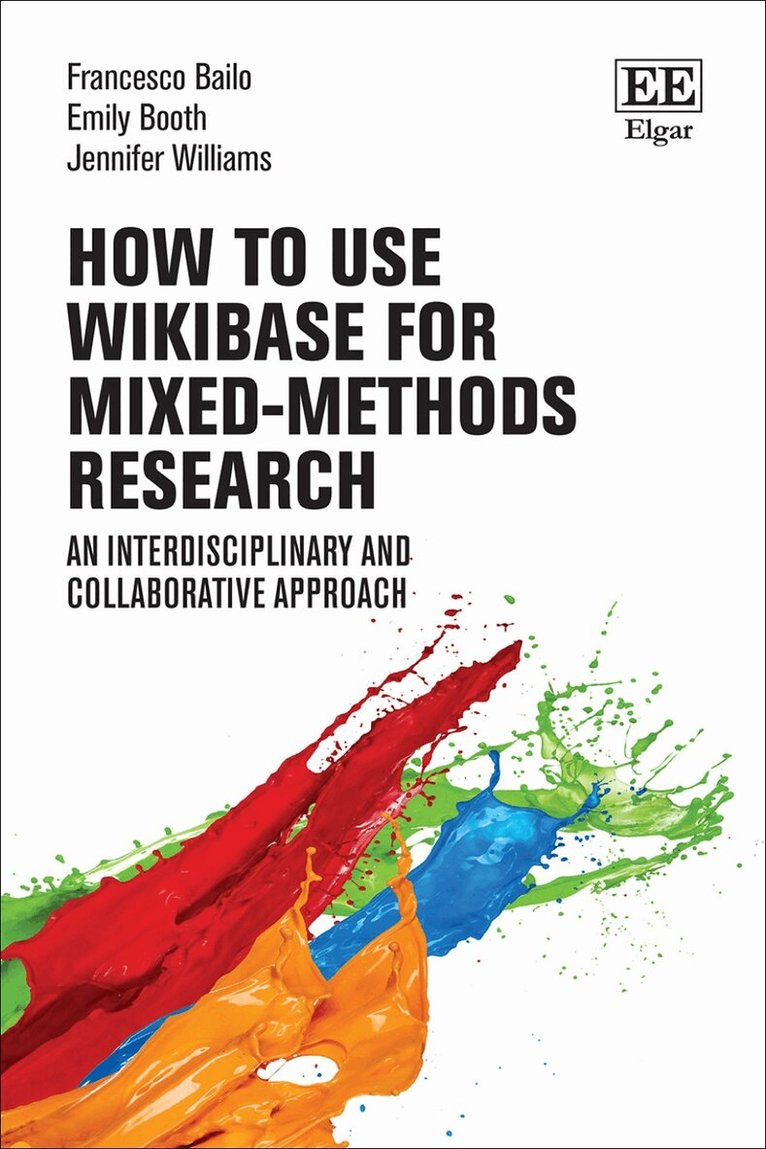
This applicable book outlines instructions on how to use Wikibase, a free collaborative platform that enables research teams to manage complex, multimodal data in one shared workspace. Francesco Bailo, Emily Booth and Jennifer Williams provide a comprehensive toolkit explaining this open-source infrastructure, providing practical guidance for researchers at all technical levels, from installation to advanced workflows.Drawing on real-world case studies investigating online misinformation and political communication, the authors demonstrate how Wikibase bridges the qualitative-quantitative divide, allowing teams to store unstructured content whilst building structured relationships through their data. Accessible to diverse skill sets with guidance ranging from conceptual frameworks for qualitative researchers to technical implementation for computational specialists, it fosters genuine interdisciplinary integration. Solutions to interdisciplinary collaboration challenges are presented, including shared conceptual frameworks (ontologies), common terminology development and workflows that accommodate diverse methodological expertise.How to use Wikibase for Mixed-Methods Research is a crucial resource for scholars and students adopting mixed methods across multiple disciplines, particularly those in the social sciences, digital humanities and computational fields. Researchers working on collaborative projects in education, health sciences, public policy and digital communication studies will benefit from this book’s guidance on maximising the capabilities and resources of Wikibase.
Inbunden, Engelska, 2005
1 626 kr
Skickas inom 10-15 vardagar
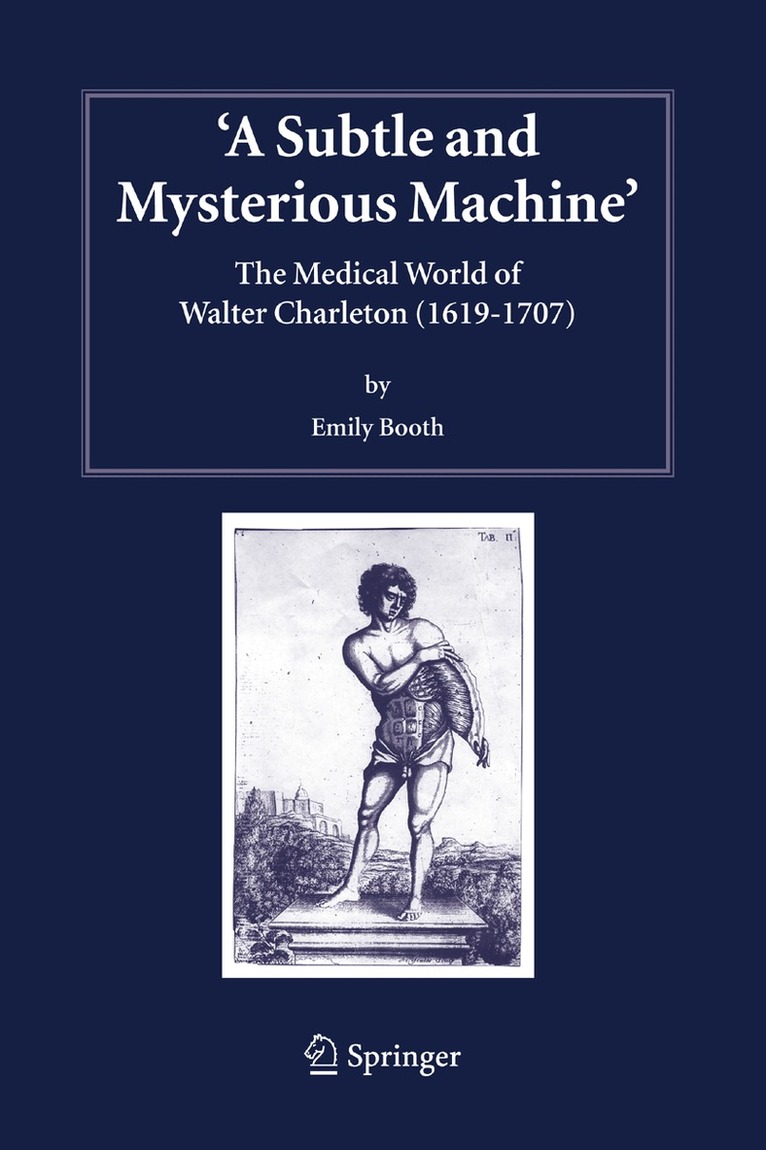
Walter Charleton is an intriguing character—he flits through the diaries of Pepys and Evelyn, the correspondence of Margaret Cavendish, and his texts appear in the libraries of better-known contemporaries. We catch sight of him 1 conversing with Pepys about teeth, arguing with Inigo Jones about the origin of 2 Stonehenge, being lampooned in contemporary satire, stealing from the Royal Society, and embarrassing himself in anatomical procedures. While extremely active in a broad range of Royal Society investigations, his main discovery there seems to have been that tadpoles turned into frogs. As a practising physician of limited means, Walter Charleton was reliant for his living upon patrons and his medical practice—in addition he had the m- fortune to live in an era of dramatic political change, and consequently of unpredictable fortune. His achievements were known on the Continent. Despite his embarrassments in Royal Society anatomical investigation he was offered the prestigious chair of anatomy at the University of Padua. He turned down this extraordinary opportunity, only to die destitute in his native country a couple of decades later. The lugubrious doctor is without doubt an enigma. Charleton’s Anglicanism and staunch Royalism were unwavering throughout his career. The latter caused difficulties for him when he attempted to gain membership of the College of Physicians during the interregnum. His religious views were a source of concern when he was offered the position at Padua.
E-bok
PDF, Engelska, 20061 995 kr
Läs direkt efter köp
Walter Charleton is an intriguing character—he flits through the diaries of Pepys and Evelyn, the correspondence of Margaret Cavendish, and his texts appear in the libraries of better-known contemporaries. We catch sight of him 1 conversing with Pepys about teeth, arguing with Inigo Jones about the origin of 2 Stonehenge, being lampooned in contemporary satire, stealing from the Royal Society, and embarrassing himself in anatomical procedures. While extremely active in a broad range of Royal Society investigations, his main discovery there seems to have been that tadpoles turned into frogs. As a practising physician of limited means, Walter Charleton was reliant for his living upon patrons and his medical practice—in addition he had the m- fortune to live in an era of dramatic political change, and consequently of unpredictable fortune. His achievements were known on the Continent. Despite his embarrassments in Royal Society anatomical investigation he was offered the prestigious chair of anatomy at the University of Padua. He turned down this extraordinary opportunity, only to die destitute in his native country a couple of decades later. The lugubrious doctor is without doubt an enigma. Charleton’s Anglicanism and staunch Royalism were unwavering throughout his career. The latter caused difficulties for him when he attempted to gain membership of the College of Physicians during the interregnum. His religious views were a source of concern when he was offered the position at Padua.
Häftad, Engelska, 2010
1 633 kr
Skickas inom 10-15 vardagar
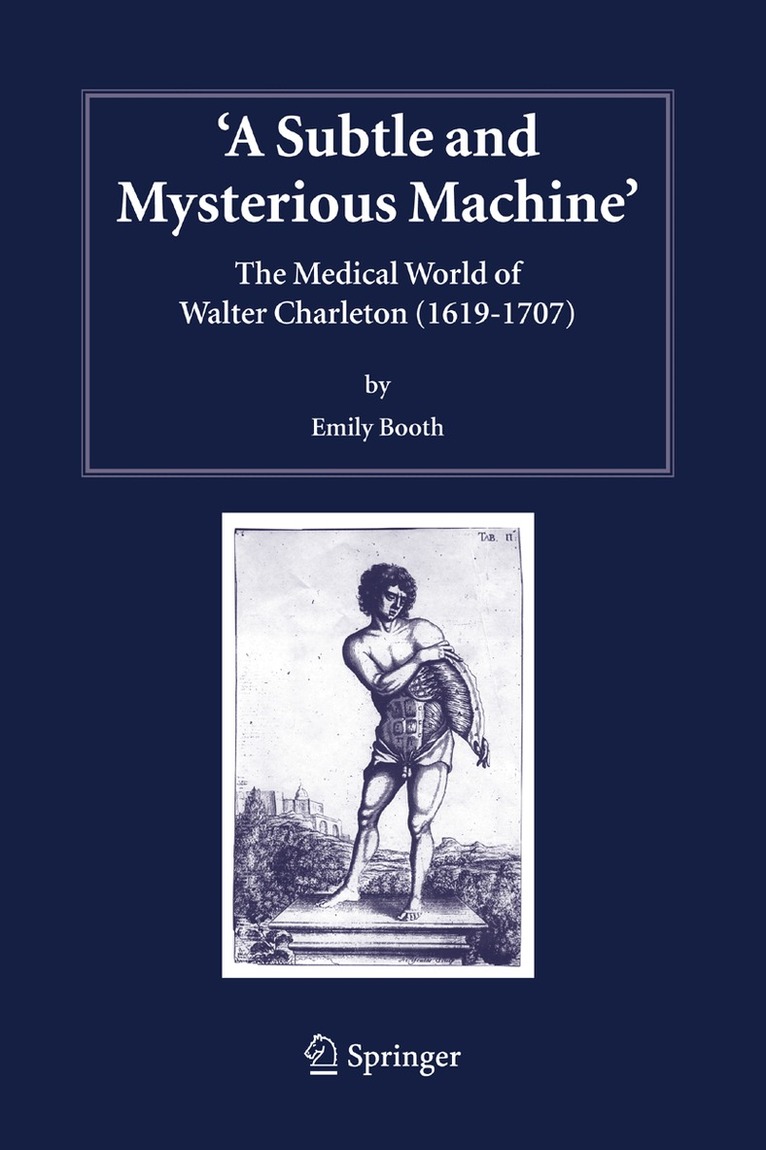
Walter Charleton is an intriguing character—he flits through the diaries of Pepys and Evelyn, the correspondence of Margaret Cavendish, and his texts appear in the libraries of better-known contemporaries. We catch sight of him 1 conversing with Pepys about teeth, arguing with Inigo Jones about the origin of 2 Stonehenge, being lampooned in contemporary satire, stealing from the Royal Society, and embarrassing himself in anatomical procedures. While extremely active in a broad range of Royal Society investigations, his main discovery there seems to have been that tadpoles turned into frogs. As a practising physician of limited means, Walter Charleton was reliant for his living upon patrons and his medical practice—in addition he had the m- fortune to live in an era of dramatic political change, and consequently of unpredictable fortune. His achievements were known on the Continent. Despite his embarrassments in Royal Society anatomical investigation he was offered the prestigious chair of anatomy at the University of Padua. He turned down this extraordinary opportunity, only to die destitute in his native country a couple of decades later. The lugubrious doctor is without doubt an enigma. Charleton’s Anglicanism and staunch Royalism were unwavering throughout his career. The latter caused difficulties for him when he attempted to gain membership of the College of Physicians during the interregnum. His religious views were a source of concern when he was offered the position at Padua.