
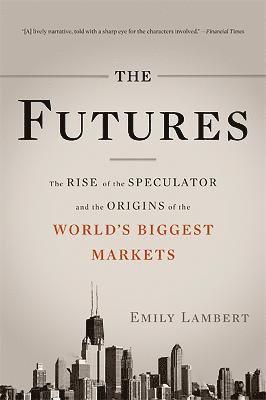
In The Futures , Forbes magazine senior writer Emily Lambert tells the rich and dramatic history of the Chicago Mercantile Exchange and Chicago Board of Trade, the original futures market. Commodities exchanges have become some of the largest financial markets in our global economic system, yet the exchanges themselves and the speculators who run them remain largely misunderstood, as does their chief instrument: the futures contract. Lambert describes the emergence of the futures business as a kind of meeting place for gamblers and farmers that subsequently transformed into a sophisticated electronic market, one where contracts are traded at lightning-fast speeds. When Wall Street adopted the futures contract without the rules and close-knit social bonds that had made trading it in Chicago work so well, however, the effects were disastrous. But, as Lambert argues, the traditional futures market,with its written and cultural limits,can serve as a useful example of how markets ought to work, thereby becoming a tonic for our current financial ills.

Nina's boundless energy and limitless imagination must come to a pause in this Shabbat book for modern families.Meet Nina: She’s energetic, bright, and full of creativity. Her exuberance can not be contained. A race car driver on Monday, a pilot on Tuesday, a construction worker on Wednesday, Nina does not stop moving or creating worlds around her. Nina’s imagination is so busy that she sometimes doesn’t even hear her parents. That all changes on Shabbat when Nina enjoys quieter activities like long walks, naps, and simple conversations. Resting on Shabbat helps her connect with her family and recharge for a new week of creative fun."Onomatopoeia, enticing visuals, and valuable backmatter . . . combine for a tale that will have young listeners happily driving and flying . . . and maybe even resting by story’s end." —Kirkus Reviews"Thoughtful . . . Quirky illustrations blend a child's imagination with reality." —Foreword Reviews
In The Futures , Forbes magazine senior writer Emily Lambert tells the rich and dramatic history of the Chicago Mercantile Exchange and Chicago Board of Trade, the original futures market. Commodities exchanges have become some of the largest financial markets in our global economic system, yet the exchanges themselves and the speculators who run them remain largely misunderstood, as does their chief instrument: the futures contract. Lambert describes the emergence of the futures business as a kind of meeting place for gamblers and farmers that subsequently transformed into a sophisticated electronic market, one where contracts are traded at lightning-fast speeds. When Wall Street adopted the futures contract without the rules and close-knit social bonds that had made trading it in Chicago work so well, however, the effects were disastrous. But, as Lambert argues, the traditional futures market,with its written and cultural limits,can serve as a useful example of how markets ought to work, thereby becoming a tonic for our current financial ills.
Nina's boundless energy and limitless imagination must come to a pause in this Shabbat book for modern families.Meet Nina: She’s energetic, bright, and full of creativity. Her exuberance can not be contained. A race car driver on Monday, a pilot on Tuesday, a construction worker on Wednesday, Nina does not stop moving or creating worlds around her. Nina’s imagination is so busy that she sometimes doesn’t even hear her parents. That all changes on Shabbat when Nina enjoys quieter activities like long walks, naps, and simple conversations. Resting on Shabbat helps her connect with her family and recharge for a new week of creative fun."Onomatopoeia, enticing visuals, and valuable backmatter . . . combine for a tale that will have young listeners happily driving and flying . . . and maybe even resting by story’s end." —Kirkus Reviews"Thoughtful . . . Quirky illustrations blend a child's imagination with reality." —Foreword Reviews