Emily Neumeier - Böcker
Visar alla böcker från författaren Emily Neumeier. Handla med fri frakt och snabb leverans.
3 produkter
3 produkter
Del 15 - Buildings, Landscapes, and Societies
Architectural Revolution on the Ottoman Frontier
Greece and Albania in the Age of Ali Pasha
Inbunden, Engelska, 2025
1 254 kr
Skickas inom 7-10 vardagar
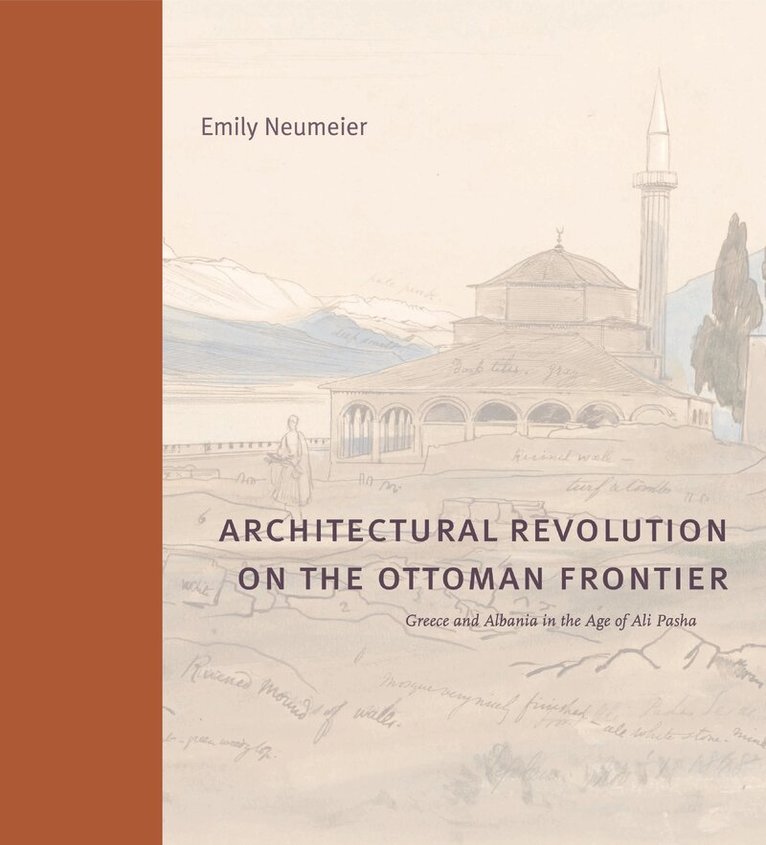
In the early nineteenth century, the most consequential developments in Ottoman architecture were taking place not in Istanbul but in the farthest reaches of imperial territory. Emily Neumeier investigates this wider phenomenon through a consideration of the architecture of Ali Pasha of Ioannina, one of the most prolific patrons in the history of the Ottoman Empire, who undertook a building program so ambitious that it ultimately got him killed.Ali Pasha is still a household name in present-day Greece and Albania, where he served as Ottoman governor from 1788 to 1822. To consolidate his rule over an incredibly diverse population, the governor set out on a sweeping building program that included mosques, palaces, military fortifications, dervish lodges, and even Orthodox Christian monasteries. Drawing upon a wealth of primary sources, Neumeier reveals how Ali Pasha’s buildings shifted the sociopolitical order by testing the standards of patronage established by the imperial court and relocating administrative authority from center to province. To reconstruct the world that Ali Pasha built, Neumeier draws from both extensive fieldwork and abundant archival material, whose far-flung nature—from Istanbul to London—reflects the impressively wide scope of Ali Pasha’s influence.Rigorously researched and packed with fascinating stories, this book presents an innovative spatial history of the Ottoman frontier during the age of revolutions, a pivotal period in the late eighteenth and early nineteenth centuries when there was no obvious blueprint for power. It will be of interest to specialists in art and architectural history, the Ottoman Empire, and Mediterranean, Islamic, and Modern Greek studies.
1 323 kr
Skickas
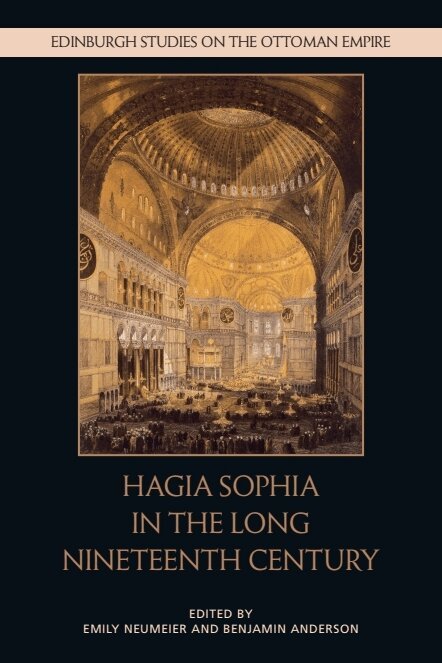
Hagia Sophia a building whose domes have defined Istanbul's skyline for over 1500 years has led many lives. Initially a church, subsequently a mosque, then a museum, the structure is today a monument of world heritage, even as its official status remains contested. Hagia Sophia's global fame took shape during the long nineteenth century, when Europeans "discovered" its architectural significance. But what role did local actors play in the creation of Hagia Sophia as a modern monument? This book seeks out the audiences of this building beyond its Western interpreters, from Ottoman officials to the diverse communities of Istanbul. Chronologically bracketed by the major renovation of the structure in the 1740s and its conversion into a museum in 1934, this volume traces the gradual transformation of Hagia Sophia within the Ottoman imaginary from imaret (mosque complex) to eser (monument); that is, from lived space to archaeological artifact.
426 kr
Skickas
Hagia Sophia a building whose domes have defined Istanbul's skyline for over 1500 years has led many lives. Initially a church, subsequently a mosque, then a museum, the structure is today a monument of world heritage, even as its official status remains contested. Hagia Sophia's global fame took shape during the long nineteenth century, when Europeans 'discovered' its architectural significance. But what role did local actors play in the creation of Hagia Sophia as a modern monument? This book seeks out the audiences of this building beyond its Western interpreters, from Ottoman officials to the diverse communities of Istanbul. Chronologically bracketed by the major renovation of the structure in the 1740s and its conversion into a museum in 1934, this volume traces the gradual transformation of Hagia Sophia within the Ottoman imaginary from imaret (mosque complex) to eser (monument); that is, from lived space to archaeological artifact.