Emily Van Duyn – författare
Visar alla böcker från författaren . Handla med fri frakt och snabb leverans.
6 produkter
6 produkter
Inbunden, Engelska, 2021
1 426 kr
Skickas inom 5-8 vardagar
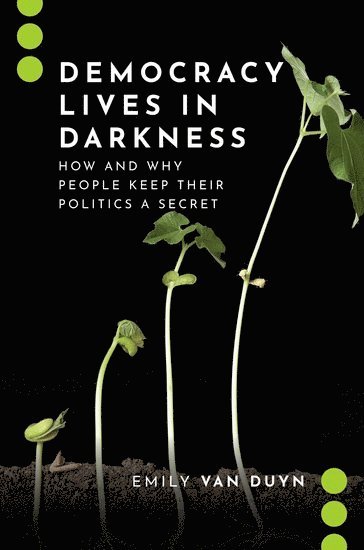
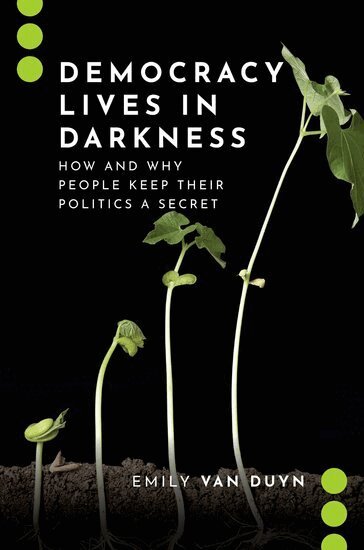
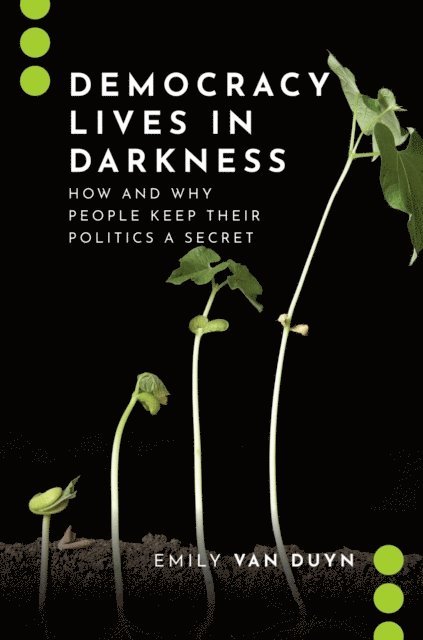
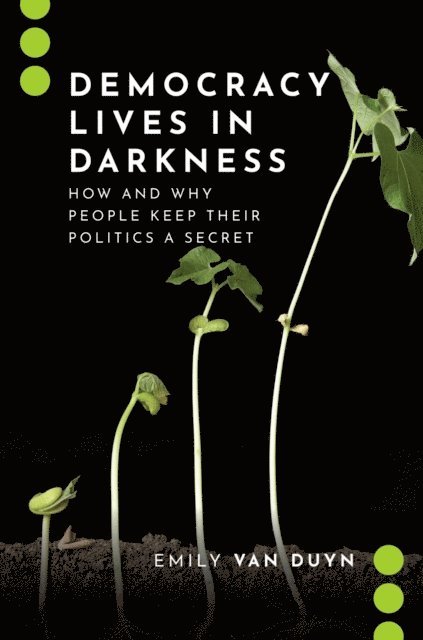
Republicans and Democrats increasingly distrust, avoid, and wish harm upon those from the opposing party. They also increasingly reside among like-minded individuals and belong to social groups that share their political beliefs. While these factors can make it difficult to express a dissenting political opinion, digital and social media have given people new spaces for political discourse and community, and more control over who knows--and does not know--their political beliefs. In Democracy Lives in Darkness, Emily Van Duyn looks at how these changes in the political and media landscape affect democracy. Van Duyn discovers and follows a secret political organization of progressive women in a conservative community in rural Texas. Its members, a mixture of real estate agents, school teachers, business owners, and retired grandmothers, met in secret to protect themselves from social, economic, and even physical retaliation by their conservative neighbors, friends, and family. They discussed immigrant rights, women's reproductive rights, racism, and intolerance of those of different racial/ethnic and cultural backgrounds in their community. Democracy Lives in Darkness is about this group: their daily lives, their choices, and ultimately, their incubation. But it is also about what led them to meet in secret--the political prejudice and hostility that marginalizes and makes people afraid, and the growing political, social, and geographic cleavages that now make even mainstream dissent dangerous. Importantly, Van Duyn asks why mainstream partisans feel the need to hide their political beliefs from others, why they feel afraid of those from the opposite party, how they stay politically engaged in secret, and how this can transform them and their communities. The book challenges those who study democratic life to look beyond public political behavior and those who study big data and machine learning to consider the unique and meaningful qualities of studying the individual in context. Van Duyn challenges the assumption that the United States is a liberal democracy where ideas can be expressed freely and publicly. Rather, she suggests that democracy in the United States may exist in darkness, but, more optimistically, that it uses this darkness to move forward.
Häftad, Engelska, 2021
381 kr
Skickas inom 5-8 vardagar
Republicans and Democrats increasingly distrust, avoid, and wish harm upon those from the opposing party. They also increasingly reside among like-minded individuals and belong to social groups that share their political beliefs. While these factors can make it difficult to express a dissenting political opinion, digital and social media have given people new spaces for political discourse and community, and more control over who knows--and does not know--their political beliefs. In Democracy Lives in Darkness, Emily Van Duyn looks at how these changes in the political and media landscape affect democracy. Van Duyn discovers and follows a secret political organization of progressive women in a conservative community in rural Texas. Its members, a mixture of real estate agents, school teachers, business owners, and retired grandmothers, met in secret to protect themselves from social, economic, and even physical retaliation by their conservative neighbors, friends, and family. They discussed immigrant rights, women's reproductive rights, racism, and intolerance of those of different racial/ethnic and cultural backgrounds in their community. Democracy Lives in Darkness is about this group: their daily lives, their choices, and ultimately, their incubation. But it is also about what led them to meet in secret--the political prejudice and hostility that marginalizes and makes people afraid, and the growing political, social, and geographic cleavages that now make even mainstream dissent dangerous. Importantly, Van Duyn asks why mainstream partisans feel the need to hide their political beliefs from others, why they feel afraid of those from the opposite party, how they stay politically engaged in secret, and how this can transform them and their communities. The book challenges those who study democratic life to look beyond public political behavior and those who study big data and machine learning to consider the unique and meaningful qualities of studying the individual in context. Van Duyn challenges the assumption that the United States is a liberal democracy where ideas can be expressed freely and publicly. Rather, she suggests that democracy in the United States may exist in darkness, but, more optimistically, that it uses this darkness to move forward.
E-bok
PDF, Engelska, 2021309 kr
Läs direkt efter köp
Republicans and Democrats increasingly distrust, avoid, and wish harm upon those from the opposing party. They also increasingly reside among like-minded individuals and belong to social groups that share their political beliefs. While these factors can make it difficult to express a dissenting political opinion, digital and social media have given people new spaces for political discourse and community, and more control over who knows--and does not know--their political beliefs. In Democracy Lives in Darkness, Emily Van Duyn looks at how these changes in the political and media landscape affect democracy. Van Duyn discovers and follows a secret political organization of progressive women in a conservative community in rural Texas. Its members, a mixture of real estate agents, school teachers, business owners, and retired grandmothers, met in secret to protect themselves from social, economic, and even physical retaliation by their conservative neighbors, friends, and family. They discussed immigrant rights, women''s reproductive rights, racism, and intolerance of those of different racial/ethnic and cultural backgrounds in their community. Democracy Lives in Darkness is about this group: their daily lives, their choices, and ultimately, their incubation. But it is also about what led them to meet in secret--the political prejudice and hostility that marginalizes and makes people afraid, and the growing political, social, and geographic cleavages that now make even mainstream dissent dangerous. Importantly, Van Duyn asks why mainstream partisans feel the need to hide their political beliefs from others, why they feel afraid of those from the opposite party, how they stay politically engaged in secret, and how this can transform them and their communities. The book challenges those who study democratic life to look beyond public political behavior and those who study big data and machine learning to consider the unique and meaningful qualities of studying the individual in context. Van Duyn challenges the assumption that the United States is a liberal democracy where ideas can be expressed freely and publicly. Rather, she suggests that democracy in the United States may exist in darkness, but, more optimistically, that it uses this darkness to move forward.
E-bok
Engelska, 2021321 kr
Läs direkt efter köp
Republicans and Democrats increasingly distrust, avoid, and wish harm upon those from the opposing party. They also increasingly reside among like-minded individuals and belong to social groups that share their political beliefs. While these factors can make it difficult to express a dissenting political opinion, digital and social media have given people new spaces for political discourse and community, and more control over who knows--and does not know--their political beliefs. In Democracy Lives in Darkness, Emily Van Duyn looks at how these changes in the political and media landscape affect democracy. Van Duyn discovers and follows a secret political organization of progressive women in a conservative community in rural Texas. Its members, a mixture of real estate agents, school teachers, business owners, and retired grandmothers, met in secret to protect themselves from social, economic, and even physical retaliation by their conservative neighbors, friends, and family. They discussed immigrant rights, women''s reproductive rights, racism, and intolerance of those of different racial/ethnic and cultural backgrounds in their community. Democracy Lives in Darkness is about this group: their daily lives, their choices, and ultimately, their incubation. But it is also about what led them to meet in secret--the political prejudice and hostility that marginalizes and makes people afraid, and the growing political, social, and geographic cleavages that now make even mainstream dissent dangerous. Importantly, Van Duyn asks why mainstream partisans feel the need to hide their political beliefs from others, why they feel afraid of those from the opposite party, how they stay politically engaged in secret, and how this can transform them and their communities. The book challenges those who study democratic life to look beyond public political behavior and those who study big data and machine learning to consider the unique and meaningful qualities of studying the individual in context. Van Duyn challenges the assumption that the United States is a liberal democracy where ideas can be expressed freely and publicly. Rather, she suggests that democracy in the United States may exist in darkness, but, more optimistically, that it uses this darkness to move forward.
Inbunden, Engelska, 2027
1 267 kr
Kommande
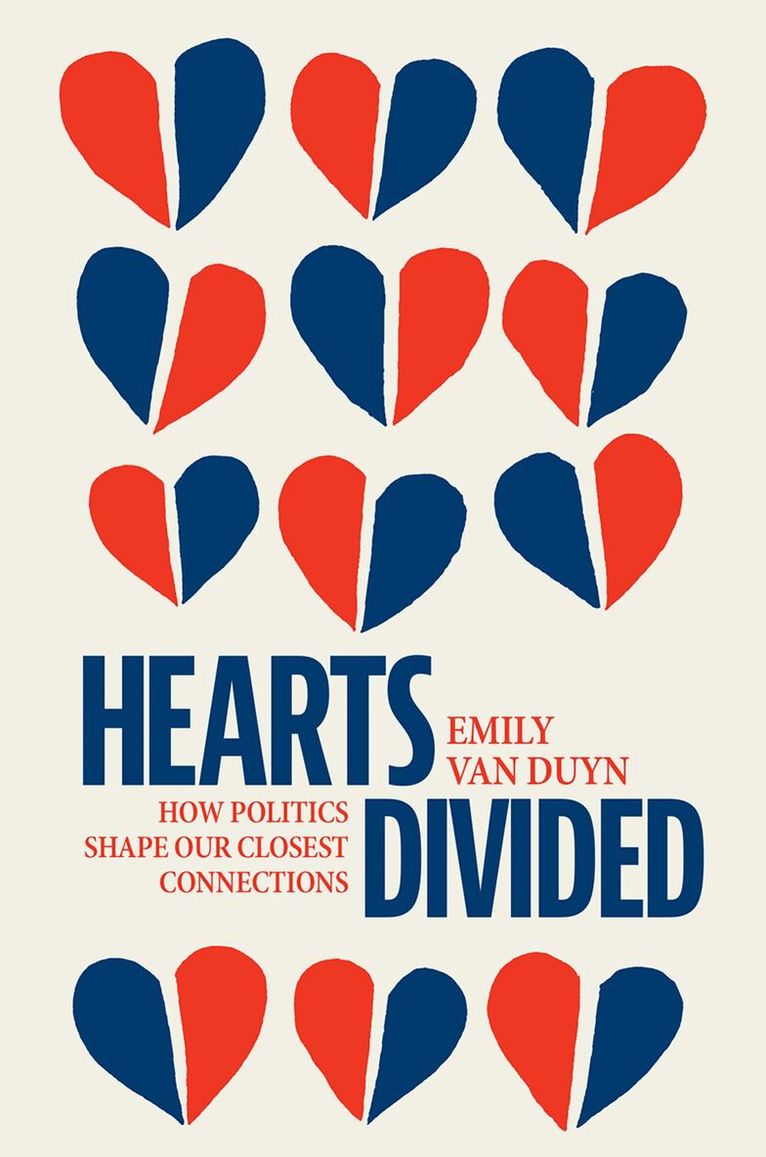
Hearts Divided examines the growing centrality of political beliefs and identities in personal life. Focusing on cross-cutting romantic relationships-partnerships in which individuals hold opposing political views-the book explores how political difference reshapes both personal relationships and democratic engagement.Set against the tumultuous period from 2020 to 2024---marked by two presidential elections, a global pandemic, an insurrection, and an assassination attempt---Hearts Divided investigates what happens when politics enters the most private corners of life. Why can disagreement between partners feel so destabilizing? When does it threaten the relationship itself?Drawing on in-depth interviews with individuals in current and former cross-cutting relationships, alongside survey data from politically mixed and politically aligned couples, the book shows that cross-cutting partners face distinctive relational and emotional challenges that shape both their private lives and their civic participation.At the center of the analysis is the moralization of political identity. When political differences are interpreted as moral failings, disagreement becomes a judgment of character, often rendering relationships untenable. By explaining how political moralization has intensified and offering practical strategies for navigating disagreement, Hearts Divided illuminates what intimate conflict reveals about our contemporary politics---and what sustaining relationships across difference may mean for democratic life.
Häftad, Engelska, 2027
325 kr
Kommande
Hearts Divided examines the growing centrality of political beliefs and identities in personal life. Focusing on cross-cutting romantic relationships-partnerships in which individuals hold opposing political views-the book explores how political difference reshapes both personal relationships and democratic engagement.Set against the tumultuous period from 2020 to 2024---marked by two presidential elections, a global pandemic, an insurrection, and an assassination attempt---Hearts Divided investigates what happens when politics enters the most private corners of life. Why can disagreement between partners feel so destabilizing? When does it threaten the relationship itself?Drawing on in-depth interviews with individuals in current and former cross-cutting relationships, alongside survey data from politically mixed and politically aligned couples, the book shows that cross-cutting partners face distinctive relational and emotional challenges that shape both their private lives and their civic participation.At the center of the analysis is the moralization of political identity. When political differences are interpreted as moral failings, disagreement becomes a judgment of character, often rendering relationships untenable. By explaining how political moralization has intensified and offering practical strategies for navigating disagreement, Hearts Divided illuminates what intimate conflict reveals about our contemporary politics---and what sustaining relationships across difference may mean for democratic life.