Emmanuel Frossard – författare
Visar alla böcker från författaren Emmanuel Frossard. Handla med fri frakt och snabb leverans.
4 produkter
4 produkter
Inbunden, Engelska, 2004
2 011 kr
Skickas inom 5-8 vardagar
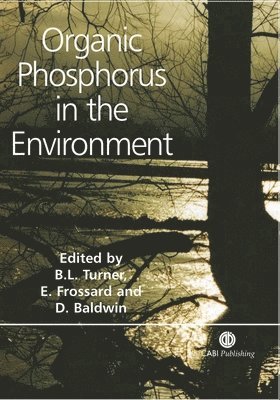
Organic phosphorus is involved in almost every biological process. Organic forms of phosphorus often dominate in soils and aquatic systems and many organisms possess complex mechanisms enabling them to access phosphorus from organic compounds. However organic phosphorus remains the most poorly understood aspect of the global phosphorus cycle. This book brings together the latest research and opinion on the biogeochemistry of organic phosphorus from a wide range of disciplines and focuses specifically on the characterisation and transformations of organic phosphorus in terrestrial and aquatic systems. It examines analytical procedures for the chemical characterization of organic phosphorus in environmental samples, processes regulating organic phosphorus in the environment, and integration of the process at the ecosystem level. Ecological, chemical, microbiological and analytical aspects are explored. Written by a team of leading experts, the book will provide an invaluable reference for all those interested in organic phosphorus.
Del 26 - Soil Biology
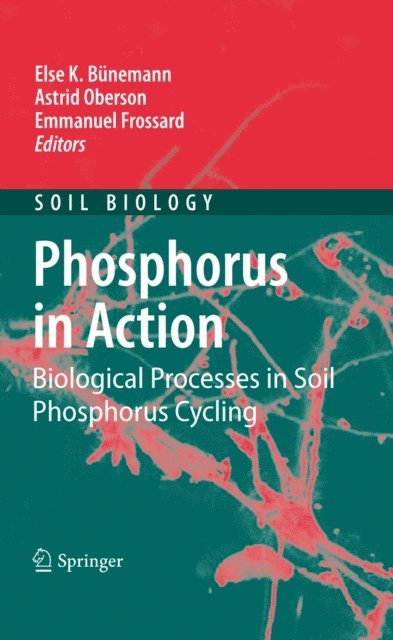
Phosphorus in Action
Biological Processes in Soil Phosphorus Cycling
Inbunden, Engelska, 2010
2 178 kr
Skickas inom 10-15 vardagar
Phosphorus (P) is a finite resource which is essential for life. It is a limiting nutrient in many ecosystems but also a pollutant which can affect biodiversity in terrestrial ecosystems and change the ecology of water bodies. This book collects the latest information on biological processes in soil P cycling, which to date have remained much less understood than physico-chemical processes. The methods section presents spectroscopic techniques and the characterization of microbial P forms, as well as the use of tracers, molecular approaches and modeling of soil-plant systems. The section on processes deals with mycorrhizal symbioses, microbial P solubilization, soil macrofauna, phosphatase enzymes and rhizosphere processes. On the system level, P cycling is examined for grasslands, arctic and alpine soils, forest plantations, tropical forests, and dryland regions. Further, P management with respect to animal production and cropping, and the interactions between global change and P cycling, are treated.
E-bok
PDF, Engelska, 20102 741 kr
Läs direkt efter köp
Phosphorus (P) is a finite resource which is essential for life. It is a limiting nutrient in many ecosystems but also a pollutant which can affect biodiversity in terrestrial ecosystems and change the ecology of water bodies. This book collects the latest information on biological processes in soil P cycling, which to date have remained much less understood than physico-chemical processes. The methods section presents spectroscopic techniques and the characterization of microbial P forms, as well as the use of tracers, molecular approaches and modeling of soil-plant systems. The section on processes deals with mycorrhizal symbioses, microbial P solubilization, soil macrofauna, phosphatase enzymes and rhizosphere processes. On the system level, P cycling is examined for grasslands, arctic and alpine soils, forest plantations, tropical forests, and dryland regions. Further, P management with respect to animal production and cropping, and the interactions between global change and P cycling, are treated.
Del 26 - Soil Biology
Phosphorus in Action
Biological Processes in Soil Phosphorus Cycling
Häftad, Engelska, 2013
2 178 kr
Skickas inom 10-15 vardagar
Phosphorus (P) is a finite resource which is essential for life. It is a limiting nutrient in many ecosystems but also a pollutant which can affect biodiversity in terrestrial ecosystems and change the ecology of water bodies. This book collects the latest information on biological processes in soil P cycling, which to date have remained much less understood than physico-chemical processes. The methods section presents spectroscopic techniques and the characterization of microbial P forms, as well as the use of tracers, molecular approaches and modeling of soil-plant systems. The section on processes deals with mycorrhizal symbioses, microbial P solubilization, soil macrofauna, phosphatase enzymes and rhizosphere processes. On the system level, P cycling is examined for grasslands, arctic and alpine soils, forest plantations, tropical forests, and dryland regions. Further, P management with respect to animal production and cropping, and the interactions between global change and P cycling, are treated.