Enid Slack – författare
Visar alla böcker från författaren Enid Slack. Handla med fri frakt och snabb leverans.
5 produkter
5 produkter
E-bok
PDF, Engelska, 2017333 kr
Läs direkt efter köp
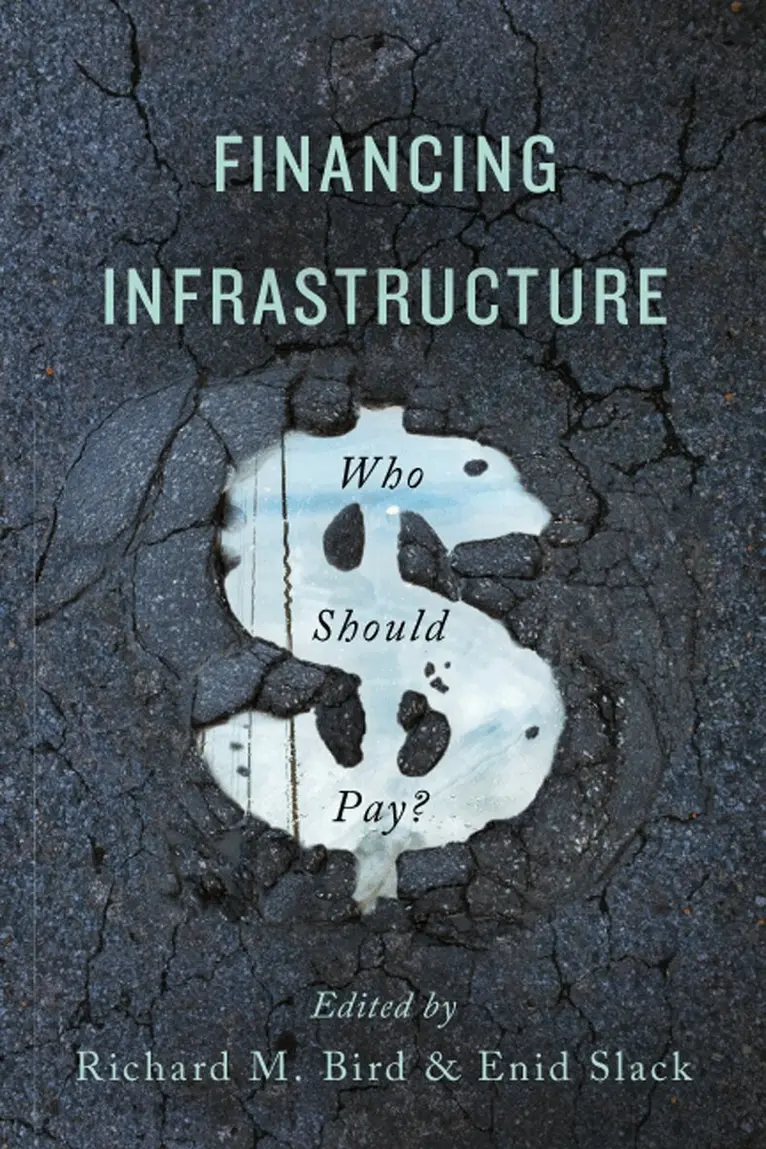
Politicians and citizens universally agree that Canada’s urban infrastructure urgently needs work. Roads and bridges are overdue for repair, aging water systems should be replaced, sewage must be adequately treated, urban transit needs to be updated and extended, and it is necessary that public housing as well as schools, health centres, and government offices are brought up to current standards. But few cities have room to raise additional revenue, and the federal and provincial governments to which they turn for financial support are already in deficit, so who is going to pay for all of this? Bringing together perspectives and case studies from across Canada, the US, and Europe, Financing Infrastructure argues that the answer to the question “Who should pay?” should always be “users.” Headed by two of Canada’s foremost experts on municipal finance, this book provides a closer look at why charging user fees makes sense, how much users should pay, how to charge fees well and where present processes can be improved, and how to convince the politicians and the public of the importance of pricing infrastructure correctly. Across the disciplines of public policy, urban studies, and economics, almost no one is looking at the extent to which users should play a role in infrastructure planning. Financing Infrastructure contends that the users, not federal and provincial taxpayers, should start paying directly for their cities’ repairs and expansions. Contributors include Richard M. Bird (University of Toronto), Bernard Dafflon (University of Fribourg, Switzerland), Robert D. Ebel (Local Governance Innovation and Development), Harry Kitchen (Trent University), Jean-Philippe Meloche (Université de Montréal), Matti Siemiatycki (University of Toronto), Enid Slack (University of Toronto), Almos T. Tassonyi (University of Calgary), Lindsay M. Tedds (University of Victoria), François Vaillancourt (Université de Montréal), and Yameng Wang (World Bank).
E-bok
Engelska, 2017333 kr
Läs direkt efter köp
Politicians and citizens universally agree that Canada’s urban infrastructure urgently needs work. Roads and bridges are overdue for repair, aging water systems should be replaced, sewage must be adequately treated, urban transit needs to be updated and extended, and it is necessary that public housing as well as schools, health centres, and government offices are brought up to current standards. But few cities have room to raise additional revenue, and the federal and provincial governments to which they turn for financial support are already in deficit, so who is going to pay for all of this? Bringing together perspectives and case studies from across Canada, the US, and Europe, Financing Infrastructure argues that the answer to the question “Who should pay?” should always be “users.” Headed by two of Canada’s foremost experts on municipal finance, this book provides a closer look at why charging user fees makes sense, how much users should pay, how to charge fees well and where present processes can be improved, and how to convince the politicians and the public of the importance of pricing infrastructure correctly. Across the disciplines of public policy, urban studies, and economics, almost no one is looking at the extent to which users should play a role in infrastructure planning. Financing Infrastructure contends that the users, not federal and provincial taxpayers, should start paying directly for their cities’ repairs and expansions. Contributors include Richard M. Bird (University of Toronto), Bernard Dafflon (University of Fribourg, Switzerland), Robert D. Ebel (Local Governance Innovation and Development), Harry Kitchen (Trent University), Jean-Philippe Meloche (Université de Montréal), Matti Siemiatycki (University of Toronto), Enid Slack (University of Toronto), Almos T. Tassonyi (University of Calgary), Lindsay M. Tedds (University of Victoria), François Vaillancourt (Université de Montréal), and Yameng Wang (World Bank).
E-bok
PDF, Engelska, 20091 011 kr
Läs direkt efter köp
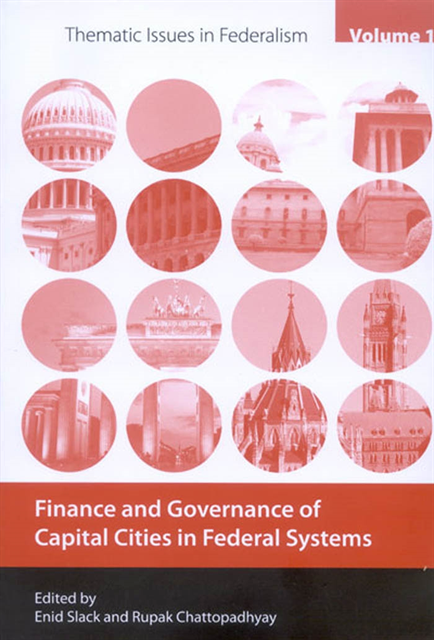
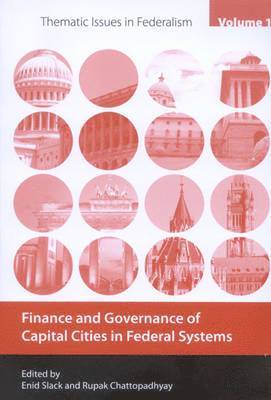
Using capital cities in Australia, Belgium, Canada, Ethiopia, Germany, India, Mexico, Nigeria, South Africa, Switzerland, and the United States as case studies, contributors examine federal policies towards capital cities, with a particular emphasis on how capital cities are funded and governed, and the extent to which the federal government compensates them for their unique role.
Häftad, Engelska, 2012
273 kr
Skickas inom 5-8 vardagar
Inbunden, Engelska, 2004
3 008 kr
Skickas inom 5-8 vardagar
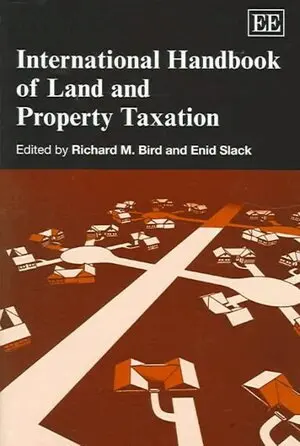
Taxes on land and property exist all over the world in many forms and are an important source of finance for local governments. The extent to which local governments have control over property taxes is often an important determinant of their ability to make autonomous expenditure decisions. This comprehensive Handbook explores case studies of land and property taxation in 25 countries (five in each of five regions - OECD, central and eastern Europe, Asia, Africa, and Latin America), and focuses on the potential contributions of the property tax to the revenues of urban and rural governments and to more efficient land use. Introductory chapters highlight the diversity in the application of land and property taxes among the countries. Major policy alternatives with respect to taxing land and property are discussed, including the choice of tax base, exemptions, methods of determining the tax base, tax rates, differential treatment of different classes of property (such as farms, residences, commercial properties), and the process of tax administration. Other taxes levied on land, such as land transfer taxes, development charges and unearned increment taxes, are also reviewed, as is recent experience with property tax reform in a number of countries.This major reference work will provide a valuable resource and necessary addition to the libraries of government officials, municipal associations, property assessors, international agencies, teachers and students of public finance.