Enric Bou – författare
Visar alla böcker från författaren Enric Bou. Handla med fri frakt och snabb leverans.
5 produkter
5 produkter
Inbunden, Engelska, 2024
789 kr
Skickas inom 5-8 vardagar
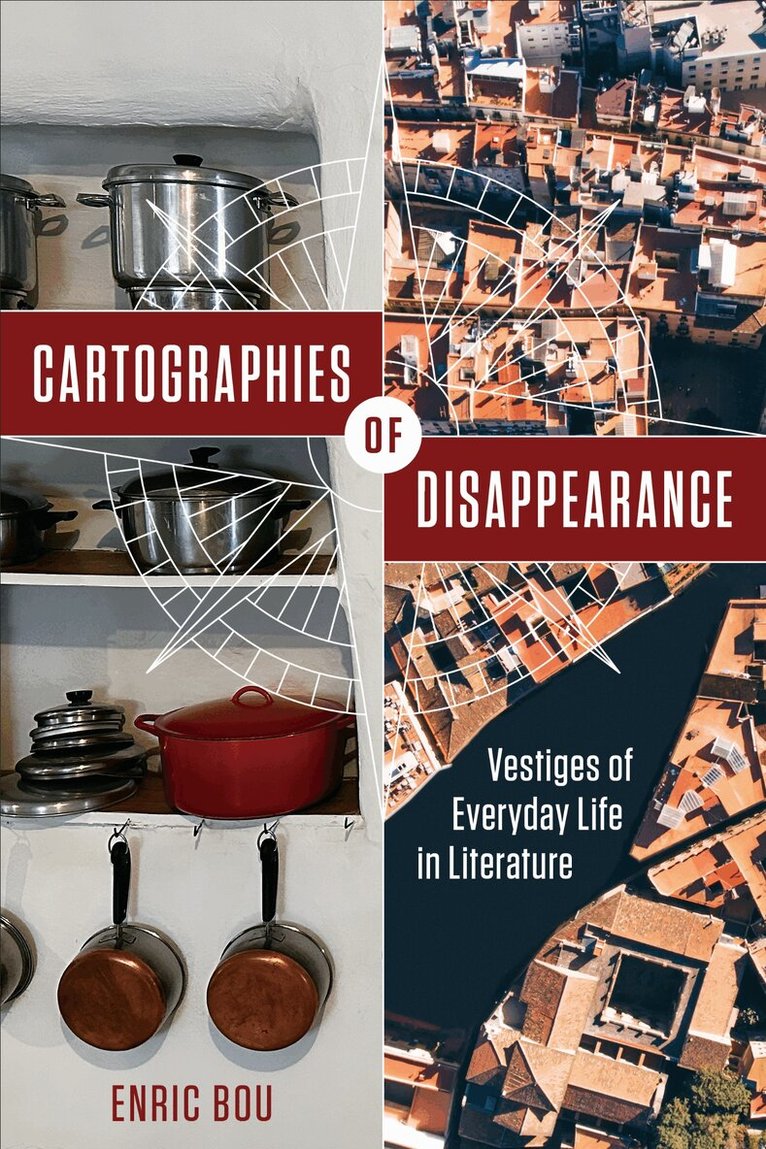
The everyday can be defined as the routine that happens day after day and becomes our most permanent reality. It is made up of different identifiable areas of life, such as the home, the street, the subway, the park, the workplace, and local institutions. Focusing on literary texts and artistic forms, Cartographies of Disappearance addresses representations of everyday life from varying perspectives.Opening our eyes to a new understanding of our daily environment, the book presents detailed readings of texts, practices, and mythologies of everyday life within Spanish and Catalan culture. Enric Bou examines how and to what extent issues of identity, space, memory, and immigration have impacted everyday life in Spain. The book explores five major instances of representing the everyday in literature and the arts: routines and disappearances, observations of the nearby, the uses of public transportation, thanatourism, and food.Acknowledging that the everyday is a matter of study and observation, the book reveals how to look at the world from a different perspective. While the everyday is filled with the unorganized accumulation of objects and beings, Cartographies of Disappearance addresses the inclination to make sense of it all.
E-bok
PDF, Engelska, 2024931 kr
Läs direkt efter köp
The everyday can be defined as the routine that happens day after day and becomes our most permanent reality. It is made up of different identifiable areas of life, such as the home, the street, the subway, the park, the workplace, and local institutions. Focusing on literary texts and artistic forms, Cartographies of Disappearance addresses representations of everyday life from varying perspectives.Opening our eyes to a new understanding of our daily environment, the book presents detailed readings of texts, practices, and mythologies of everyday life within Spanish and Catalan culture. Enric Bou examines how and to what extent issues of identity, space, memory, and immigration have impacted everyday life in Spain. The book explores five major instances of representing the everyday in literature and the arts: routines and disappearances, observations of the nearby, the uses of public transportation, thanatourism, and food.Acknowledging that the everyday is a matter of study and observation, the book reveals how to look at the world from a different perspective. While the everyday is filled with the unorganized accumulation of objects and beings, Cartographies of Disappearance addresses the inclination to make sense of it all.
Häftad, Engelska, 2017
478 kr
Skickas inom 5-8 vardagar
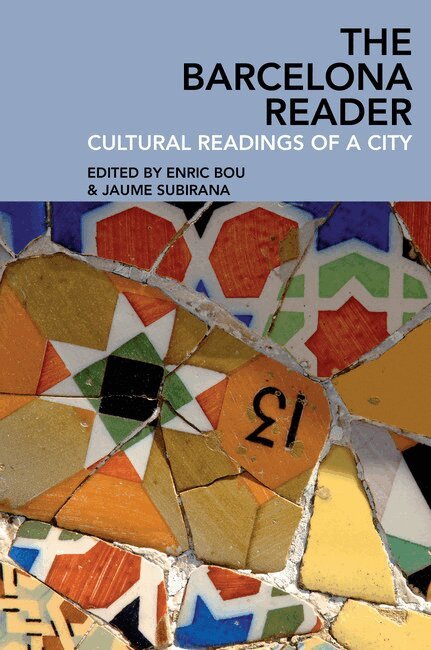
Over the last twenty years there has been a growing international interest in the city of Barcelona. This has been reflected in the academic world through a series of studies, courses, seminars, and publications. The Barcelona Reader hinges together a selection of the best academic articles, written in English, about the city, and its main elements of identity and interest: art, urban planning, history and social movements. The book includes scholarly essays about Barcelona that can be of interest to the student and the general public alike. It focuses on cultural representations of the city: the arts (including literature) provide a complex yet discontinuous portrait of the city, similar to a patchwork. The authors selected create a kaleidoscope of views and voices thus presenting a diverse yet inclusive Barcelona portrait. The Barcelona Reader offers a multifaceted assessment that will be essential reading for anyone interested in this iconic city.
E-bok
Engelska, 2014271 kr
Läs direkt efter köp
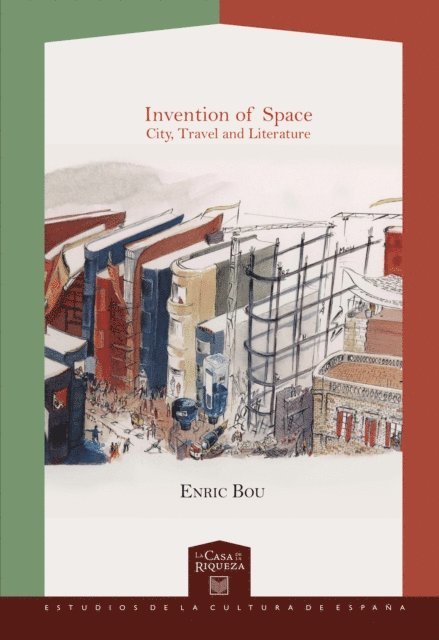
This book explores the many ways that space has been represented in literature in the twentieth century, dealing with concepts related to space as applied to two different situations: writing the city and traveling through the world. The first chapters propose an innovative different version of Comparatism, one more akin to issues of center and periphery, otherness and non hierarchical assumptions, and a general discussion of ways to read the city. The following chapters analyze how writers create an urban jungle of words with a very precise purpose: the critical interpretation of space according to the values of the writer in the present, proffering a quasi-archeological reading of a jumble of temporal traces scrawled on the walls of old buildings. This kind of exploration deals with general problems and also with specific authors and books (Corpus Barga, Cela, Roig, Gil de Biedma, Vilallonga, Rodoreda, Mendoza). The third section is devoted to a discussion of problems put forth by travelogues, focusing on specific occasions for travel such as the curiosity sparked by the new regime in soviet Russia, how travel is affected by the exile experience, and the uses of travelogues as a way to rediscover daily life.
E-bok
Spanska, 2023322 kr
Läs direkt efter köp
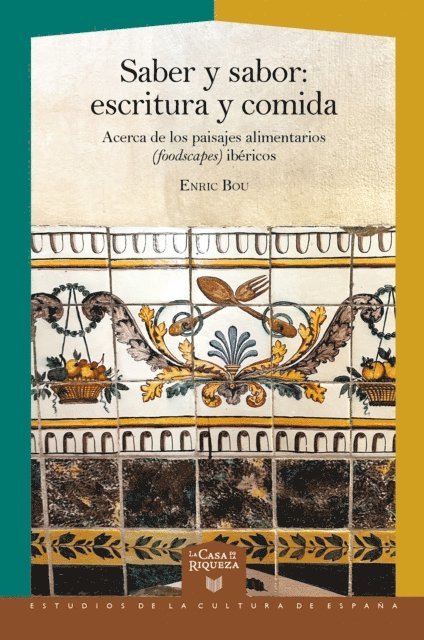
Estudia aspectos de los paisajes alimentarios (foodscapes) ibéricos desde una perspectiva ecocrítica. La comida es uno de los componentes clave y más evidentes de nuestra identidad: quiénes somos, dónde vivimos, de dónde venimos. El sistema alimentario es depositario de tradiciones e identidad colectiva y un extraordinario vehículo de autorrepresentación e intercambio cultural. Decía Umberto Eco que al llegar a otro país, antes de visitar museos o iglesias, es importante deambular, observan a la gente, para luego buscar la comida local: es fundamental para entender el lugar y su forma única de pensar. En este libro, a partir de una reflexión teórica sobre los aspectos clave de los estudios alimentarios se propone una exploración de casos clave, representativos de la identidad ibérica: los relatos de exploración de la proximidad en clave gastronómica; la pérdida de las colonias a partir de los conflictos gastronómicos en Emilia Pardo Bazán; una indagación sobre la entidad fluida de la llamada paella en Manuel Vázquez Montalbán; y una incursión en varios ejemplos de poesía gastronómica, entre la comida y el afecto, en poetas como Josep Carner, Pablo Neruda y Miguel Hernández.