Eren Duzgun – författare
Visar alla böcker från författaren . Handla med fri frakt och snabb leverans.
6 produkter
6 produkter
Inbunden, Engelska, 2022
1 061 kr
Skickas inom 7-10 vardagar
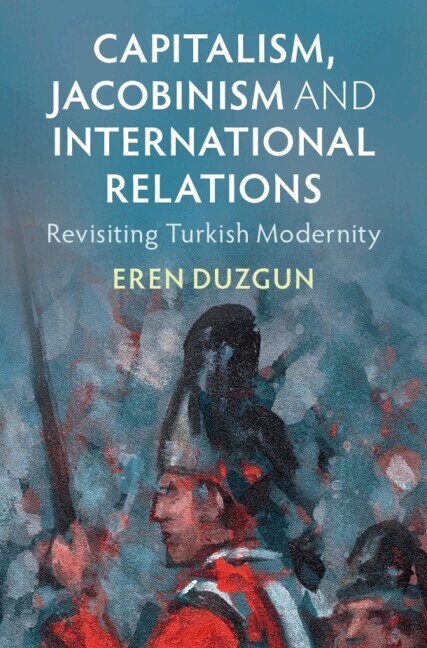
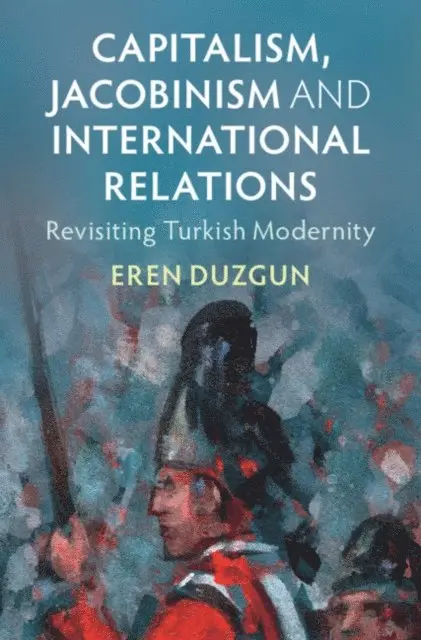
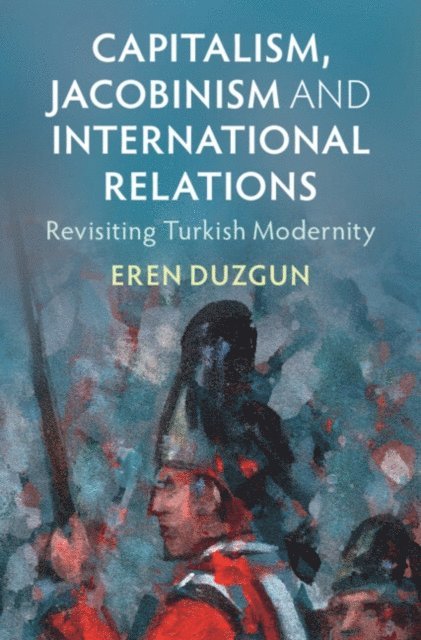
This book offers a radical reinterpretation of the development of the modern world through the concept of Jacobinism. It argues that the French Revolution was not just another step in the construction of capitalist modernity, but produced an alternative (geo)political economy - that is, 'Jacobinism.' Furthermore, Jacobinism provided a blueprint for other modernization projects, thereby profoundly impacting the content and tempo of global modernity in and beyond Europe. The book traces the journey of Jacobinism in the Ottoman Empire and Turkey. It contends that until the 1950s, the Ottoman/Turkish experiment with modernity was not marked by capitalism, but by a historically specific Jacobinism. Asserting this Jacobin legacy then leads to a novel interpretation of the subsequent transition to and authoritarian consolidation of capitalism in contemporary Turkey. As such, by tracing the world historical trajectory of Jacobinism, the book establishes a new way of understanding the origins and development of global modernity.
Häftad, Engelska, 2024
370 kr
Skickas inom 7-10 vardagar
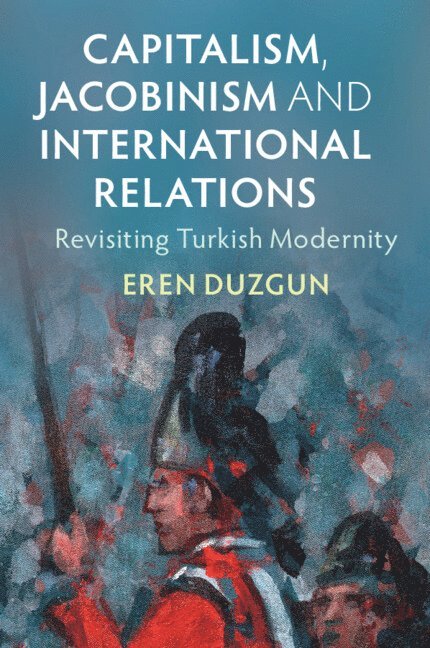
This book offers a radical reinterpretation of the development of the modern world through the concept of Jacobinism. It argues that the French Revolution was not just another step in the construction of capitalist modernity, but produced an alternative (geo)political economy - that is, 'Jacobinism.' Furthermore, Jacobinism provided a blueprint for other modernization projects, thereby profoundly impacting the content and tempo of global modernity in and beyond Europe. The book traces the journey of Jacobinism in the Ottoman Empire and Turkey. It contends that until the 1950s, the Ottoman/Turkish experiment with modernity was not marked by capitalism, but by a historically specific Jacobinism. Asserting this Jacobin legacy then leads to a novel interpretation of the subsequent transition to and authoritarian consolidation of capitalism in contemporary Turkey. As such, by tracing the world historical trajectory of Jacobinism, the book establishes a new way of understanding the origins and development of global modernity.
E-bok
PDF, Engelska, 2022428 kr
Läs direkt efter köp
This book offers a radical reinterpretation of the development of the modern world through the concept of Jacobinism. It argues that the French Revolution was not just another step in the construction of capitalist modernity, but produced an alternative (geo)political economy – that is, ''Jacobinism.'' Furthermore, Jacobinism provided a blueprint for other modernization projects, thereby profoundly impacting the content and tempo of global modernity in and beyond Europe. The book traces the journey of Jacobinism in the Ottoman Empire and Turkey. It contends that until the 1950s, the Ottoman/Turkish experiment with modernity was not marked by capitalism, but by a historically specific Jacobinism. Asserting this Jacobin legacy then leads to a novel interpretation of the subsequent transition to and authoritarian consolidation of capitalism in contemporary Turkey. As such, by tracing the world historical trajectory of Jacobinism, the book establishes a new way of understanding the origins and development of global modernity.
428 kr
Läs direkt efter köp
This book offers a radical reinterpretation of the development of the modern world through the concept of Jacobinism. It argues that the French Revolution was not just another step in the construction of capitalist modernity, but produced an alternative (geo)political economy – that is, ''Jacobinism.'' Furthermore, Jacobinism provided a blueprint for other modernization projects, thereby profoundly impacting the content and tempo of global modernity in and beyond Europe. The book traces the journey of Jacobinism in the Ottoman Empire and Turkey. It contends that until the 1950s, the Ottoman/Turkish experiment with modernity was not marked by capitalism, but by a historically specific Jacobinism. Asserting this Jacobin legacy then leads to a novel interpretation of the subsequent transition to and authoritarian consolidation of capitalism in contemporary Turkey. As such, by tracing the world historical trajectory of Jacobinism, the book establishes a new way of understanding the origins and development of global modernity.

Inbunden, Engelska, 2026
791 kr
Kommande
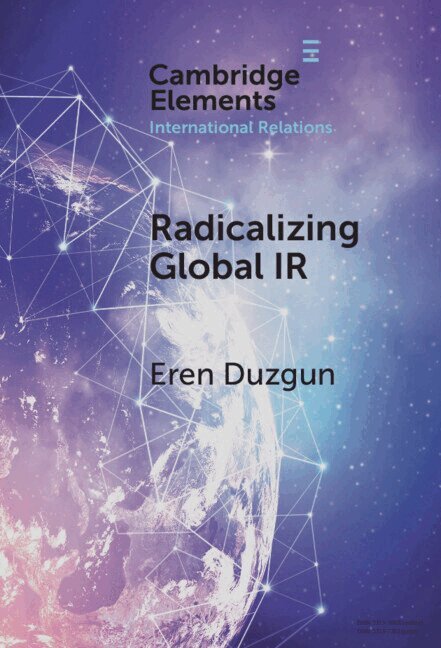
What if the deepest resources for globalizing IR lie not in capitalist modernity, but in humanity's much older struggles against hierarchy? This Element argues that Global IR cannot become genuinely anti-Eurocentric unless it breaks decisively with 'methodological presentism': the tendency to read the past in terms of the present. Engaging Global IR debates, and drawing on Karl Polanyi, Political Marxism, and evolutionary anthropology, the book offers a non-presentist macro-historical narrative. It mobilizes deep history to trace the millennia-old human capacities to refuse domination, pursue autonomy, and sustain cooperation, thereby inviting readers to fundamentally rethink the sources of human interconnectedness and solidarity. On this basis, it proposes 'radical modernity', rooted in the prehistoric legacy of 'radical egalitarianism', as an alternative to capitalist modernity. Radical modernity is not a Western achievement later diffused to the non-Western world, but an alternative foundation for rethinking universality, difference, and the 'international' from below.
Häftad, Engelska, 2026
246 kr
Kommande
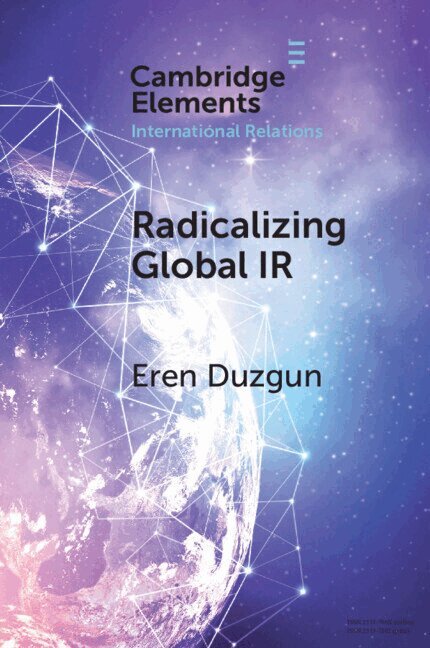
What if the deepest resources for globalizing IR lie not in capitalist modernity, but in humanity's much older struggles against hierarchy? This Element argues that Global IR cannot become genuinely anti-Eurocentric unless it breaks decisively with 'methodological presentism': the tendency to read the past in terms of the present. Engaging Global IR debates, and drawing on Karl Polanyi, Political Marxism, and evolutionary anthropology, the book offers a non-presentist macro-historical narrative. It mobilizes deep history to trace the millennia-old human capacities to refuse domination, pursue autonomy, and sustain cooperation, thereby inviting readers to fundamentally rethink the sources of human interconnectedness and solidarity. On this basis, it proposes 'radical modernity', rooted in the prehistoric legacy of 'radical egalitarianism', as an alternative to capitalist modernity. Radical modernity is not a Western achievement later diffused to the non-Western world, but an alternative foundation for rethinking universality, difference, and the 'international' from below.