Eric C. K. Cheng – författare
2 354 kr
Skickas inom 10-15 vardagar
607 kr
Skickas inom 10-15 vardagar
719 kr
Läs direkt efter köp
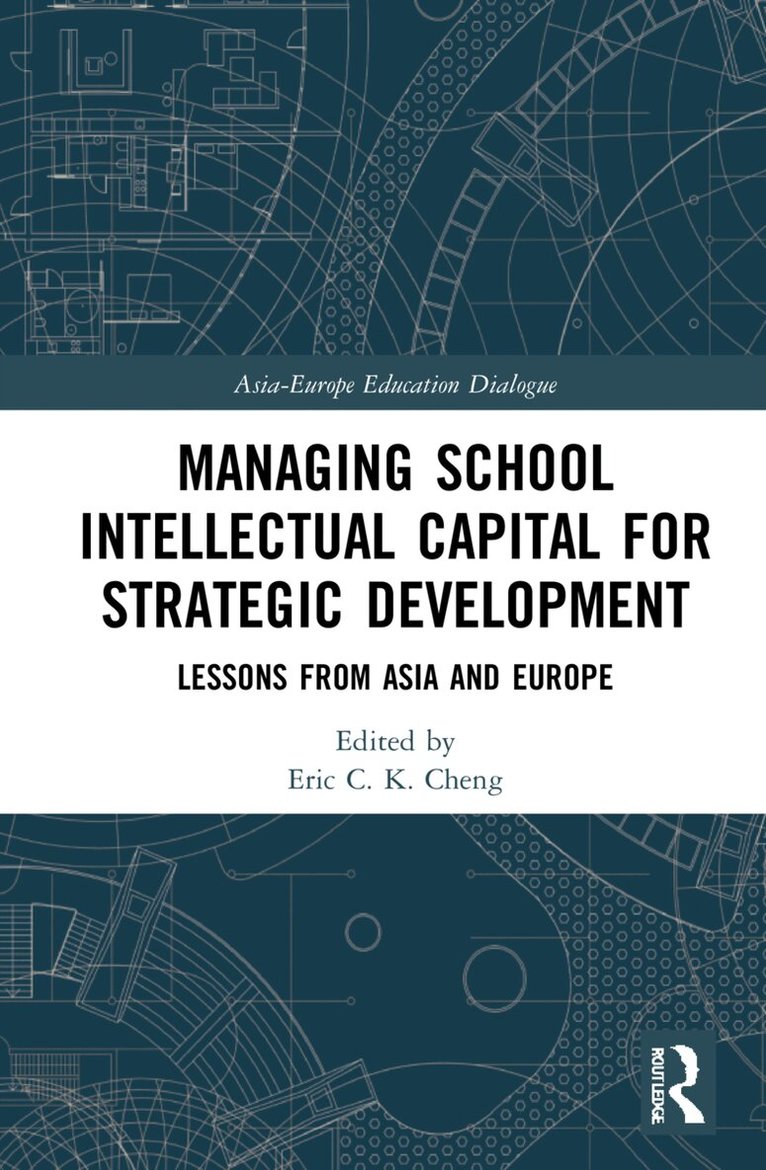
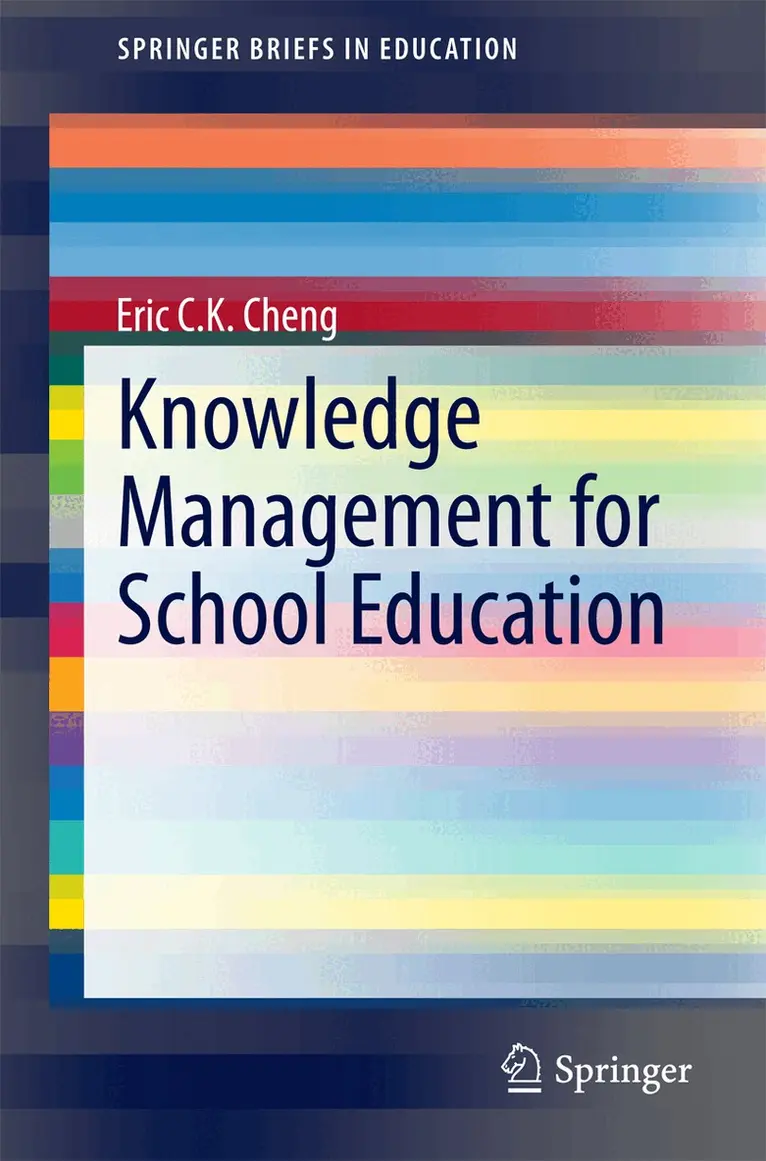
Cheng articulates the extent to which knowledge management approaches can create Intellectual Capital (IC) and contribute to improvements in education quality.
He argues that public schools have long contended with the requirements of quality assurance in a competitive environment of decreasing student numbers, increasing parental choice and rising standards of accountability. As public organisations, schools have to demonstrate appropriate resource management and show evidence that they are meeting defined development plans and goals. Cheng proposes a strategic approach, IC management, to help schools respond to and cope with the increasingly competitive environment while enhancing school capacity for improving student learning.
First, the book guides readers to understand the development of IC theory in the context of education to address the requirements of quality assurance and accountability. It then introduces Lesson Study, e-Learning, and Information and Communication Technology (ICT) as key resources and drivers for building school IC, and examines the organisational factors that enable knowledge management approaches for developing IC in schools from both Asia and Europe. It concludes by offering strategies and implementation methods to manage school IC for sustainable development.
Combining research from Asia and Europe, this edited volume will be useful for school leaders and policy makers, as well as those researching school leadership and IC.
719 kr
Läs direkt efter köp
Cheng articulates the extent to which knowledge management approaches can create Intellectual Capital (IC) and contribute to improvements in education quality.
He argues that public schools have long contended with the requirements of quality assurance in a competitive environment of decreasing student numbers, increasing parental choice and rising standards of accountability. As public organisations, schools have to demonstrate appropriate resource management and show evidence that they are meeting defined development plans and goals. Cheng proposes a strategic approach, IC management, to help schools respond to and cope with the increasingly competitive environment while enhancing school capacity for improving student learning.
First, the book guides readers to understand the development of IC theory in the context of education to address the requirements of quality assurance and accountability. It then introduces Lesson Study, e-Learning, and Information and Communication Technology (ICT) as key resources and drivers for building school IC, and examines the organisational factors that enable knowledge management approaches for developing IC in schools from both Asia and Europe. It concludes by offering strategies and implementation methods to manage school IC for sustainable development.
Combining research from Asia and Europe, this edited volume will be useful for school leaders and policy makers, as well as those researching school leadership and IC.
632 kr
Skickas inom 10-15 vardagar
828 kr
Läs direkt efter köp
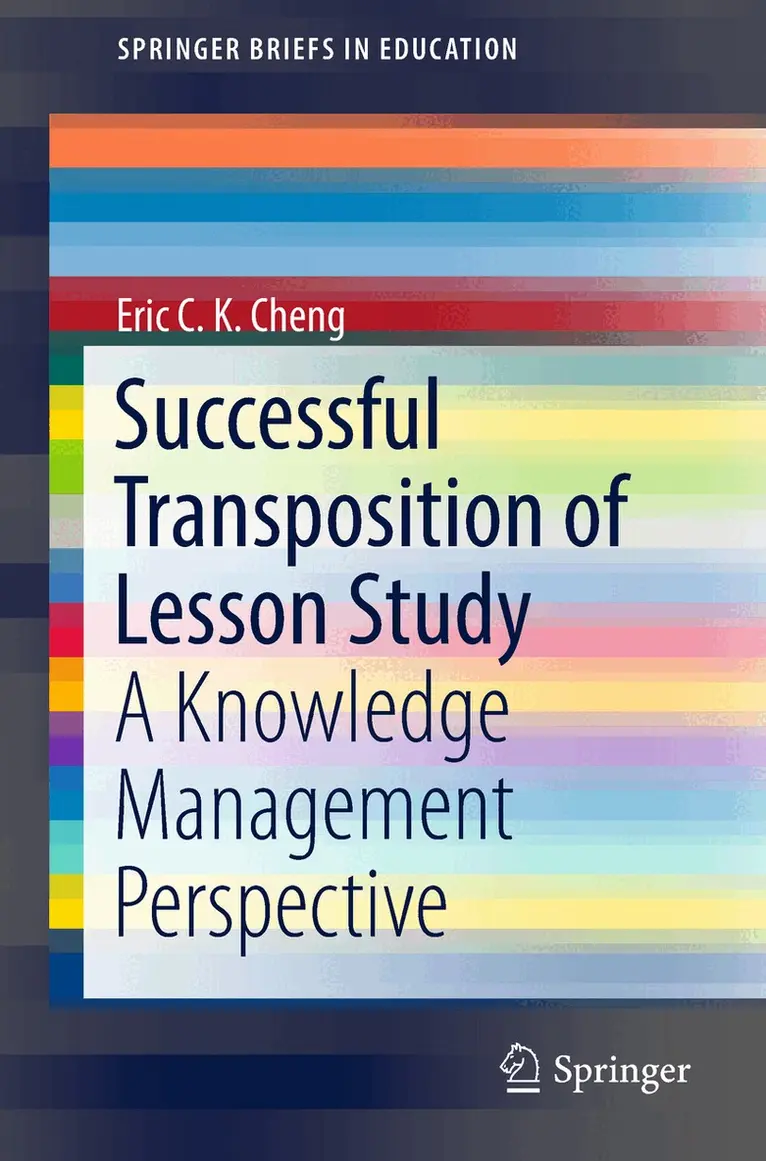
This book analyses the organisation cultures that promote Japanese Lesson Study, identifies the soul of lesson study, which is missing in other cultures, and discusses the conditions for successfully transplanting the Lesson Study to other cultures. Adopting Nonaka and Tateuchi’s (1995) SECI knowledge creation model as the analytical lens, it explores the tacit and explicit knowledge convention and creation processes in lesson study. Unpacking the mechanism of the knowledge management process and practices could assist policy makers and school administrators, educators in contextualising lesson study to their school systems. The book provides an accessible discussion of the benefits and challenges of introducing lesson study, and presents three new research dimensions to analyse it: reviewing the historical development of lesson study in terms of the pendulum swings between professional accountability and state accountability in developing the school-based curriculum and the national curriculum; examining lesson study as a knowledge management tool for creating pedagogical knowledge for curriculum implementation: and studying the “kaizen kata” embedded in the PDCA cycles of lesson study as an organization routine for school improvement.
684 kr
Skickas inom 10-15 vardagar
846 kr
Läs direkt efter köp
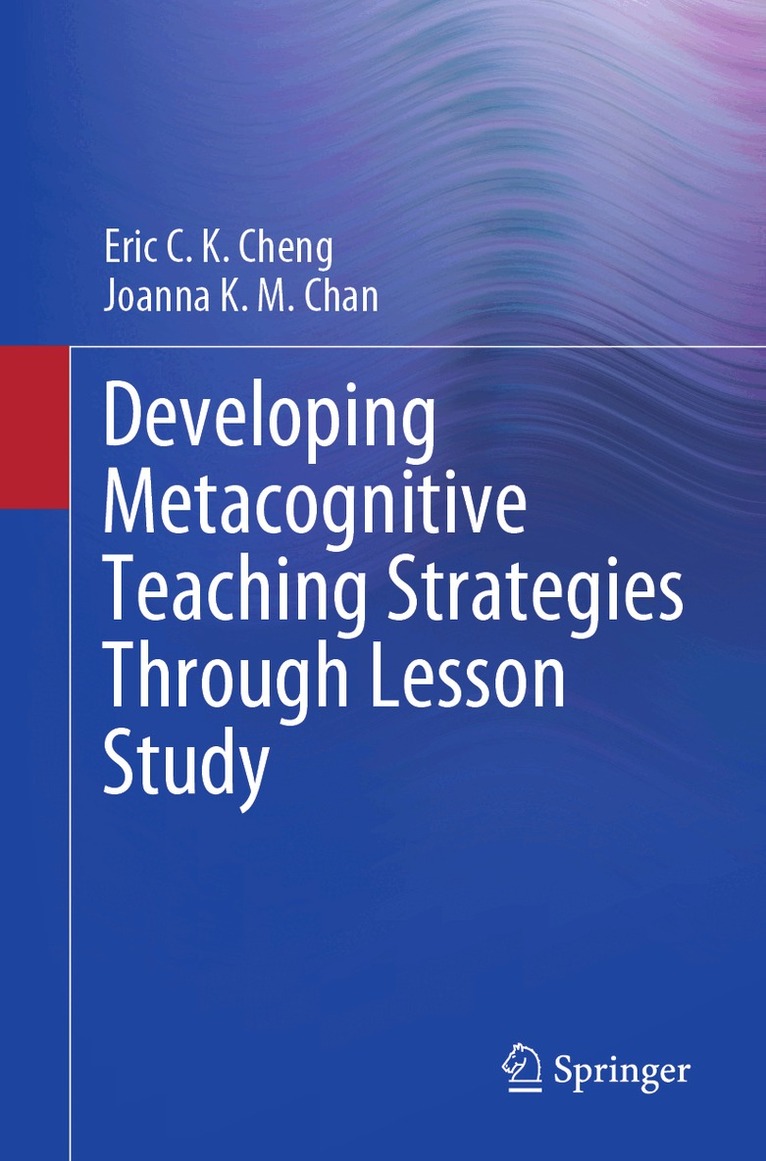
The book illustrates how Lesson Study can be applied to craft metacognitive teaching strategies to enhance students’ learning to learn competencies. Based on the findings of an empirical study of a university-funded teaching development project, this book reports how to apply Lesson Study and Learning Study to enhance teachers’ metacognitive teaching competencies with a view to tackling the impacts and challenges created by and underlying the learning to learn curriculum.
The book allows readers to experience metacognitive learning by sorting the prior knowledge on the metacognition, setting the goal and planning reading schedule, checking their understanding and progress, evaluating what they have or have not learned and reflected on their reading experience and feelings. Readers can grasp the key concept underpinning metacognitive teaching, including teaching strategies for developing students’ metacognitive abilities that include working on problem-solving activities, working on small collaborative groups, making metacognitive and learning strategies explicit, and encouraging students to reflect upon and talk about their learning.Artificial Intelligence in Education: Emerging Technologies, Models and Applications
Proceedings of 2021 2nd International Conference on Artificial Intelligence in Education Technology
1 674 kr
Skickas inom 10-15 vardagar
2 145 kr
Läs direkt efter köp
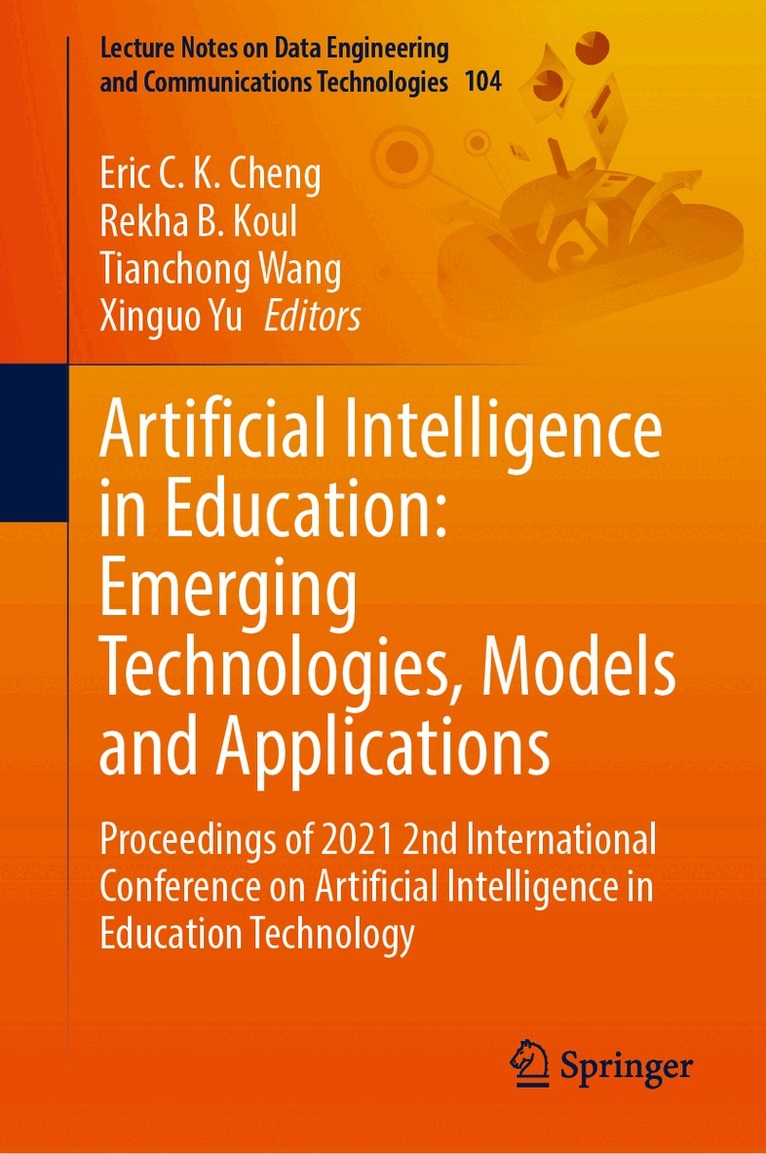
This edited book is a collection of selected research papers presented at the 2021 2nd International Conference on Artificial Intelligence in Education Technology (AIET 2021), held in Wuhan, China on July 2-4, 2021. AIET establishes a platform for AI in education researchers to present research, exchange innovative ideas, propose new models, as well as demonstrate advanced methodologies and novel systems. Rapid developments in artificial intelligence (AI) and the disruptive potential of AI in educational use has drawn significant attention from the education community in recent years. For educators entering this uncharted territory, many theoretical and practical questions concerning AI in education are raised, and issues on AI’s technical, pedagogical, administrative and socio-cultural implications are being debated.
The book provides a comprehensive picture of the current status, emerging trends, innovations, theory, applications, challenges and opportunities of currentAI in education research. This timely publication is well-aligned with UNESCO’s Beijing Consensus on Artificial Intelligence (AI) and Education. It is committed to exploring how best to prepare our students and harness emerging technologies for achieving the Education 2030 Agenda as we move towards an era in which AI is transforming many aspects of our lives. Providing a broad coverage of recent technology-driven advances and addressing a number of learning-centric themes, the book is an informative and useful resource for researchers, practitioners, education leaders and policy-makers who are involved or interested in AI and education.
Artificial Intelligence in Education: Emerging Technologies, Models and Applications
Proceedings of 2021 2nd International Conference on Artificial Intelligence in Education Technology
1 674 kr
Skickas inom 10-15 vardagar
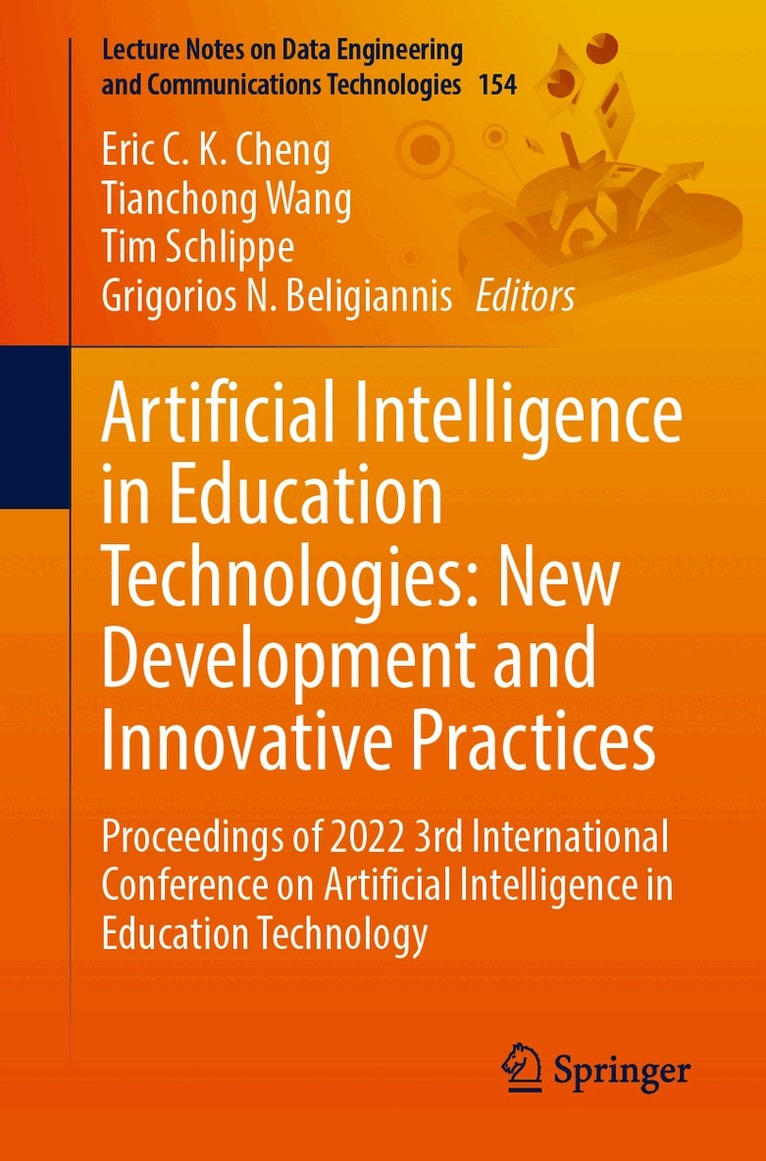
Artificial Intelligence in Education Technologies: New Development and Innovative Practices
Proceedings of 2022 3rd International Conference on Artificial Intelligence in Education Technology
1 362 kr
Skickas inom 10-15 vardagar
1 684 kr
Läs direkt efter köp
This edited book is a collection of selected research papers presented at the 2022 3rd International Conference on Artificial Intelligence in Education Technology (AIET 2022), held in Wuhan, China, on July 1–3, 2022. AIET establishes a platform for AI in education researchers to present research, exchange innovative ideas, propose new models, as well as demonstrate advanced methodologies and novel systems.
The book is divided into five main sections – 1) AI in Education in the Post-COVID New Norm, 2) Emerging AI Technologies, Methods, Systems and Infrastructure, 3) Innovative Practices of Teaching and Assessment Driven by AI and Education Technologies, 4) Curriculum, Teacher Professional Development and Policy for AI in Education, and 5) Issues and Discussions on AI In Education and Future Development. Through these sections, the book provides a comprehensive picture of the current status, emerging trends, innovations, theory, applications, challenges and opportunitiesof current AI in education research.
This timely publication is well aligned with UNESCO’s Beijing Consensus on Artificial Intelligence (AI) and Education. It is committed to exploring how AI may play a role in bringing more innovative practices, transforming education in the post-pandemic new norm and triggering an exponential leap toward the achievement of the Education 2030 Agenda. Providing broad coverage of recent technology-driven advances and addressing a number of learning-centric themes, the book is an informative and useful resource for researchers, practitioners, education leaders and policy-makers who are involved or interested in AI and education.
684 kr
Skickas inom 10-15 vardagar
846 kr
Läs direkt efter köp
Artificial Intelligence in Education Technologies: New Development and Innovative Practices
Proceedings of 2025 6th International Conference on Artificial Intelligence in Education Technology
1 974 kr
Skickas inom 10-15 vardagar
2 145 kr
Läs direkt efter köp
1 883 kr
Skickas inom 10-15 vardagar
2 453 kr
Läs direkt efter köp
2 300 kr
Skickas inom 10-15 vardagar
3 068 kr
Läs direkt efter köp
This book delves into the intersection of technology and education, providing a comprehensive exploration of three key areas: technological issues in education, computer-supported collaborative work, and educational software and serious games. It goes beyond traditional discussions by focusing on the incorporation of Artificial Intelligence (AI) generative tools and their pedagogical implications, institutional policies, and ethical considerations. By addressing areas such as blended learning, social media integration, gamified learning experiences, and the incorporation of AI generative tools, this book provides educators, researchers, and practitioners with valuable insights into harnessing the power of technology, specifically AI, to enhance teaching and learning outcomes.
2 300 kr
Skickas inom 10-15 vardagar
Artificial Intelligence in Education Technologies: New Development and Innovative Practices
Proceedings of 2024 5th International Conference on Artificial Intelligence in Education Technology
1 362 kr
Skickas inom 10-15 vardagar
1 684 kr
Läs direkt efter köp
This book is a collection of selected research papers presented at the 2024 5th International Conference on Artificial Intelligence in Education Technology (AIET 2024), held in Barcelona, Spain, on July 29 - 31, 2024. AIET establishes a platform for AI in education researchers to present research, exchange innovative ideas, propose new models, as well as demonstrate advanced methodologies and novel systems. It is a timely and up-to-date publication responsive to the rapid development of AI technologies, practices and their increasingly complex interplay with the education domain. It promotes the cross-fertilisation of knowledge and ideas from researchers in various fields to construct the interdisciplinary research area of AI in Education. These subject areas include computer science, cognitive science, education, learning sciences, educational technology, psychology, philosophy, sociology, anthropology and linguistics. The feature of this book will contribute from diverse perspectives to form a dynamic picture of AI in Education. It also includes various domain-specific areas for which AI and other education technology systems have been designed or used in an attempt to address challenges and transform educational practice.
Education stands as a cornerstone for societal progress, and ensuring universal access to quality education is integral to achieving Goal 4 of the United Nations'' Sustainable Development Goals (SDGs). The goal is to ensure inclusive and equitable quality education for all by 2030. This involves not only expanding access to education but also improving the quality of education to promote lifelong learning opportunities. AI has the potential to significantly contribute to the achievement of Goal 4. It is committed to exploring how AI may play a role in bringing more innovative practices, transforming education, and triggering an exponential leap towards the achievement of the Education 2030 Agenda. Providing broad coverage of recent technology-driven advances and addressing a number of learning-centric themes, the book is an informative and useful resource for researchers, practitioners, education leaders and policy-makers who are involved or interested in AI and education.
Artificial Intelligence in Education Technologies: New Development and Innovative Practices
Proceedings of 2023 4th International Conference on Artificial Intelligence in Education Technology
1 258 kr
Skickas inom 10-15 vardagar
1 684 kr
Läs direkt efter köp
This book is a collection of selected research papers presented at the 2023 4th International Conference on Artificial Intelligence in Education Technology (AIET 2023), held in Berlin, Germany, on June 30 - July 2, 2023. AIET establishes a platform for AI in education researchers to present research, exchange innovative ideas, propose new models, as well as demonstrate advanced methodologies and novel systems. It is a timely and up-to-date publication responsive to the rapid development of AI technologies, practices and their increasingly complex interplay with the education domain. It promotes the cross-fertilisation of knowledge and ideas from researchers in various fields to construct the interdisciplinary research area of AI in Education. These subject areas include computer science, cognitive science, education, learning sciences, educational technology, psychology, philosophy, sociology, anthropology and linguistics. The feature of this book will contribute from diverse perspectives to form a dynamic picture of AI in Education. It also includes various domain-specific areas for which AI and other education technology systems have been designed or used in an attempt to address challenges and transform educational practice.
This timely publication is in line with UNESCO’s Beijing Consensus on Artificial Intelligence and Education. It is committed to exploring how AI may play a role in bringing more innovative practices, transforming education, and triggering an exponential leap towards the achievement of the Education 2030 Agenda. Providing broad coverage of recent technology-driven advances and addressing a number of learning-centric themes, the book is an informative and useful resource for researchers, practitioners, education leaders and policy-makers who are involved or interested in AI and education.