Eric Cascales – författare
3 010 kr
Skickas inom 10-15 vardagar
3 157 kr
Läs direkt efter köp
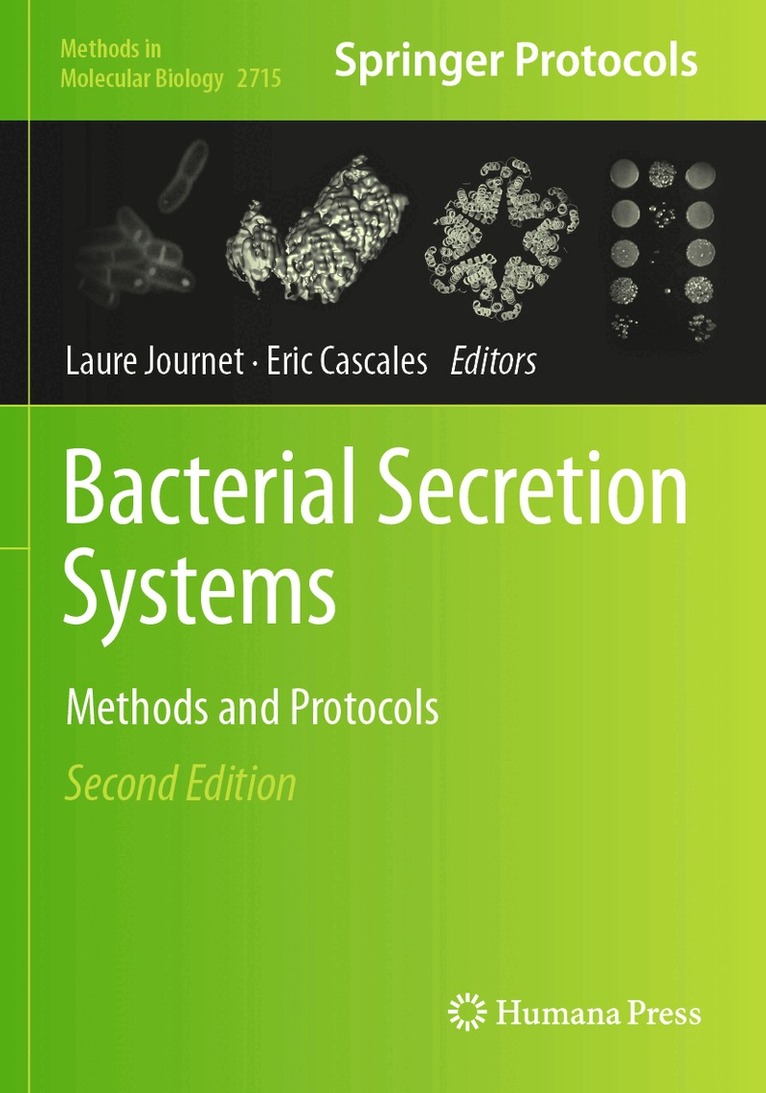
This second edition details new and updated protocols that cover techniques used to study secretion systems. Chapters focus on identifying and localizing the different subunits, defining interactions within subunits, monitoring conformational changes, purifying and imaging of large complexes, defining the assembly pathway by fluorescence microscopy and the role of energy during assembly and/or secretion, identifying secreted effectors as well as using reporters to follow effector transport. Written in the highly successful Methods in Molecular Biology series format, chapters include introductions to their respective topics, lists of the necessary materials and reagents, step-by-step, readily reproducible laboratory protocols, and key tips on troubleshooting and avoiding known pitfalls.
Authoritative and cutting-edge, Bacterial Secretion Systems: Methods and Protocols- Second Edition aims to be a useful andpractical guide to new researchers and experts looking to expand their knowledge.
Bacterial Secretion Systems
Methods and Protocols
2 367 kr
Skickas inom 10-15 vardagar
2 474 kr
Skickas inom 10-15 vardagar
2 207 kr
Läs direkt efter köp
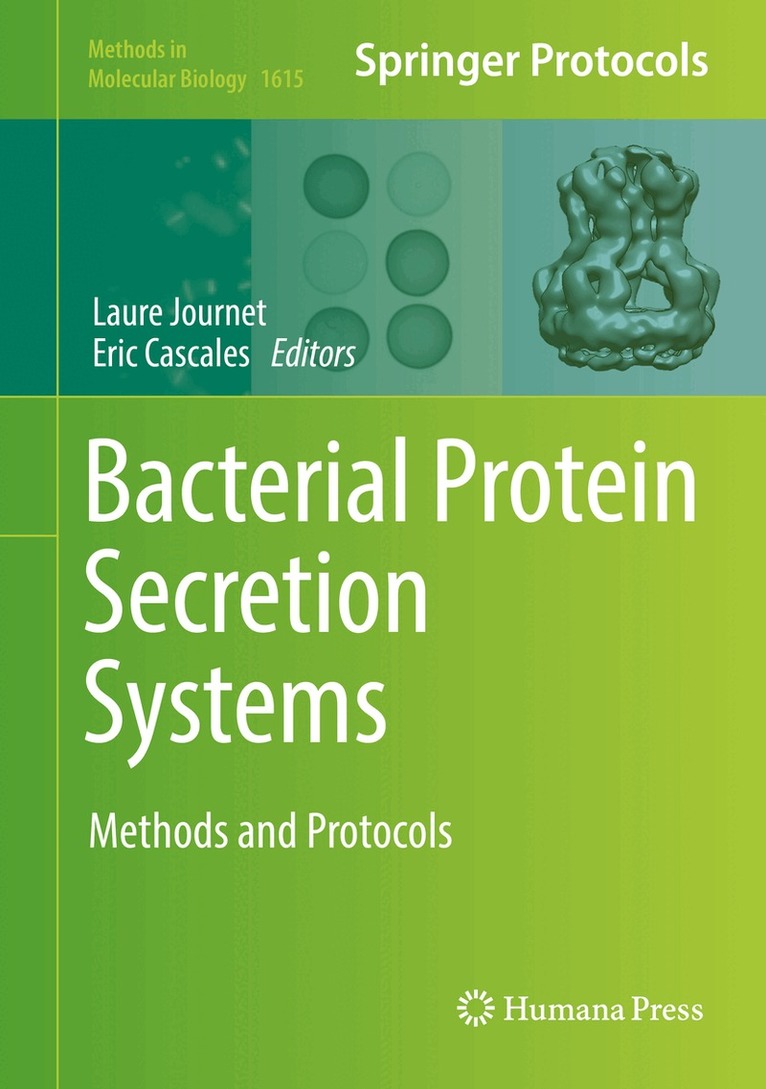
This volume details protocols that cover the broad arsenal of techniques used to study a secretion system from A to Z. Chapters focus on identifying and localizing the different subunits, defining interactions within subunits, monitoring conformational changes, purifying and imaging of large complexes, defining the assembly pathway by fluorescence microscopy and the role of energy during assembly and/or secretion, identifying secreted effectors as well as reporters to follow effector transport. Written in the highly successful Methods in Molecular Biology series format, chapters include introductions to their respective topics, lists of the necessary materials and reagents, step-by-step, readily reproducible laboratory protocols, and tips on troubleshooting and avoiding known pitfalls.
Authoritative and cutting-edge, Bacterial Protein Secretion Systems: Methods and Protocol aims to provide techniques that are not restricted to the study of secretion systems but arealso of specific interest for any researcher interested on multi-protein complexes of the bacterial cell envelope.1 777 kr
Skickas inom 10-15 vardagar
1 594 kr
Skickas inom 5-8 vardagar
1 955 kr
Läs direkt efter köp
Protein transport into and across membranes is a fundamental process in bacteria that touches upon and unites many areas of microbiology, including bacterial cell physiology, adhesion and motility, nutrient scavenging, intrabacterial signaling and social behavior, toxin deployment, interbacterial antagonism and collaboration, host invasion and disruption, and immune evasion. A broad repertoire of mechanisms and macromolecular machines are required to deliver protein substrates across bacterial cell membranes for intended effects. Some machines are common to most, if not all bacteria, whereas others are specific to Gram-negative or Gram-positive species or species with unique cell envelope properties such as members of Actinobacteria and Spirochetes.
Protein Secretion in Bacteria, authored and edited by an international team of experts, draws together the many distinct functions and mechanisms involved in protein translocation in one concise tome. This comprehensive book presents updated information on all aspects of bacterial protein secretion encompassing:
Individual secretory systems–Sec, Tat, and T1SS through the newly discovered T9SS Mechanisms, structures, and functions of bacterial secretion systems Lipoprotein sorting pathways, outer membrane vesicles, and the sortase system Structures and roles of surface organelles, including flagella, pili, and curli Emerging technologies and translational implicationsProtein Secretion in Bacteria serves as both an introductory guide for students and postdocs and a ready reference for seasoned researchers whose work touches on protein export and secretion. This volume synthesizes the diversity of mechanisms of bacterial secretion across the microbial world into a digestible resource to stimulate new research, inspire continued identification and characterization of novel systems, and bring about new ways to manipulate these systems for biotechnological, preventative, and therapeutic applications.
1 955 kr
Läs direkt efter köp
Protein transport into and across membranes is a fundamental process in bacteria that touches upon and unites many areas of microbiology, including bacterial cell physiology, adhesion and motility, nutrient scavenging, intrabacterial signaling and social behavior, toxin deployment, interbacterial antagonism and collaboration, host invasion and disruption, and immune evasion. A broad repertoire of mechanisms and macromolecular machines are required to deliver protein substrates across bacterial cell membranes for intended effects. Some machines are common to most, if not all bacteria, whereas others are specific to Gram-negative or Gram-positive species or species with unique cell envelope properties such as members of Actinobacteria and Spirochetes.
Protein Secretion in Bacteria, authored and edited by an international team of experts, draws together the many distinct functions and mechanisms involved in protein translocation in one concise tome. This comprehensive book presents updated information on all aspects of bacterial protein secretion encompassing:
Individual secretory systems–Sec, Tat, and T1SS through the newly discovered T9SS Mechanisms, structures, and functions of bacterial secretion systems Lipoprotein sorting pathways, outer membrane vesicles, and the sortase system Structures and roles of surface organelles, including flagella, pili, and curli Emerging technologies and translational implicationsProtein Secretion in Bacteria serves as both an introductory guide for students and postdocs and a ready reference for seasoned researchers whose work touches on protein export and secretion. This volume synthesizes the diversity of mechanisms of bacterial secretion across the microbial world into a digestible resource to stimulate new research, inspire continued identification and characterization of novel systems, and bring about new ways to manipulate these systems for biotechnological, preventative, and therapeutic applications.