Eric G. Swedin - Böcker
Visar alla böcker från författaren Eric G. Swedin. Handla med fri frakt och snabb leverans.
10 produkter
10 produkter
626 kr
Skickas inom 10-15 vardagar
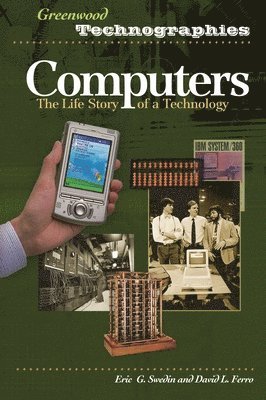
The computer is the great technological and scientific innovation of the last half of the twentieth century. It has revolutionized how we organize information, how we communicate with each other, and even the way that we think about the human mind. Computers have eased the drudgery of such tasks as calculating sums and clerical work, making them both more bearable and more efficient. The computer has become ubiquitous in many aspects of business, recreation, and everyday life, and the trend is that they are becoming both more powerful and easier to use. Computers: The Life Story of a Technology provides an accessible overview of this ever changing technology, giving students and lay readers an understanding of the complete scope of its history from ancient times to the present day.The volume includes a glossary of terms, a timeline of important events, and a selected bibliography of useful resources for further information.
533 kr
Skickas inom 5-8 vardagar
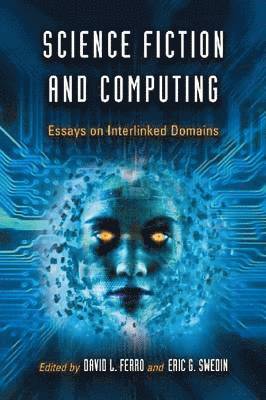
The prevalence of science fiction readership among those who create and program computers is so well-known that it has become a cliche, but the phenomenon has remained largely unexplored by scholars. What role has science fiction played in the actual development of computers and computing? And likewise, how has computing (including the related fields of robotics and artificial intelligence) affected the course of science fiction? The 18 essays in this critical work explore the interrelationship of these domains over the span of more than half a century.
363 kr
Skickas inom 5-8 vardagar
A great technological and scientific innovation of the last half of the twentieth century, the computer has revolutionized how we organize information, how we communicate with each other, and even the way we think about the human mind. Computers have eased the drudgery of such tasks as calculating sums and clerical work, making them both more bearable and more efficient, whatever the occasional frustration they carry with them. The computer has become a standard fixture in our culture, a necessity for many aspects of business, recreation, and everyday life. In this book, Eric G. Swedin and David L. Ferro offer an accessible short history of this dynamic technology, covering its central themes from ancient times to the present day.
231 kr
Skickas inom 5-8 vardagar
188 kr
Skickas inom 5-8 vardagar
764 kr
Skickas inom 10-15 vardagar
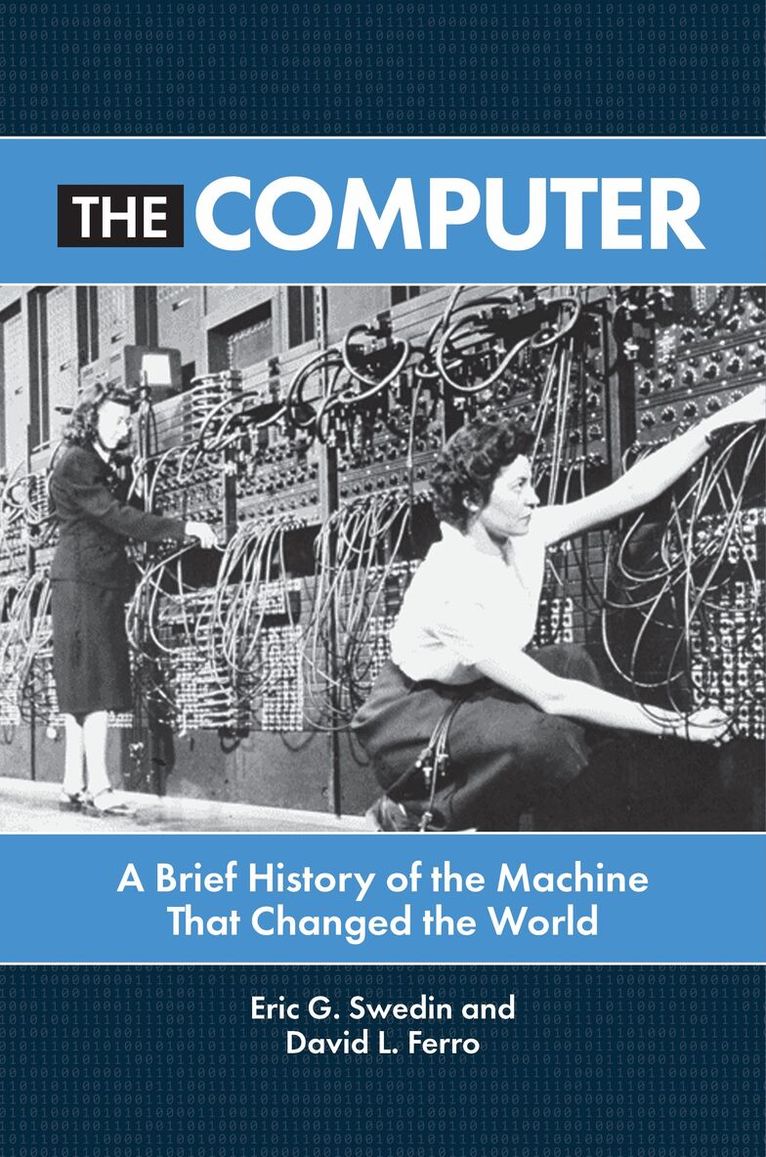
This book, aimed at general readers, covers the entirety of computing history from antiquity to the present, placing the story of computing into the broader context of politics, economics, society, and more.Computers dominate the world we live in, and this book describes how we got here. The Computer: A Brief History of the Machine That Changed the World covers topics from early efforts at mathematical computation back in ancient times, such as the abacus and the Antikythera device, through Babbage's Difference Engine and the Hollerith Tabulating Machines of the 19th century, to the eventual invention of the modern computer during World War II and its aftermath. The scope of the text reaches into the modern day, with chapters on social media and the influence of computers and technology on recent elections.The information in this book, perfect for readers new to the topic or those looking to delve into the history of computers in greater detail, can be accessed both chronologically and topically. With chapters focusing on larger time periods as well as shorter subsections covering specific people and topics, this book is designed to make the history of computing as approachable as possible.
213 kr
Skickas inom 5-8 vardagar
432 kr
Skickas inom 3-6 vardagar
In 1961 at the Bay of Pigs, CIA-trained and -organized Cuban exiles aiming to overthrow Fidel Castro were soundly defeated. Most were taken prisoner by Cuban armed forces. Fearing another U.S. invasion of its new ally, the Soviet Union sneaked into Cuba strategic missiles tipped with nuclear warheads and Soviet troops armed with tactical nuclear weapons. However, a U-2 spy plane flight would soon find the Soviet missile sites, thus sparking the famous missile crisis. For thirteen terrifying days, the world watched nervously as the two superpowers moved toward escalation, holding the world's fate in their hands. Finally, Nikita Khrushchev blinked. He agreed to withdraw the weapons from Cuba in return for John F. Kennedy's pledge not to invade the island.But what if it had not turned out this way? What if the U-2 flight had been delayed? If the confrontation had set off a nuclear war, what would have happened to the United States and Soviet Union in 1962? What kind of account would a historian have written in a world scarred by nuclear war?Eric G. Swedin draws on research made available after the Soviet Union's collapse to examine what could have happened. Top U.S. military officers all urged stronger action against Cuba than the naval blockade, including a bombing campaign and even a full-scale invasion. Unknown to the Americans, meanwhile, the Soviet Union had tactical nuclear weapons in Cuba and were prepared to use them.The 1962 crisis had many possible outcomes. Positing an alternate history helps us better appreciate the dangers of that tense time. Such counterfactual speculation shows what the Cuban missile crisis could have wrought and how it was truly one of the most important moments of the twentieth century.
1 076 kr
Skickas inom 10-15 vardagar
This work is a unique introductory A–Z resource detailing the scientific achievements of the contemporary world and analyzing the key scientific trends, discoveries, and personalities of the modern age.An authoritative reference survey of the modern age of scientific discovery, Science in the Contemporary World is a scholarly yet accessible chronicle of scientific achievement from the discovery of penicillin to the latest developments in space exploration and cloning.Over 200 A–Z entries cover the full spectrum of contemporary science, with emphasis on its diverse nature. Within the last 50 years, medicine has eradicated the killer disease smallpox, but primarily because the virus can live only in humans. Space probes have revealed that on Europa, a moon of Jupiter, an ice-capped ocean with the potential to support life probably exists. Marvels from animal psychology and deep-sea exploration are also explored extensively.
310 kr
Skickas inom 10-15 vardagar
This book, aimed at general readers, covers the entirety of computing history from antiquity to the present, placing the story of computing into the broader context of politics, economics, society, and more.Computers dominate the world we live in, and this book describes how we got here. The Computer: A Brief History of the Machine That Changed the World covers topics from early efforts at mathematical computation back in ancient times, such as the abacus and the Antikythera device, through Babbage's Difference Engine and the Hollerith Tabulating Machines of the 19th century, to the eventual invention of the modern computer during World War II and its aftermath. The scope of the text reaches into the modern day, with chapters on social media and the influence of computers and technology on recent elections.The information in this book, perfect for readers new to the topic or those looking to delve into the history of computers in greater detail, can be accessed both chronologically and topically. With chapters focusing on larger time periods as well as shorter subsections covering specific people and topics, this book is designed to make the history of computing as approachable as possible.