Eric Katz - Böcker
Visar alla böcker från författaren Eric Katz. Handla med fri frakt och snabb leverans.
6 produkter
6 produkter
2 098 kr
Skickas inom 10-15 vardagar
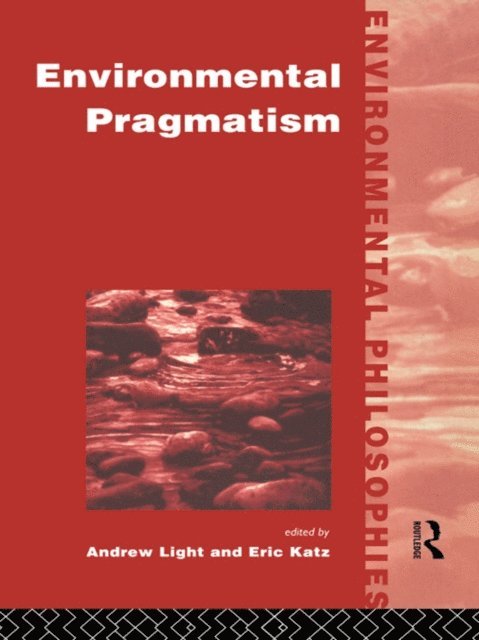
Environmental pragmatism is a new strategy in environmental thought. It argues that theoretical debates are hindering the ability of the environmental movement to forge agreement on basic policy imperatives. This new direction in environmental thought moves beyond theory, advocating a serious inquiry into the merits of moral pluralism. Environmental pragmatism, as a coherent philosophical position, connects the methodology of classical American pragmatic thought to the explanation, solution and discussion of real issues.This concise, well-focused collection is the first comprehensive presentation of environmental pragmatism as a new philosophical approach to environmental thought and policy.
633 kr
Skickas inom 10-15 vardagar
Environmental pragmatism is a new strategy in environmental thought. It argues that theoretical debates are hindering the ability of the environmental movement to forge agreement on basic policy imperatives. This new direction in environmental thought moves beyond theory, advocating a serious inquiry into the merits of moral pluralism. Environmental pragmatism, as a coherent philosophical position, connects the methodology of classical American pragmatic thought to the explanation, solution and discussion of real issues.This concise, well-focused collection is the first comprehensive presentation of environmental pragmatism as a new philosophical approach to environmental thought and policy.
675 kr
Skickas inom 10-15 vardagar
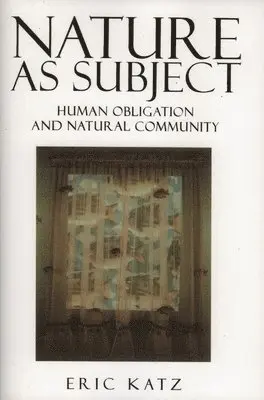
Written by one of the instrumental figures in environmental ethics, Nature as Subject traces the development of an ethical policy that is centered not on human beings, but on itself. Katz applies this idea to contemporary environmental problems, introducing themes of justice, domination, imperialism, and the Holocaust. This volume will stand as a foundational work for environmental scholars, government and industry policy makers, activists, and students in advanced philosophy and environmental studies courses.
416 kr
Tillfälligt slut
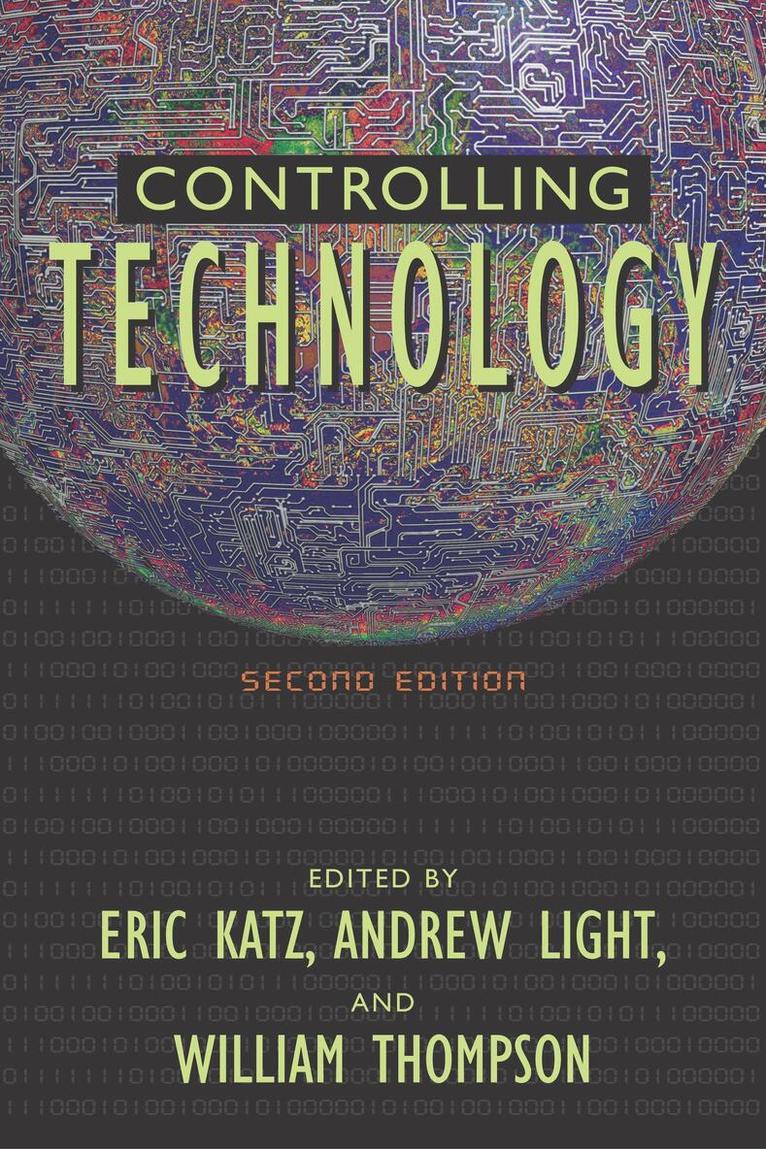
Do we control technology or does technology control us? Explosive progress in the twentieth century has led to the disquieting perception that technology is not the servant of humanity – but its master.Controlling Technology brings together readings that focus on the conflicting views concerning the nature of modern technology as it relates to the quality of everyday life and to the larger problems of human survival on this planet. The thesis that technology has indeed become autonomous and independent of human ideals is contrasted with the position that, by its very nature, technology can exist only under human control.Like the first edition, this revised edition contains classic essays that are fundamental to the study of technology. To these have been added recent scholarly treatments that analyze the classic tradition, as well as updated popular essays. A whole new section of case studies delves into the topics of computers, information, and virtual reality. Also included are essays on technology and the recreation of nature, which debate the pros and cons of environmental restoration.This excellent collection of essays will be of great value as a reader for undergraduate courses in science and technology studies, technology and human values, and the social dimensions of technology.
Anne Frank's Tree
Nature's Confrontation with Technology, Domination, and the Holocaust
Inbunden, Engelska, 2015
944 kr
Skickas inom 5-8 vardagar
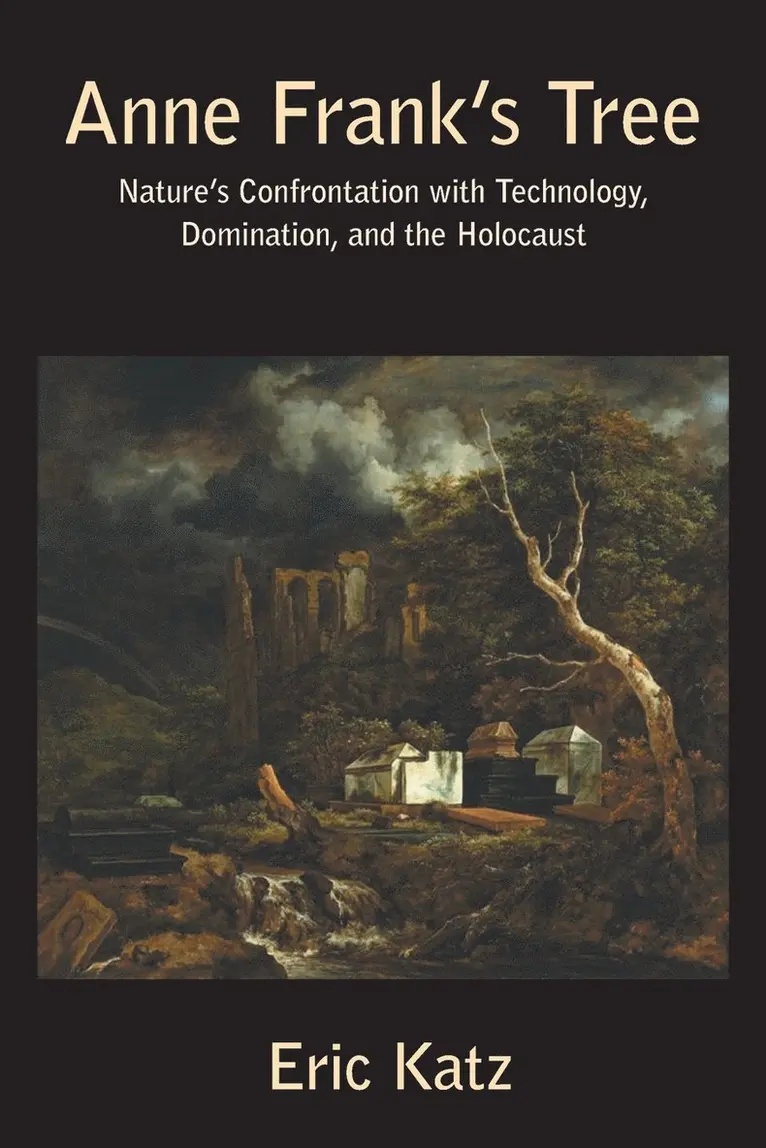
In this important and original interdisciplinary work, well-known environmental philosopher Eric Katz explores technology's role in dominating both nature and humanity. He argues that technology dominates, and hence destroys, the natural world; it dominates, and hence destroys, critical aspects of human life and society. Technology causes an estrangement from nature, and thus a loss of meaning in human life. As a result, humans lose the power to make moral and social choices; they lose the power to control their lives. Katz's argument innovatively connects two distinct areas of thought: the fundamental goal of the Holocaust, including Nazi environmental policy, to heal the degenerate elements of society; and the plan to heal degraded natural systems that informs the contemporary environmental policy of 'ecological restoration'. In both arenas of 'healing,' Katz argues that technological forces drive action, while domination emerges as the prevailing ideology. Katz's work is a plea for the development of a technology that does not dominate and destroy but instead promotes autonomy and freedom.Anne Frank, a victim of Nazi ideology and action, saw the titular tree behind her secret annex as a symbol of freedom and moral goodness.In Katz's argument, the tree represents a free and autonomous nature, resistant to human control and domination. Anne Frank's Tree is rooted in an empirical approach to philosophy, seating complex ethical ideas in an accessible and powerful narrative of historical fact and deeply personal lived experience.
Anne Frank's Tree
Nature's Confrontation with Technology, Domination, and the Holocaust
Häftad, Engelska, 2016
402 kr
Skickas inom 5-8 vardagar
In this important and original interdisciplinary work, well-known environmental philosopher Eric Katz explores technology's role in dominating both nature and humanity. He argues that technology dominates, and hence destroys, the natural world; it dominates, and hence destroys, critical aspects of human life and society. Technology causes an estrangement from nature, and thus a loss of meaning in human life. As a result, humans lose the power to make moral and social choices; they lose the power to control their lives. Katz's argument innovatively connects two distinct areas of thought: the fundamental goal of the Holocaust, including Nazi environmental policy, to heal the degenerate elements of society; and the plan to heal degraded natural systems that informs the contemporary environmental policy of 'ecological restoration'. In both arenas of 'healing', Katz argues that technological forces drive action, while domination emerges as the prevailing ideology. Katz's work is a plea for the development of a technology that does not dominate and destroy but instead promotes autonomy and freedom.Anne Frank, a victim of Nazi ideology and action, saw the titular tree behind her secret annex as a symbol of freedom and moral goodness. In Katz's argument, the tree represents a free and autonomous nature, resistant to human control and domination. Anne Frank's Tree is rooted in an empirical approach to philosophy, seating complex ethical ideas in an accessible and powerful narrative of historical fact and deeply personal lived experience. The book is essentially a meditation on the opposing themes of domination and autonomy as they relate to the uses of technology in environmental policy and in the genocidal policies of the Holocaust. Rather than an abstract, or theoretical, examination of the concepts of 'domination' and 'autonomy,' the book undertakes a robust pragmatic investigation into the ways in which these themes 'cash-out' in specific real-life or historical situations. It is a work in 'empirical' or 'historical' philosophy, for the meaning of the philosophical ideas and the arguments used to justify them flow out of a detailed understanding of historical and practical reality as well as personal lived experience.The overall argument of the book is this: There is a connection between the destruction of nature and the destruction of specific human cultures, although this connection is not often perceived or understood. The analysis of environmental problems dealing with the degradation of natural systems is generally seen as distinct from the analysis of human historical problems such as war, imperialism, and genocide. But on the level of practical or physical reality, it can be seen that science and technology plays a significant and crucial role in this connection; moreover, on the conceptual level, the ideology of domination and control is the connecting theme. By the examination of several case studies or historical examples, we can see the pervasive power of the idea of domination expressed through the development and use of science and technology. Technology dominates, and hence destroys the natural world; it dominates, and hence destroys, critical aspects of human life and society. In this realm of technological domination, humans lose the power to make moral and social choices; they lose the power to control their lives.To avoid or overcome this evil of domination, we must turn to the ideas of autonomy and freedom as our primary goals of the development and use of technology. Anne Frank's tree can serve as a symbol of the resistance to domination and oppression and the need for the preservation of freedom and autonomy both in human society and in the natural world.