Eric Normand – författare
Visar alla böcker från författaren . Handla med fri frakt och snabb leverans.
3 produkter
3 produkter
Del 2570 - BAR International Series
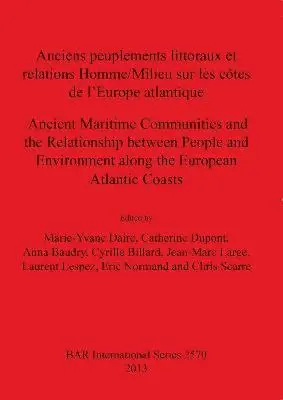
Anciens peuplements littoraux et relations Homme/Milieu sur les côtes de l'Europe Atlantique / Ancient Maritime Communities and the Relationship betwe
Häftad, Engelska, 2013
1 938 kr
Skickas inom 5-8 vardagar
Häftad, Engelska, 2021
626 kr
Skickas inom 7-10 vardagar
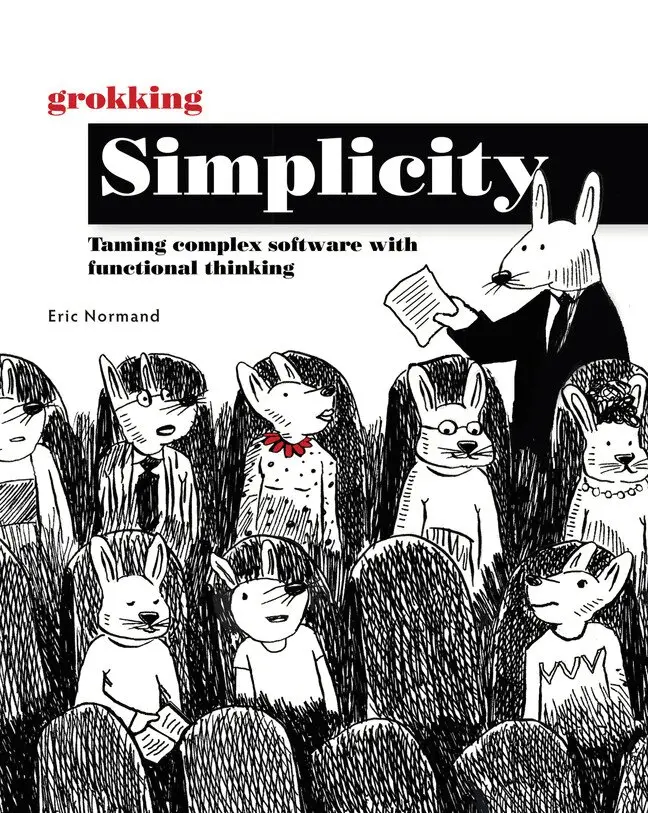
Distributed across servers, difficult to test, and resistant to modification—modern software is complex. Grokking Simplicity is a friendly, practical guide that will change the way you approach software design and development. It introduces a unique approach to functional programming that explains why certain features of software are prone to complexity, and teaches you the functional techniques you can use to simplify these systems so that they’re easier to test and debug. Available in PDF (ePub, kindle, and liveBook formats coming soon). about the technologyEven experienced developers struggle with software systems that sprawl across distributed servers and APIs, are filled with redundant code, and are difficult to reliably test and modify. Adopting ways of thinking derived from functional programming can help you design and refactor your codebase in ways that reduce complexity, rather than encouraging it. Grokking Simplicity lays out how to use functional programming in a professional environment to write a codebase that’s easier to test and reuse, has fewer bugs, and is better at handling the asynchronous nature of distributed systems. about the bookIn Grokking Simplicity, you’ll learn techniques and, more importantly, a mindset that will help you tackle common problems that arise when software gets complex. Veteran functional programmer Eric Normand guides you to a crystal-clear understanding of why certain features of modern software are so prone to complexity and introduces you to the functional techniques you can use to simplify these systems so that they’re easier to read, test, and debug. Through hands-on examples, exercises, and numerous self-assessments, you’ll learn to organize your code for maximum reusability and internalize methods to keep unwanted complexity out of your codebase. Regardless of the language you’re using, the ways of thinking in this book will help recognize problematic code and tame even the most complex software. what's inside Apply functional programming principles to reduce codebase complexity Work with data transformation pipelines for code that’s easier to test and reuse Tools for modeling time to simplify asynchrony 60 exercises and 100 questions to test your knowledge about the readerFor experienced programmers. Examples are in JavaScript. about the author Eric Normand has been a functional programmer since 2001 and has been teaching functional programming online and in person since 2007. Visit LispCast.com to see more of his credentials.
E-bok
Engelska, 2021418 kr
Läs direkt efter köp
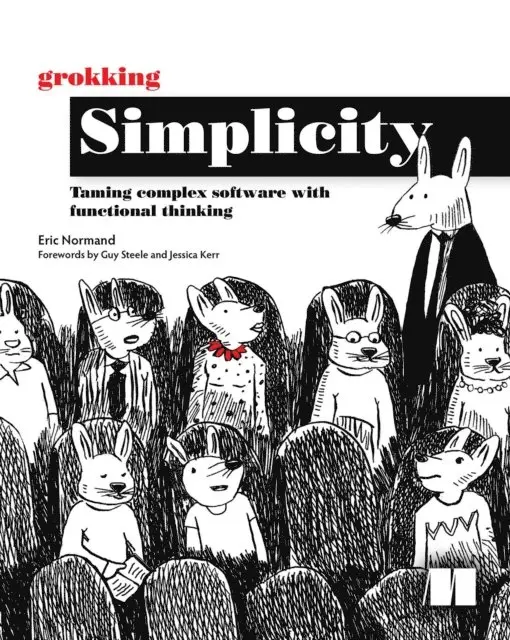
"The most insightful and intuitive guide to clean and simple software. I recommend this to all software developers." - Rob Pacheco, Vision Government Solutions Grokking Simplicity is a friendly, practical guide that will change the way you approach software design and development. Distributed across servers, difficult to test, and resistant to modification—modern software is complex. Grokking Simplicity is a friendly, practical guide that will change the way you approach software design and development. It introduces a unique approach to functional programming that explains why certain features of software are prone to complexity, and teaches you the functional techniques you can use to simplify these systems so that they’re easier to test and debug. Purchase of the print book includes a free eBook in PDF, Kindle, and ePub formats from Manning Publications. About the technology Developers rightly fear the unintended complexity that infects most code. This book shows you how to write software that keeps complexity close to its inherent minimum. As you write software you should distinguish between code that alters your system’s state, and code that does not. Once you learn to make that distinction, you can refactor much of your state-altering “actions” into stateless “calculations.” Your software will be simpler. About the book The book also teaches you to solve the complex timing bugs that inevitably creep into asynchronous and multithreaded code. In advanced sections of the book you learn how composable abstractions help avoid repeating code and open up new levels of expressivity. What's inside Patterns for simpler code Powerful time modeling approaches to simplify asynchronous code How higher-order functions can make code reusable and composable About the reader For intermediate and advanced developers building complex software. Exercises, illustrations, self-assessments, and hands-on examples lock in each new idea. About the author Eric Normand is an expert software developer who has been an influential teacher of functional programming since 2007. Table of Contents 1 Welcome to Grokking Simplicity 2 Functional thinking in action PART 1 - ACTIONS, CALCULATIONS, AND DATA 3 Distinguishing actions, calculations, and data 4 Extracting calculations from actions 5 Improving the design of actions 6 Staying immutable in a mutable language 7 Staying immutable with untrusted code 8 Stratified design, part 1 9 Stratified design, part 2 PART 2 - FIRST-CLASS ABSTRACTIONS 10 First-class functions, part 1 11 First-class functions, part 2 12 Functional iteration 13 Chaining functional tools 14 Functional tools for nested data 15 Isolating timelines 16 Sharing resources between timelines 17 Coordinating timelines 18 Reactive and onion architectures 19 The functional journey ahead