Eric P. Robinson - Böcker
Visar alla böcker från författaren Eric P. Robinson. Handla med fri frakt och snabb leverans.
5 produkter
5 produkter
966 kr
Skickas inom 10-15 vardagar
A primer on legal issues relating to cyberspace, this textbook introduces business, policy and ethical considerations raised by our use of information technology.With a focus on the most significant issues impacting internet users and businesses in the United States of America, the book provides coverage of key topics such as social media, online privacy, artificial intelligence and cybercrime as well as emerging themes such as doxing, ransomware, revenge porn, data-mining, e-sports and fake news. The authors, experienced in journalism, technology and legal practice, provide readers with expert insights into the nuts and bolts of cyber law.Cyber Law and Ethics: Regulation of the Connected World provides a practical presentation of legal principles, and is essential reading for non-specialist students dealing with the intersection of the internet and the law.
549 kr
Skickas inom 7-10 vardagar
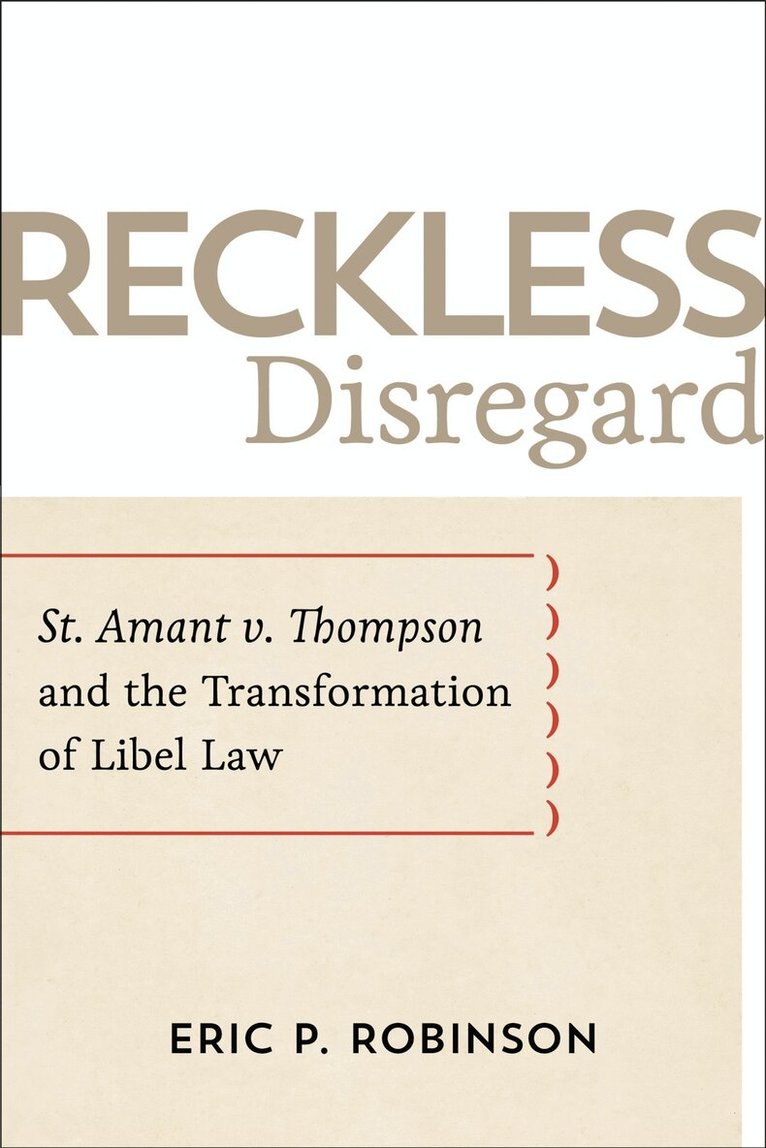
In the years following the landmark United States Supreme Court decision on libel law in New York Times v. Sullivan, the court ruled on a number of additional cases that continued to shape the standards of protected speech. As part of this key series of judgments, the justices explored the contours of the Sullivan ruling and established the definition of ""reckless disregard"" as it pertains to ""actual malice"" in the case of St. Amant v. Thompson. While an array of scholarly and legal literature examines Sullivan and some subsequent cases, the St. Amant case- once called ""the most important of the recent Supreme Court libel decisions""- has not received the attention it warrants. Eric P. Robinson's Reckless Disregard corrects this omission with a thorough analysis of the case and its ramifications.The history of St. Amant v. Thompson begins with the contentious 1962 U.S. Senate primary election in Louisiana, between incumbent Russell Long and businessman Philemon ""Phil"" A. St. Amant. The initial lawsuit stemmed from a televised campaign address in which St. Amant attempted to demonstrate Long's alleged connections with organized crime and corrupt union officials. Although St. Amant's claims had no effect on the outcome of the election, a little-noticed statement he made during the address- that money had ""passed hands"" between Baton Rouge Teamsters leader Ed Partin and East Baton Rouge Parish deputy sheriff Herman A. Thompson- led to a defamation lawsuit that ultimately passed through the legal system to the Supreme Court.A decisive step in the journey toward the robust protections that American courts provide to comments about public officials, public figures, and matters of public interest, St. Amant v. Thompson serves as a significant development in modern American defamation law. Robinson's study deftly examines the background of the legal proceedings as well as their social and political context. His analysis of how the Supreme Court ruled in this case reveals the justices' internal deliberations, shedding new light on a judgment that forever changed American libel law.
2 909 kr
Skickas inom 10-15 vardagar
A primer on legal issues relating to cyberspace, this textbook introduces business, policy and ethical considerations raised by our use of information technology.With a focus on the most significant issues impacting internet users and businesses in the United States of America, the book provides coverage of key topics such as social media, online privacy, artificial intelligence and cybercrime as well as emerging themes such as doxing, ransomware, revenge porn, data-mining, e-sports and fake news. The authors, experienced in journalism, technology and legal practice, provide readers with expert insights into the nuts and bolts of cyber law.Cyber Law and Ethics: Regulation of the Connected World provides a practical presentation of legal principles, and is essential reading for non-specialist students dealing with the intersection of the internet and the law.
892 kr
Skickas inom 10-15 vardagar
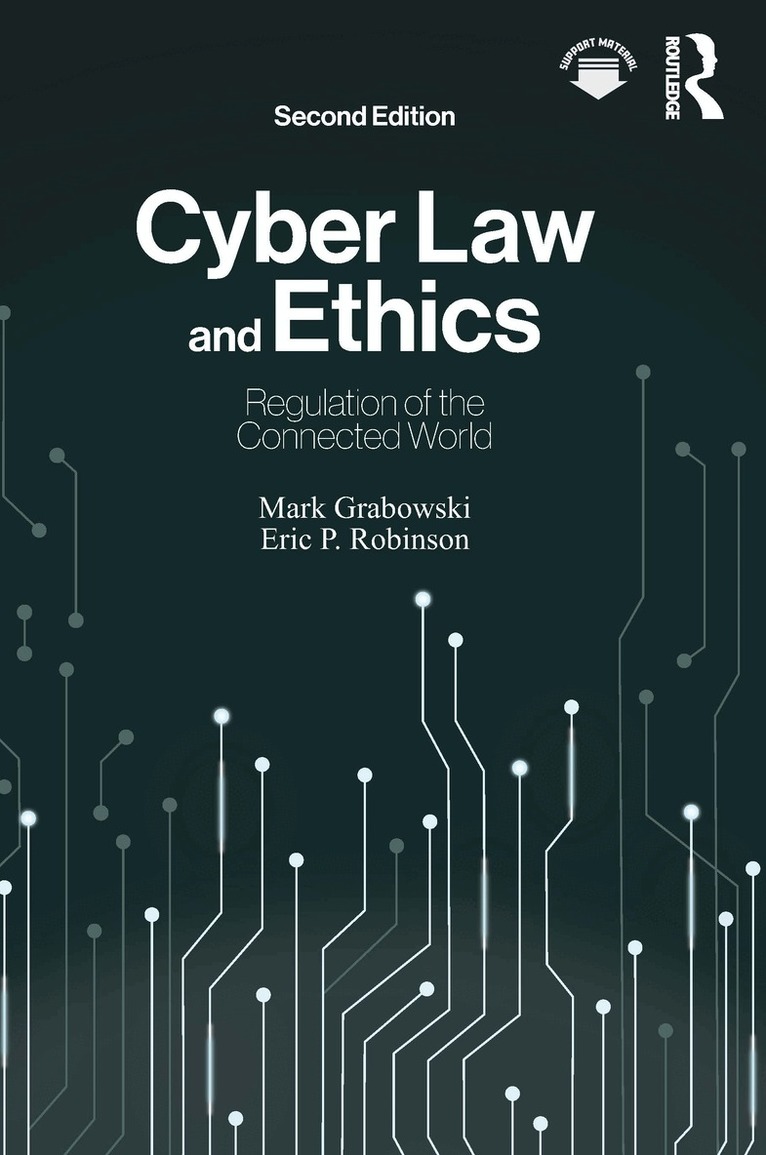
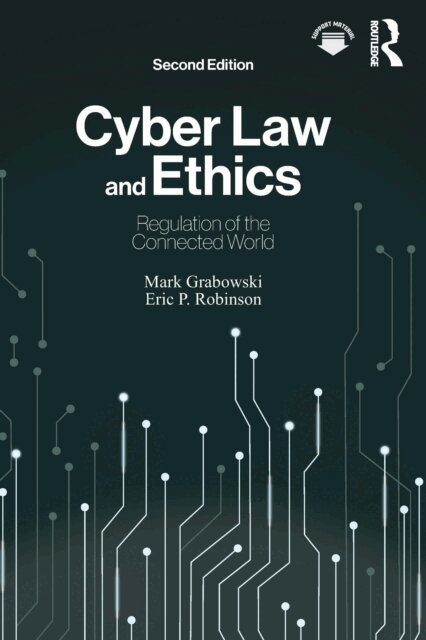
In today’s digital age, understanding the legal and ethical rules that govern cyberspace is essential—not just for future lawyers, but for anyone navigating careers in media, technology, business or government. The updated and expanded second edition of Cyber Law and Ethics continues to offer a practical, student-friendly introduction to the fast-changing world of cyber law.Written by two journalists-turned-lawyers-turned-professors, the book demystifies complex legal concepts and explores real-world dilemmas surrounding online speech, privacy, cybersecurity, intellectual property, artificial intelligence and digital commerce. It tackles timely and often controversial issues, including cancel culture and content moderation, AI-generated deepfakes and chatbots, revenge porn and age verification laws, cryptocurrency regulation and financial censorship, cybercrime and hacking and the global battle over who controls the internet.With clear, engaging writing and real-life examples, Cyber Law and Ethics avoids legal jargon and instead offers a bottom-line approach tailored for undergraduate students. Drawing on years of classroom experience, the authors break down difficult topics in an accessible way—equipping students with the digital literacy and critical thinking skills they need to understand the rules shaping our connected world. A suite of instructors’ resources is also available to support teaching and engagement further.
1 921 kr
Skickas inom 10-15 vardagar
In today’s digital age, understanding the legal and ethical rules that govern cyberspace is essential—not just for future lawyers, but for anyone navigating careers in media, technology, business or government. The updated and expanded second edition of Cyber Law and Ethics continues to offer a practical, student-friendly introduction to the fast-changing world of cyber law.Written by two journalists-turned-lawyers-turned-professors, the book demystifies complex legal concepts and explores real-world dilemmas surrounding online speech, privacy, cybersecurity, intellectual property, artificial intelligence and digital commerce. It tackles timely and often controversial issues, including cancel culture and content moderation, AI-generated deepfakes and chatbots, revenge porn and age verification laws, cryptocurrency regulation and financial censorship, cybercrime and hacking and the global battle over who controls the internet.With clear, engaging writing and real-life examples, Cyber Law and Ethics avoids legal jargon and instead offers a bottom-line approach tailored for undergraduate students. Drawing on years of classroom experience, the authors break down difficult topics in an accessible way—equipping students with the digital literacy and critical thinking skills they need to understand the rules shaping our connected world. A suite of instructors’ resources is also available to support teaching and engagement further.