Éric Phélippeau – författare
Visar alla böcker från författaren Éric Phélippeau. Handla med fri frakt och snabb leverans.
6 produkter
Political Corruption in a World in Transition
Av Jonathan Mendilow, Éric Phélippeau m. fl.
Inbunden, 2019
939 kr
Lägg i varukorg
Political Corruption in a World in Transition
Av Jonathan Mendilow, Éric Phélippeau m. fl.
Häftad, 2020
836 kr
Lägg i varukorg
Handbook of Political Party Funding
Av Jonathan Mendilow, Eric Phélippeau
Inbunden, 2018
3922 kr
Lägg i varukorg
Scrutinizing a relatively new field of study, the Handbook of Political Party Funding assesses the basic assumptions underlying the research, presenting an unequalled variety of case studies from diverse political finance systems. With contributions from both eminent international scholars and …
Handbook of Political Party Funding
Av Eric Phelippeau, Jonathan Mendilow
E-bok, 2018
880 kr
Lägg i varukorg
Scrutinizing a relatively new field of study, the Handbook of Political Party Funding assesses the basic assumptions underlying the research, presenting an unequalled variety of case studies from diverse political finance systems. With contributions from both eminent international scholars and …
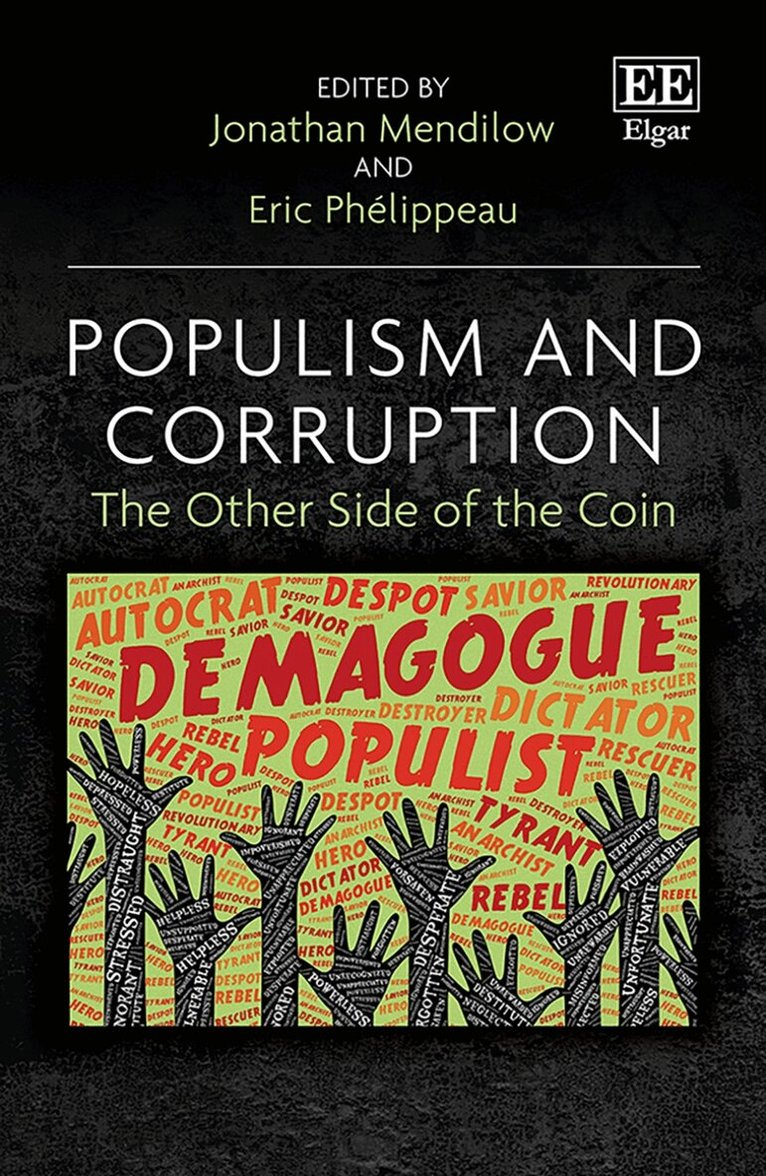
Populism and Corruption
The Other Side of the Coin
Av Jonathan Mendilow, Éric Phélippeau
Inbunden, 2021
1999 kr
Lägg i varukorg
This timely book offers an in-depth analysis of the intersection between populism and corruption, addressing phenomena that have been, so far, largely treated separately. Bringing together two dynamic and well-established fields of study, it proposes a theoretical framework for the study of …
Populism and Corruption
The Other Side of the Coin
Av Eric Phelippeau, Jonathan Mendilow
E-bok, 2021
444 kr
Lägg i varukorg
This timely book offers an in-depth analysis of the intersection between populism and corruption, addressing phenomena that have been, so far, largely treated separately. Bringing together two dynamic and well-established fields of study, it proposes a theoretical framework for the study of …