Eric Stice – författare
Visar alla böcker från författaren Eric Stice. Handla med fri frakt och snabb leverans.
3 produkter
3 produkter
E-bok
Engelska, 2012785 kr
Läs direkt efter köp
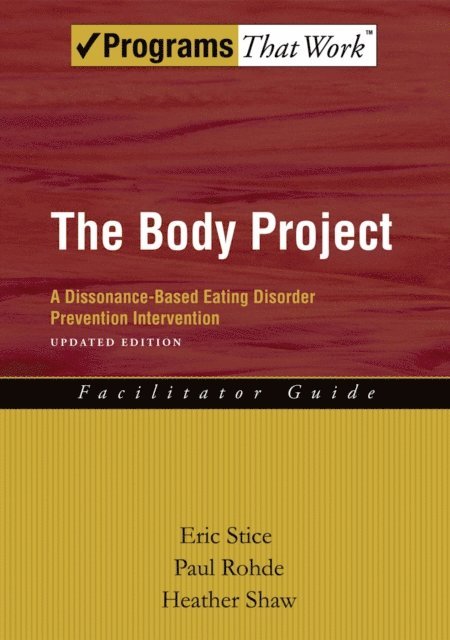
Eating disorders are among the most prevalent psychiatric disorders in adolescent and young adult females, affecting approximately 10% of young women. Unfortunately, less than half of those with eating disorders receive treatment, which can be very expensive. Thus, effective prevention has become a major public health priority.The Body Project is an empirically based eating disorder prevention program that offers young women an opportunity to critically consider the costs of pursuing the ultra-thin ideal promoted in the mass media, which improves body acceptance and reduces risk for developing eating disorders. Young women with elevated body dissatisfaction are recruited for group sessions in which they participate in a series of verbal, written, and behavioral exercises in which they consider the negative effects of pursuing the thin-ideal. Chapters provide information on the significance of body image and eating disorders, the intervention theory, the evidence base which supports the theory, recruitment and training procedures, solutions to common challenges, and a new program aimed at reducing obesity onset, as well as intervention scripts and participant handouts. The Body Project is the only currently available eating disorder prevention program that has been shown to reduce risk for onset of eating disorders and received support in trials conducted by several independent research groups. The group sessions are brief and fun to lead, and this guide provides all of the necessary information to walk clinicians, teachers, counselors, and volunteers through leading the program for vulnerable young women.
E-bok
PDF, Engelska, 2007283 kr
Läs direkt efter köp
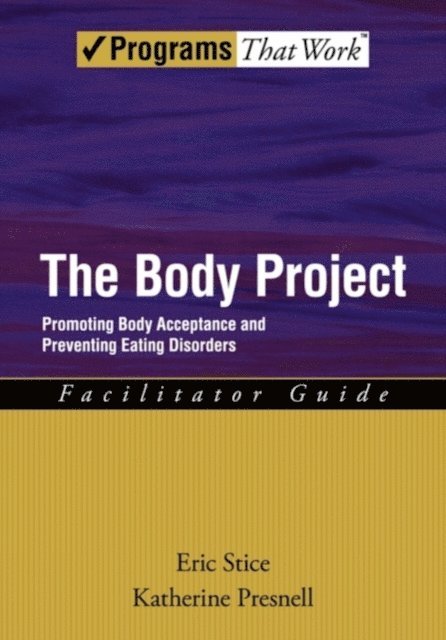
Ours is a society in which thinness, particularly in women, is idealized, even at the cost of health. Adolescent girls and young women are especially at risk of developing eating disorders such as anorexia nervosa, bulimia nervosa, and binge eating disorder. The need for wide-spread prevention among at-risk populations is paramount, as these disorders are often difficult to treat and can contribute to a range of physical and mental health problems. Studies have found that a cognitive dissonance-based intervention significantly outperforms other intervention programs and is successful in preventing onset of eating disorders. This facilitator guide outlines a two part group intervention program for adolescent and college-aged girls at risk of developing eating disorders. In the first part of the program, participants critique the thin-ideal through discussion, role-playing, and written exercises. Participants learn skills that increase body satisfaction, decrease unhealthy weight control behaviors, and prevent eating disorder symptoms. The second part of the intervention is designed to help participants make gradual and permanent lifestyle changes to achieve a healthy body weight. It teaches how to eat for energy balance, make healthy food choices, and incorporate physical exercise into a daily routine. This group therapy program is based on 16 years of research and has been completed by over 1000 adolescent girls and young women. It can be effectively delivered by real world providers, such as school counselors, nurses, and teachers. This facilitator guide provides all the information needed to successfully implement the program, including explanation of Cognitive Dissonance theory, session outlines complete with exercises, and recommendations on how to train group leaders and recruit participants.
Häftad, Engelska, 2013
873 kr
Skickas inom 5-8 vardagar
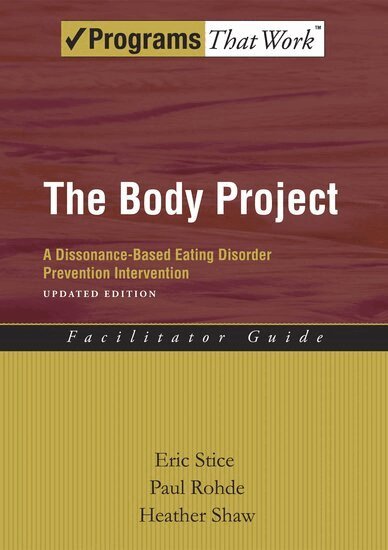
Eating disorders are among the most prevalent psychiatric disorders in adolescent and young adult females, affecting approximately 10% of young women. Unfortunately, less than half of those with eating disorders receive treatment, which can be very expensive. Thus, effective prevention has become a major public health priority.The Body Project is an empirically based eating disorder prevention program that offers young women an opportunity to critically consider the costs of pursuing the ultra-thin ideal promoted in the mass media, which improves body acceptance and reduces risk for developing eating disorders. Young women with elevated body dissatisfaction are recruited for group sessions in which they participate in a series of verbal, written, and behavioral exercises in which they consider the negative effects of pursuing the thin-ideal. Chapters provide information on the significance of body image and eating disorders, the intervention theory, the evidence base which supports the theory, recruitment and training procedures, solutions to common challenges, and a new program aimed at reducing obesity onset, as well as intervention scripts and participant handouts. The Body Project is the only currently available eating disorder prevention program that has been shown to reduce risk for onset of eating disorders and received support in trials conducted by several independent research groups. The group sessions are brief and fun to lead, and this guide provides all of the necessary information to walk clinicians, teachers, counselors, and volunteers through leading the program for vulnerable young women.