Eric T. Jennings - Böcker
Visar alla böcker från författaren Eric T. Jennings. Handla med fri frakt och snabb leverans.
11 produkter
11 produkter
234 kr
Skickas inom 7-10 vardagar
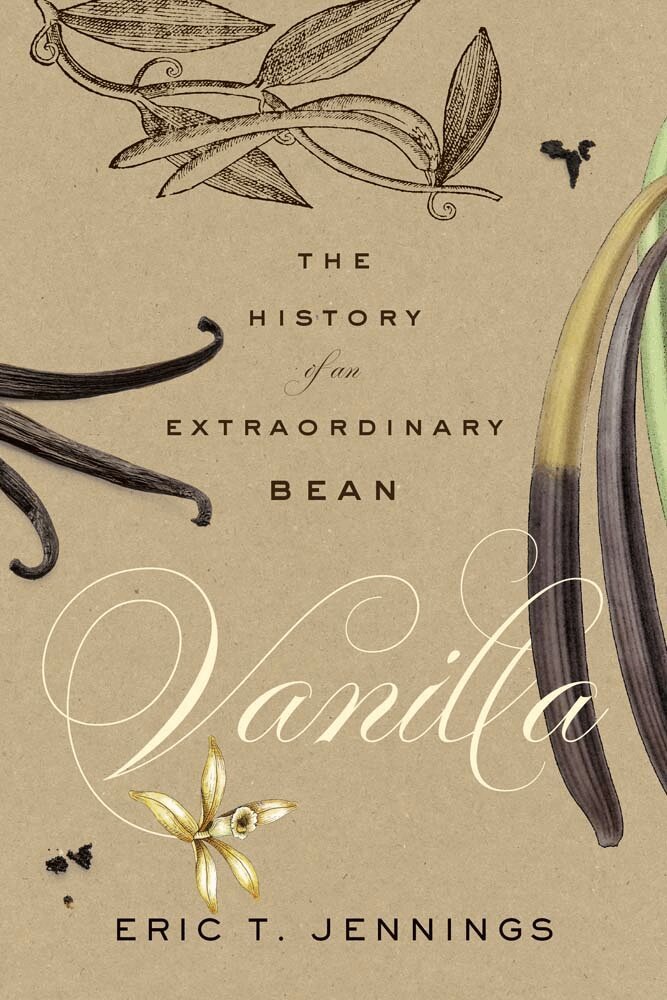
The fascinating and wide-ranging history of vanilla, from the sixteenth century to today Vanilla is one of the most expensive of flavorings—so valuable that it was smuggled or stolen by pirates in the early days—and yet it is everywhere. It is a key ingredient in dishes ranging from crème brûlée to Japanese purin. It is the quintessential ice cream flavor in the United States. Eric T. Jennings explains how the world’s only edible orchid, originally endemic to Central America, became embedded in the international culinary and cultural landscape. In tracing vanilla’s rise, Jennings describes how in the 1840s an enslaved boy named Edmond Albius discovered a way to pollinate vanilla orchids with a toothpick or needle—an ingenious process that is still in use. This method transformed the vanilla sector by enabling the plant to be grown outside of its natural range. Jennings also looks at how the vanilla craze led to the search for now‑pervasive substitutes, and how a vanilla lobby has fought back. He further unravels how vanilla—the world’s most expensive crop and once considered its most refined fragrance—came to mean “bland.” This tale of botany, production techniques, consumption habits, and colonial rivalry connects the Atlantic, Indian, and Pacific Oceans, revealing how vanilla has become a potent symbol of the modern global village.
258 kr
Kommande
The fascinating and wide-ranging history of vanilla, from the sixteenth century to today Vanilla is one of the most expensive of flavorings—so valuable that it was smuggled or stolen by pirates in the early days—and yet it is everywhere. It is a key ingredient in dishes ranging from crème brûlée to Japanese purin. It is the quintessential ice cream flavor in the United States. Eric T. Jennings explains how the world’s only edible orchid, originally endemic to Central America, became embedded in the international culinary and cultural landscape. In tracing vanilla’s rise, Jennings describes how in the 1840s an enslaved boy named Edmond Albius discovered a way to pollinate vanilla orchids with a toothpick or needle—an ingenious process that is still in use. This method transformed the vanilla sector by enabling the plant to be grown outside of its natural range. Jennings also looks at how the vanilla craze led to the search for now‑pervasive substitutes, and how a vanilla lobby has fought back. He further unravels how vanilla—the world’s most expensive crop and once considered its most refined fragrance—came to mean “bland.” This tale of botany, production techniques, consumption habits, and colonial rivalry connects the Atlantic, Indian, and Pacific Oceans, revealing how vanilla has become a potent symbol of the modern global village.
Del 4 - From Indochina to Vietnam: Revolution and War in a Global Perspective
Imperial Heights
Dalat and the Making and Undoing of French Indochina
Häftad, Engelska, 2011
290 kr
Skickas inom 7-10 vardagar
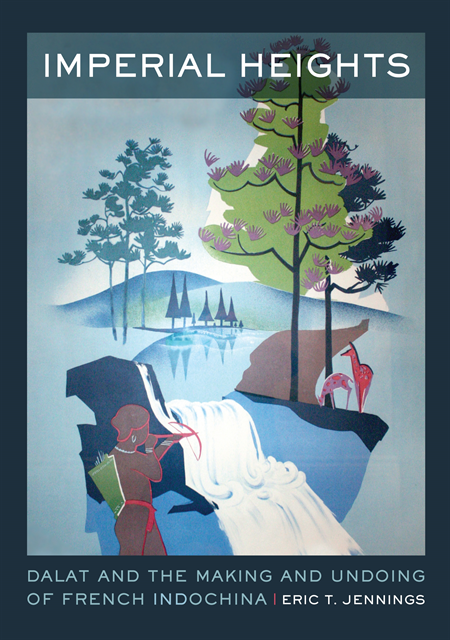
Intended as a reminder of Europe for soldiers and clerks of the empire, the city of Dalat, located in the hills of Southern Vietnam, was built by the French in an alpine locale that reminded them of home. This book uncovers the strange 100-year history of a colonial city that was conceived as a center of power and has now become a kitsch tourist destination famed for its colonial villas, flower beds, pristine lakes, and pastoral landscapes. Eric T. Jennings finds that from its very beginning, Dalat embodied the paradoxes of colonialism - it was a city of leisure built on the backs of thousands of coolies, a supposed paragon of hygiene that offered only questionable protection from disease, and a new venture into ethnic relations that ultimately backfired. Jennings' fascinating history opens a new window onto virtually all aspects of French Indochina, from architecture and urban planning to violence, labor, metissage, health and medicine, gender and ethic relations, schooling, religion, comportments, anxieties, and more.
405 kr
Skickas inom 10-15 vardagar
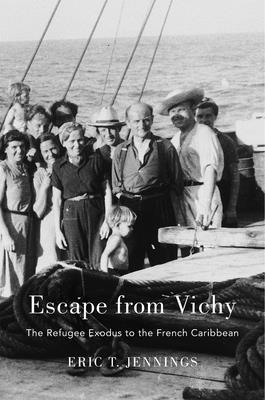
In the early years of World War II, thousands of political refugees traveled from France to Vichy-controlled Martinique in the French Caribbean, en route to what they hoped would be safer shores in North, Central, and South America. While awaiting transfer from the colony, the exiles formed influential ties—with one another and with local black dissidents. Escape from Vichy recounts this flight from the refugees’ perspectives, using novels, unpublished diaries, archives, memoirs, artwork, and other materials to explore the unlikely encounters that fueled an anti-fascist artistic and intellectual movement.The refugees included Spanish Republicans, anti-Nazi Germans and Austrians, anti-fascist Italians, Jews from across Europe, and others fleeing violence and repression. They were met with hostility by the Vichy government and rejection by the nations where they hoped to settle. Martinique, however, provided a site propitious for creative ferment, where the revolutionary Victor Serge conversed with the anthropologist Claude Lévi-Strauss, and the Surrealist André Breton met Negritude thinkers René Ménil and Aimé and Suzanne Césaire. As Eric T. Jennings shows, these interactions gave rise to a rich current of thought celebrating blackness and rejecting racism.What began as expulsion became a kind of rescue, cut short by Washington’s fears that wolves might be posing in sheep’s clothing.
Vichy in the Tropics
Pétain's National Revolution in Madagascar, Guadeloupe, and Indochina, 1940-44
Inbunden, Engelska, 2002
1 539 kr
Skickas inom 10-15 vardagar
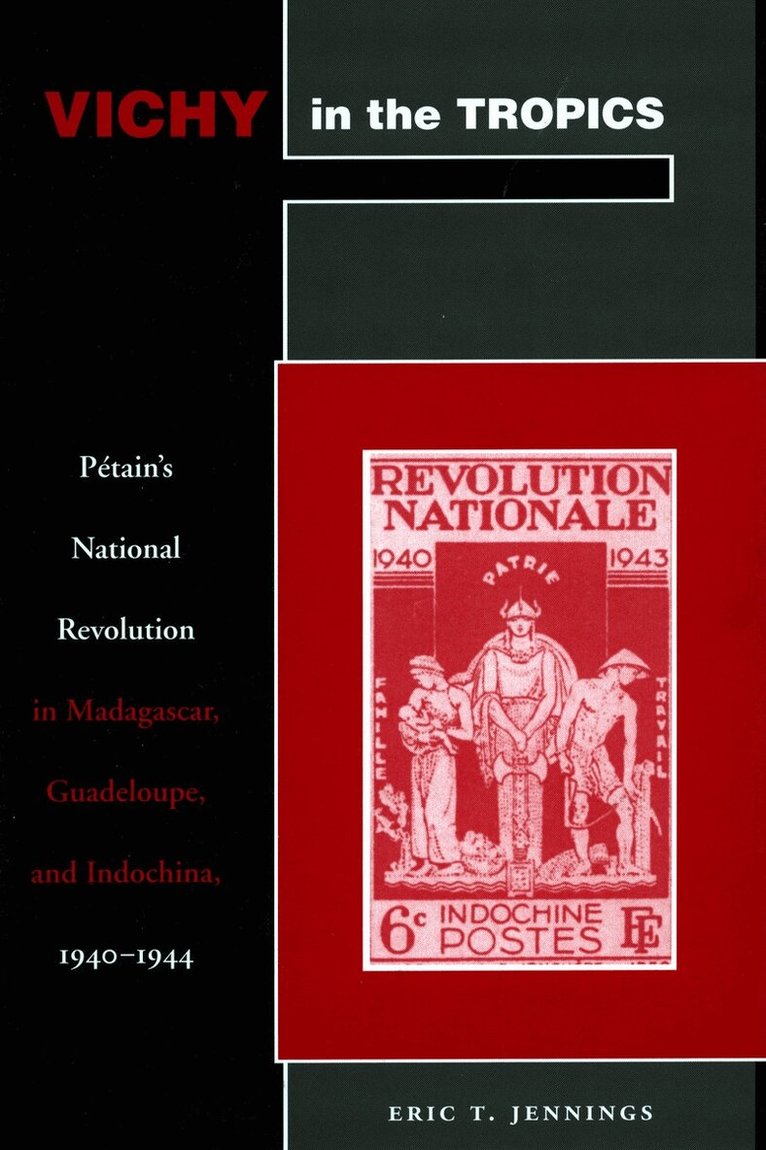
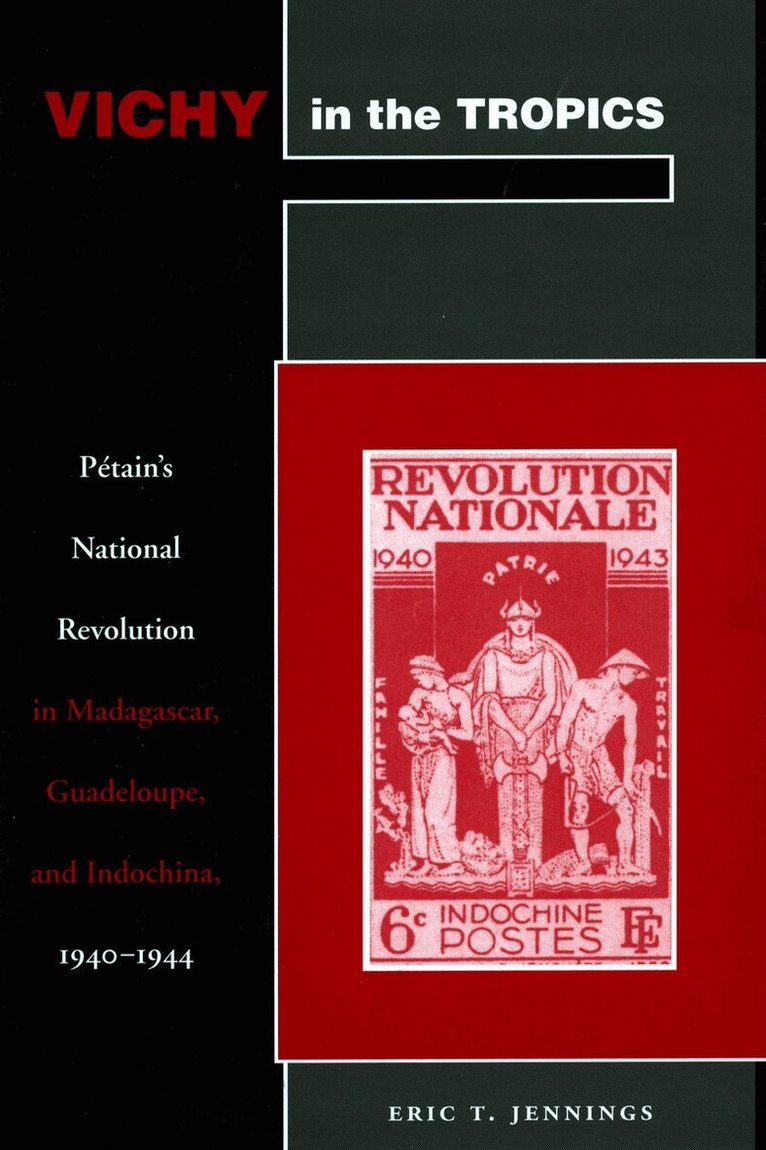
This book examines the role of the Vichy regime in bringing about profound changes in the French colonial empire after World War II. In the war's aftermath, the French colonial system began to break down. Indochina erupted into war in 1945 and Madagascar in 1947, while Guadeloupe chose an opposite course, becoming territorially part of France in 1946. The book traces the introduction of an integralist ideology of "National Revolution" to the French colonial realm, shedding new light on the nature of the Vichy regime, on the diversity of French colonialism, and on the beginnings of decolonization. Encompassing three very different regions and cultures, the study reveals both a unity in Vichy's self-reproduction overseas and a diversity of forms which this ideological cloning assumed. World War II is often presented as an agent of change in the French colonial empire only insofar as it engendered a loss of prestige for France as colonizer. The author argues that Marshal Philippe Pétain's Vichy regime contributed to decolonization in a much more substantial way, by ushering in an ideology based on a new, harsher brand of colonialism that both directly and indirectly fueled indigenous nationalism.The author also rejects the popular notion that Nazi pressure lurked behind the Vichy government's colonial actions, and that the regime lacked any real agency in colonial affairs. He shows that, far from allowing the Germans to run French colonies from behind the scenes, Vichy leaders vigorously promoted their own undiluted form of ultra-conservative ideology throughout the French empire. They delivered to the colonies an authoritarianism that not only elicited fierce opposition but sowed the seeds of nationalist resurgence among indigenous cultures. Ironically, the regime awoke long-dormant nationalist sentiments by introducing to the empire Pétain's cherished themes of authenticity, tradition, folklore, and völkism.
Vichy in the Tropics
Pétain's National Revolution in Madagascar, Guadeloupe, and Indochina, 1940-44
Häftad, Engelska, 2004
371 kr
Skickas inom 7-10 vardagar
This book examines the role of the Vichy regime in bringing about profound changes in the French colonial empire after World War II. In the war's aftermath, the French colonial system began to break down. Indochina erupted into war in 1945 and Madagascar in 1947, while Guadeloupe chose an opposite course, becoming territorially part of France in 1946. The book traces the introduction of an integralist ideology of "National Revolution" to the French colonial realm, shedding new light on the nature of the Vichy regime, on the diversity of French colonialism, and on the beginnings of decolonization. Encompassing three very different regions and cultures, the study reveals both a unity in Vichy's self-reproduction overseas and a diversity of forms which this ideological cloning assumed. World War II is often presented as an agent of change in the French colonial empire only insofar as it engendered a loss of prestige for France as colonizer. The author argues that Marshal Philippe Pétain's Vichy regime contributed to decolonization in a much more substantial way, by ushering in an ideology based on a new, harsher brand of colonialism that both directly and indirectly fueled indigenous nationalism.The author also rejects the popular notion that Nazi pressure lurked behind the Vichy government's colonial actions, and that the regime lacked any real agency in colonial affairs. He shows that, far from allowing the Germans to run French colonies from behind the scenes, Vichy leaders vigorously promoted their own undiluted form of ultra-conservative ideology throughout the French empire. They delivered to the colonies an authoritarianism that not only elicited fierce opposition but sowed the seeds of nationalist resurgence among indigenous cultures. Ironically, the regime awoke long-dormant nationalist sentiments by introducing to the empire Pétain's cherished themes of authenticity, tradition, folklore, and völkism.
371 kr
Skickas inom 7-10 vardagar
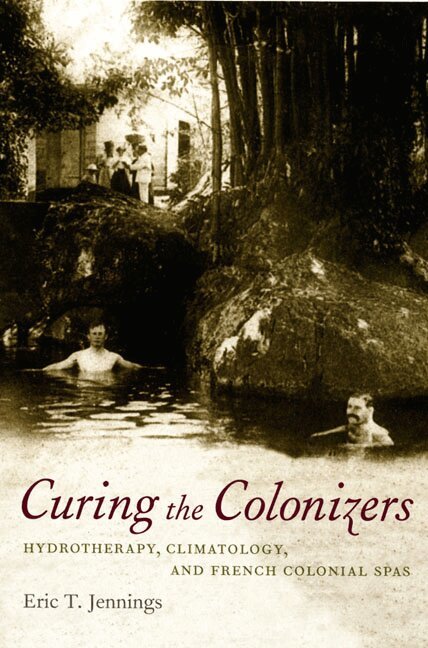
“Beware! Against the poison that is Africa, there is but one antidote: Vichy.” So ran a 1924 advertisement for one of France’s main spas. Throughout the French empire, spas featuring water cures, often combined with “climatic” cures, thrived during the nineteenth century and the twentieth. Water cures and high-altitude resorts were widely believed to serve vital therapeutic and even prophylactic functions against tropical disease and the tropics themselves. The Ministry of the Colonies published bulletins accrediting a host of spas thought to be effective against tropical ailments ranging from malaria to yellow fever; specialized guidebooks dispensed advice on the best spas for “colonial ills.” Administrators were granted regular furloughs to “take the waters” back home in France. In the colonies, spas assuaged homesickness by creating oases of France abroad. Colonizers frequented spas to maintain their strength, preserve their French identity, and cultivate their difference from the colonized.Combining the histories of empire, leisure, tourism, culture, and medicine, Eric T. Jennings sheds new light on the workings of empire by examining the rationale and practice of French colonial hydrotherapy between 1830 and 1962. He traces colonial acclimatization theory and the development of a “science” of hydrotherapy appropriate to colonial spaces, and he chronicles and compares the histories of spas in several French colonies-Guadeloupe, Madagascar, Tunisia, and RÉunion-and in France itself. Throughout Curing the Colonizers, Jennings illuminates the relationship between indigenous and French colonial therapeutic knowledge as well as the ultimate failure of the spas to make colonialism physically or morally safe for the French.
1 065 kr
Skickas inom 7-10 vardagar
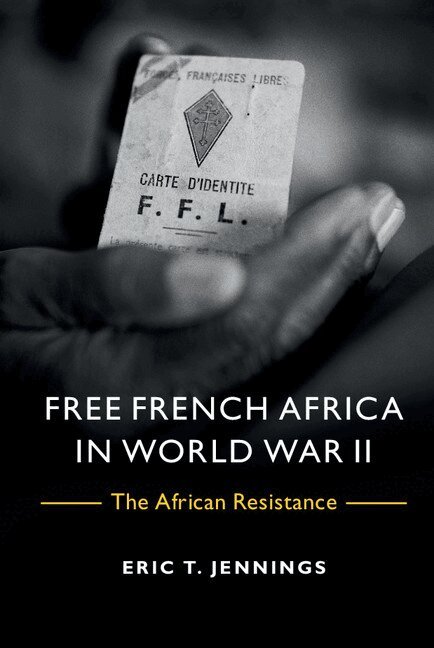
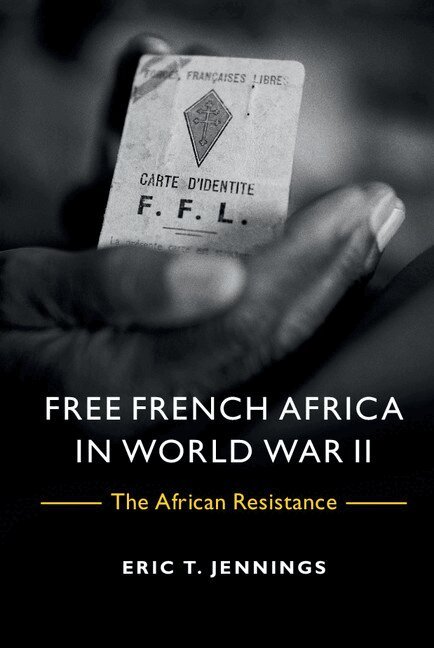
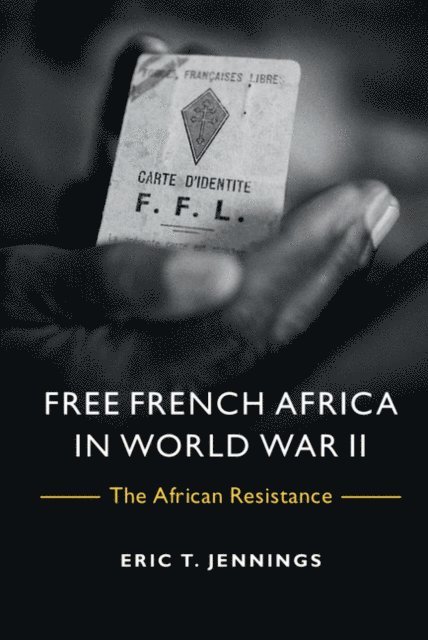
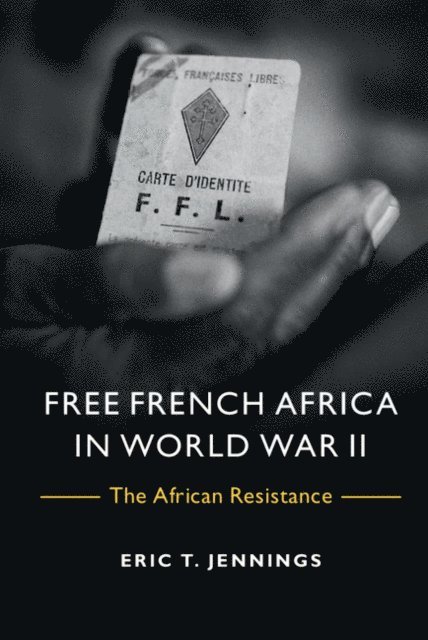
Only in recent years have historians rediscovered the critical role that French colonial troops played in the twentieth century's two world wars. What is perhaps still deeply under-appreciated is how much General de Gaulle's Free France drew its strength from 1940 to the middle of 1943 from fighting men, resources, and operations in French Equatorial Africa rather than London. Territorially, Free France spanned from the Libyan border with Chad down to the Congo River, and to the scattered tiny French territories of the South Pacific and India. Eric T. Jennings tells the story of an improbable French military and institutional rebirth through Central Africa and gives a unique, deep look at the key role Free French Africa played during World War II to help the Allied cause.
344 kr
Skickas inom 7-10 vardagar
Only in recent years have historians rediscovered the critical role that French colonial troops played in the twentieth century's two world wars. What is perhaps still deeply under-appreciated is how much General de Gaulle's Free France drew its strength from 1940 to the middle of 1943 from fighting men, resources, and operations in French Equatorial Africa rather than London. Territorially, Free France spanned from the Libyan border with Chad down to the Congo River, and to the scattered tiny French territories of the South Pacific and India. Eric T. Jennings tells the story of an improbable French military and institutional rebirth through Central Africa and gives a unique, deep look at the key role Free French Africa played during World War II to help the Allied cause.
1 092 kr
Skickas inom 10-15 vardagar
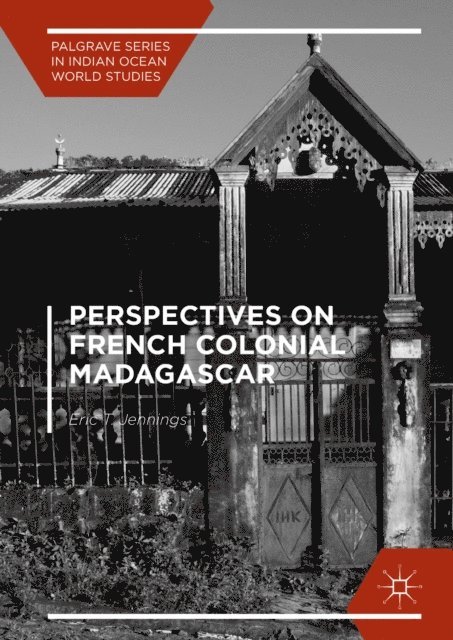
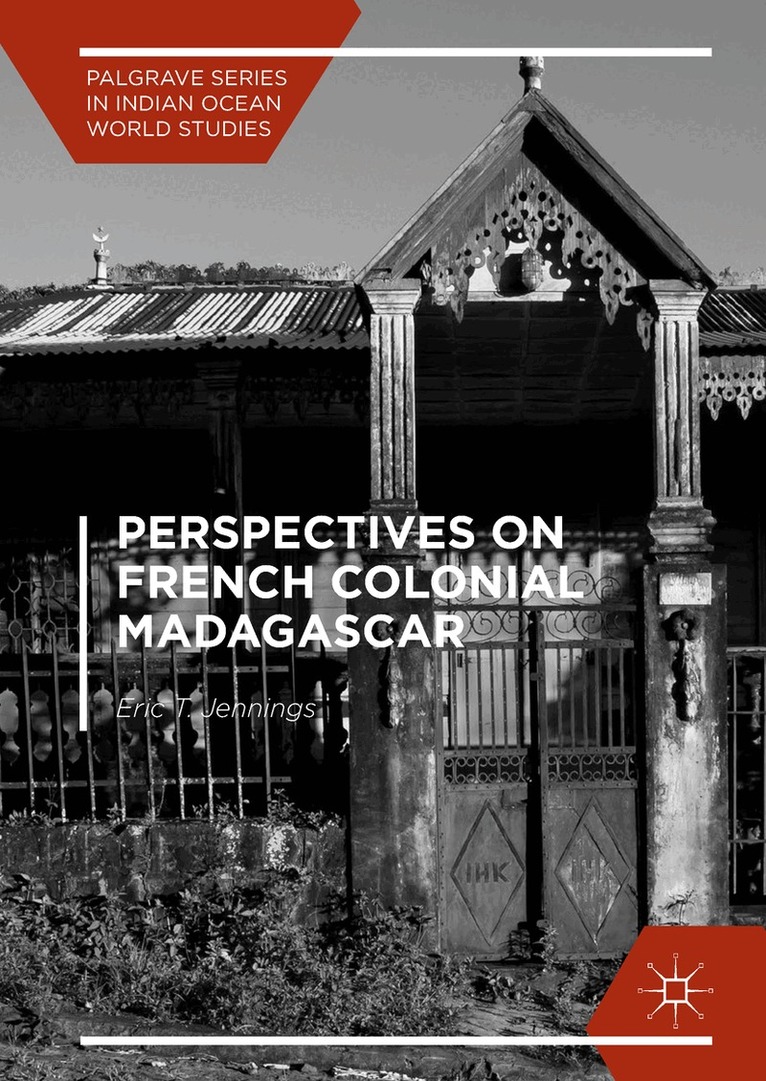
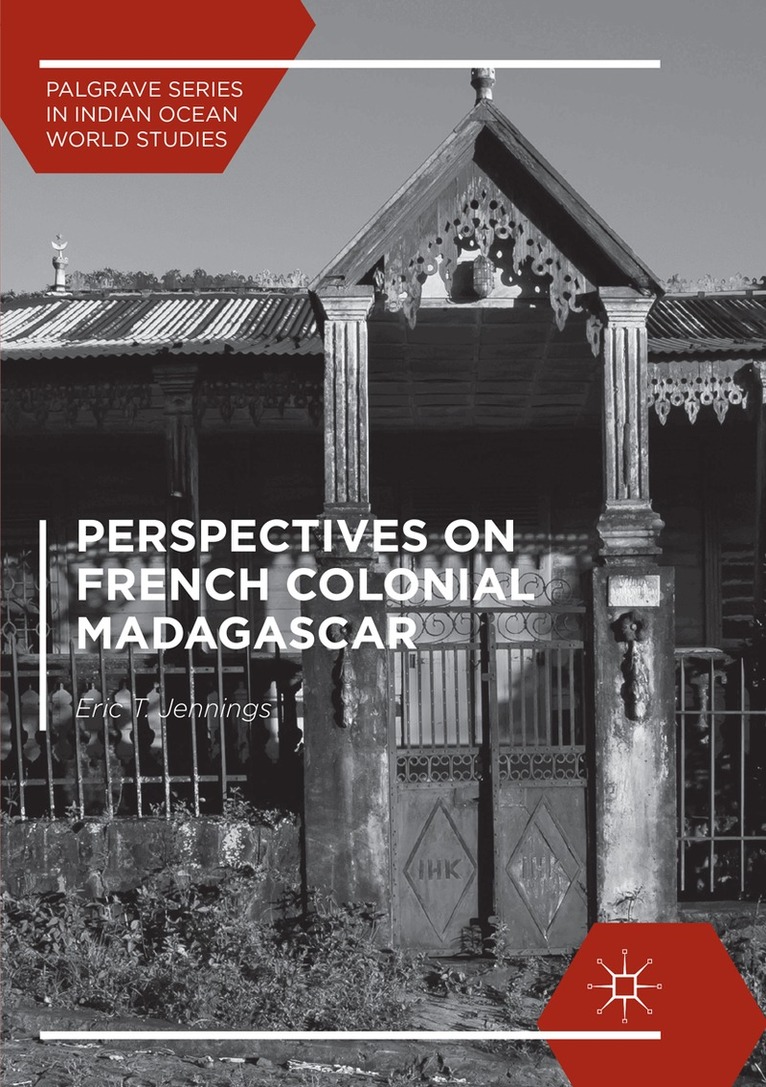
This book is a vivid history of Madagascar from the pre-colonial era to decolonization, examining a set of French colonial projects and perceptions that revolve around issues of power, vulnerability, health, conflict, control and identity.
1 092 kr
Skickas inom 10-15 vardagar
This book is a vivid history of Madagascar from the pre-colonial era to decolonization, examining a set of French colonial projects and perceptions that revolve around issues of power, vulnerability, health, conflict, control and identity.