Eric Toensmeier - Böcker
Visar alla böcker från författaren Eric Toensmeier. Handla med fri frakt och snabb leverans.
6 produkter
6 produkter
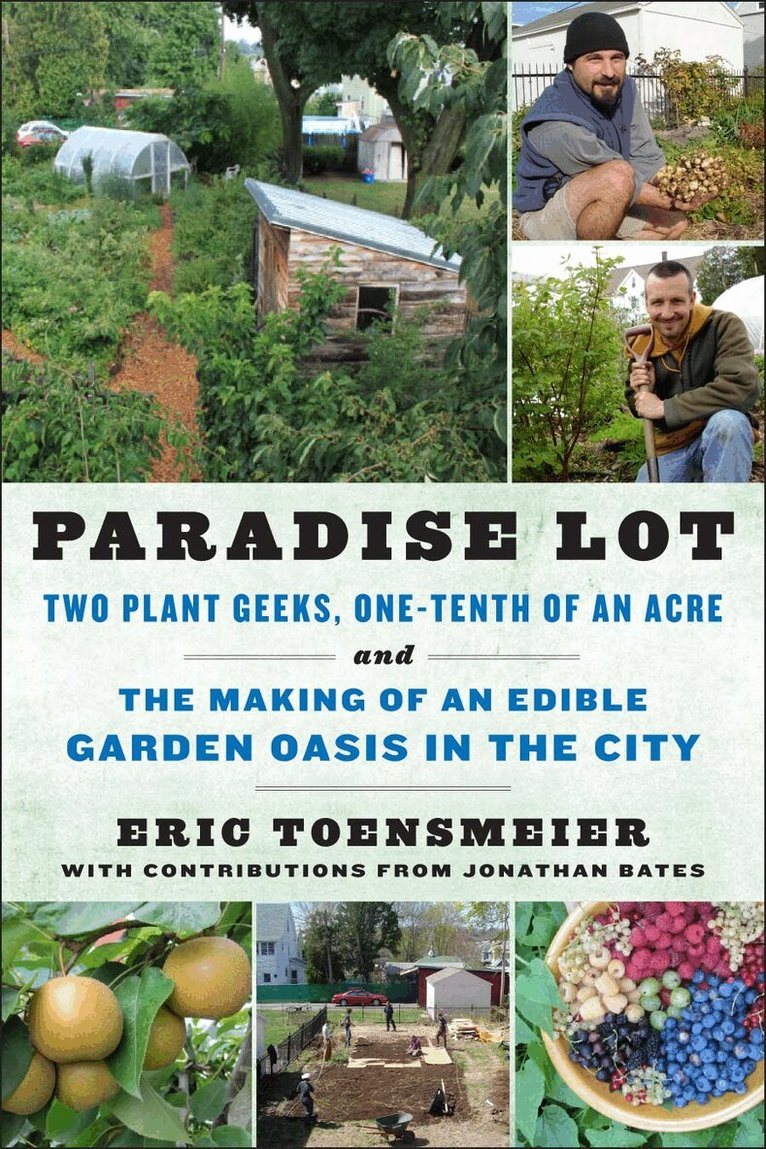
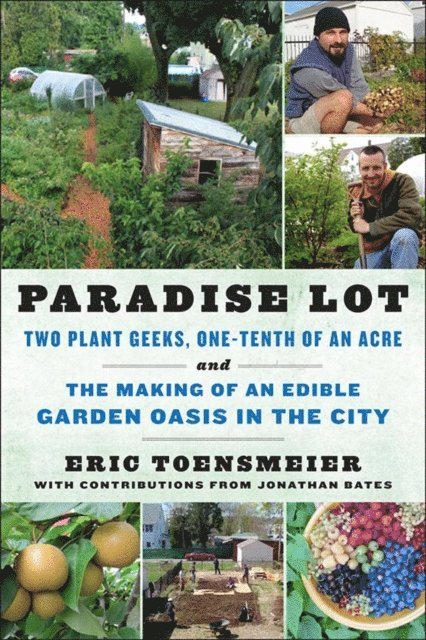
Paradise Lot
Two Plant Geeks, One-Tenth of an Acre, and the Making of an Edible Garden Oasis in the City
Häftad, Engelska, 2013
236 kr
Tillfälligt slut
When Eric Toensmeier and Jonathan Bates moved into a duplex in a run-down part of Holyoke, Massachusetts, the tenth-of-an-acre lot was barren ground and bad soil, peppered with broken pieces of concrete, asphalt, and brick. The two friends got to work designing what would become not just another urban farm, but a "permaculture paradise" replete with perennial broccoli, paw paws, bananas, and moringa—all told, more than two hundred low-maintenance edible plants in an innovative food forest on a small city lot. The garden—intended to function like a natural ecosystem with the plants themselves providing most of the garden's needs for fertility, pest control, and weed suppression—also features an edible water garden, a year-round unheated greenhouse, tropical crops, urban poultry, and even silkworms.In telling the story of Paradise Lot, Toensmeier explains the principles and practices of permaculture, the choice of exotic and unusual food plants, the techniques of design and cultivation, and, of course, the adventures, mistakes, and do-overs in the process. Packed full of detailed, useful information about designing a highly productive permaculture garden, Paradise Lot is also a funny and charming story of two single guys, both plant nerds, with a wild plan: to realize the garden of their dreams and meet women to share it with. Amazingly, on both counts, they succeed.
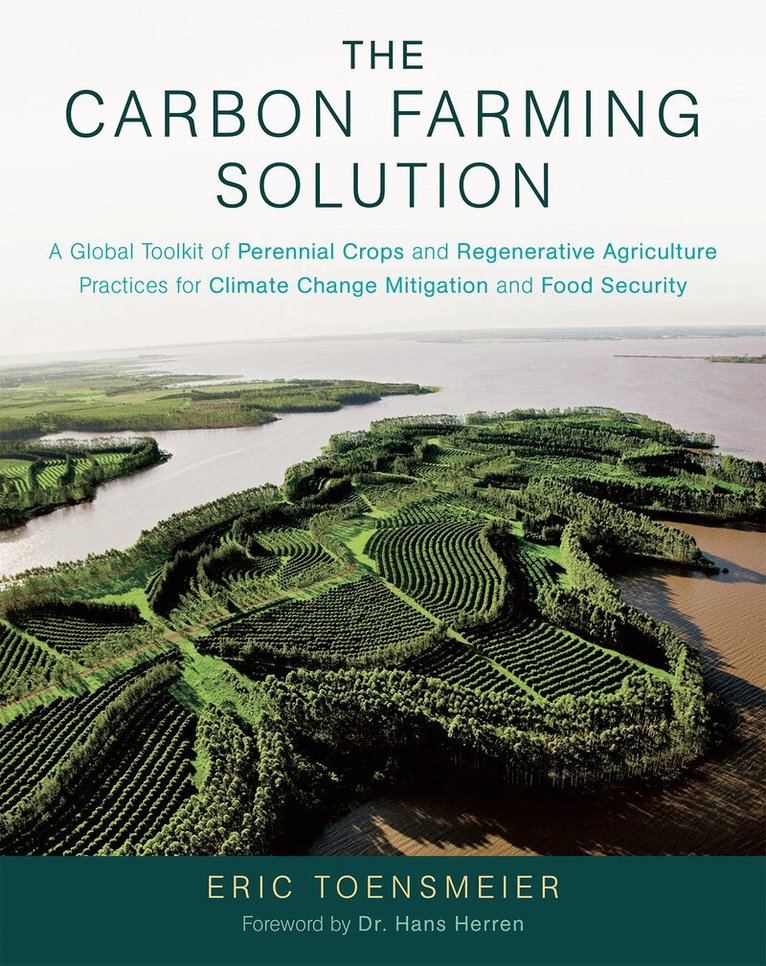
Carbon Farming Solution
A Global Toolkit of Perennial Crops and Regenerative Agriculture Practices for Climate Change Mitigation and Food Security
Inbunden, Engelska, 2016
610 kr
Skickas
With carbon farming, agriculture ceases to be part of the climate problem and becomes a critical part of the solution"This book is the toolkit for making the soil itself a sponge for carbon. It’s a powerful vision."—Bill McKibben"The Carbon Farming Solution is a book we will look back upon decades from now and wonder why something so critically relevant could have been so overlooked until that time. . . . [It] describes the foundation of the future of civilization."—Paul HawkenIn this groundbreaking book, Eric Toensmeier argues that agriculture—specifically, the subset of practices known as "carbon farming"—can, and should be, a linchpin of a global climate solutions platform. Carbon farming is a suite of agricultural practices and crops that sequester carbon in the soil and in above-ground biomass. Combined with a massive reduction in fossil fuel emissions—and in concert with adaptation strategies to our changing environment— carbon farming has the potential to bring us back from the brink of disaster and return our atmosphere to the "magic number" of 350 parts per million of carbon dioxide. Toensmeier’s book is the first to bring together these powerful strategies in one place.Includes in-depth analysis of the available research.Carbon farming can take many forms. The simplest practices involve modifications to annual crop production. Although many of these modifications have relatively low sequestration potential, they are widely applicable and easily adopted, and thus have excellent potential to mitigate climate change if practiced on a global scale. Likewise, grazing systems such as silvopasture are easily replicable, don’t require significant changes to human diet, and—given the amount of agricultural land worldwide that is devoted to pasture—can be important strategies in the carbon farming arsenal. But by far, agroforestry practices and perennial crops present the best opportunities for sequestration. While many of these systems are challenging to establish and manage, and would require us to change our diets to new and largely unfamiliar perennial crops, they also offer huge potential that has been almost entirely ignored by climate crusaders. Many of these carbon farming practices are already implemented globally on a scale of millions of hectares. These are not minor or marginal efforts, but win-win solutions that provide food, fodder, and feedstocks while fostering community self-reliance, creating jobs, protecting biodiversity, and repairing degraded land—all while sequestering carbon, reducing emissions, and ultimately contributing to a climate that will remain amenable to human civilization. Just as importantly to a livable future, these crops and practices can contribute to broader social goals such as women’s empowerment, food sovereignty, and climate justice. The Carbon Farming Solution is—at its root—a toolkit and the most complete collection of climate-friendly crops and practices currently available. With this toolkit, farmers, communities, and governments large and small, can successfully launch carbon farming projects with the most appropriate crops and practices to their climate, locale, and socioeconomic needs. Toensmeier’s ultimate goal is to place carbon farming firmly in the center of the climate solutions platform, alongside clean solar and wind energy. With The Carbon Farming Solution, Toensmeier wants to change the discussion, impact policy decisions, and steer mitigation funds to the research, projects, and people around the world who envision a future where agriculture becomes the protagonist in this fraught, urgent, and unprecedented drama of our time. Citizens, farmers, and funders will be inspired to use the tools presented in this important book to transform degraded lands around the world into productive carbon-storing landscapes.
1 436 kr
Tillfälligt slut
Edible Forest Gardens is a groundbreaking two-volume work that spells out and explores the key concepts of forest ecology and applies them to the needs of natural gardeners in temperate climates. Volume I lays out the vision of the forest garden and explains the basic ecological principles that make it work. In Volume II, Dave Jacke and Eric Toensmeier move on to practical considerations: concrete ways to design, establish, and maintain your own forest garden. Along the way they present case studies and examples, as well as tables, illustrations, and a uniquely valuable "plant matrix" that lists hundreds of the best edible and useful species.Taken together, the two volumes of Edible Forest Gardens offer an advanced course in ecological gardening-one that will forever change the way you look at plants and your environment.What is an edible forest garden?An edible forest garden is a perennial polyculture of multipurpose plants. Most plants regrow every year without replanting: perennials. Many species grow together: a polyculture. Each plant contributes to the success of the whole by fulfilling many functions: multipurpose. In other words, a forest garden is an edible ecosystem, a consciously designed community of mutually beneficial plants and animals intended for human food production. Edible forest gardens provide more than just a variety of foods. The seven F's apply here: food, fuel, fiber, fodder, fertilizer, and "farmaceuticals," as well as fun. A beautiful, lush environment can be a conscious focus of your garden design, or a side benefit you enjoy
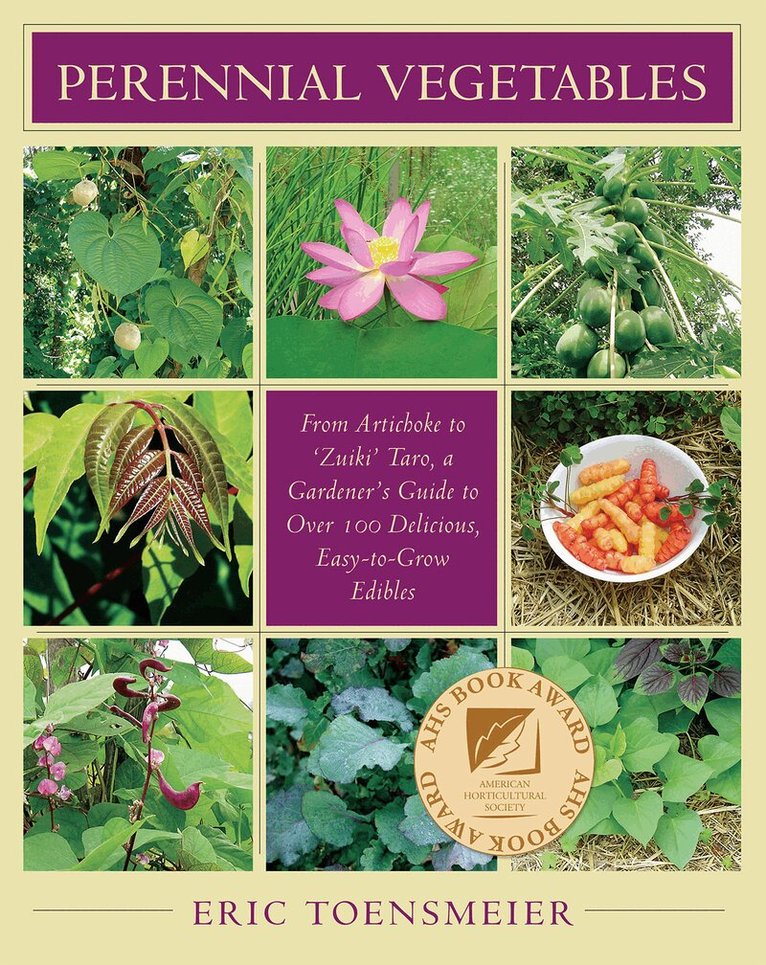
Perennial Vegetables
From Artichokes to Zuiki Taro, A Gardener's Guide to Over 100 Delicious and Easy to Grow Edibles
Häftad, Engelska, 2007
290 kr
Skickas inom 7-10 vardagar
There is a fantastic array of vegetables you can grow in your garden, and not all of them are annuals. In Perennial Vegetables the adventurous gardener will find information, tips, and sound advice on less common edibles that will make any garden a perpetual, low-maintenance source of food.Imagine growing vegetables that require just about the same amount of care as the flowers in your perennial beds and borders—no annual tilling and potting and planting. They thrive and produce abundant and nutritious crops throughout the season. It sounds too good to be true, but in Perennial Vegetables author and plant specialist Eric Toensmeier (Edible Forest Gardens) introduces gardeners to a world of little-known and wholly underappreciated plants. Ranging beyond the usual suspects (asparagus, rhubarb, and artichoke) to include such "minor" crops as ground cherry and ramps (both of which have found their way onto exclusive restaurant menus) and the much sought after, anti-oxidant-rich wolfberry (also known as goji berries), Toensmeier explains how to raise, tend, harvest, and cook with plants that yield great crops and satisfaction.Perennial vegetables are perfect as part of an edible landscape plan or permaculture garden. Profiling more than 100 species, illustrated with dozens of color photographs and illustrations, and filled with valuable growing tips, recipes, and resources, Perennial Vegetables is a groundbreaking and ground-healing book that will open the eyes of gardeners everywhere to the exciting world of edible perennials.
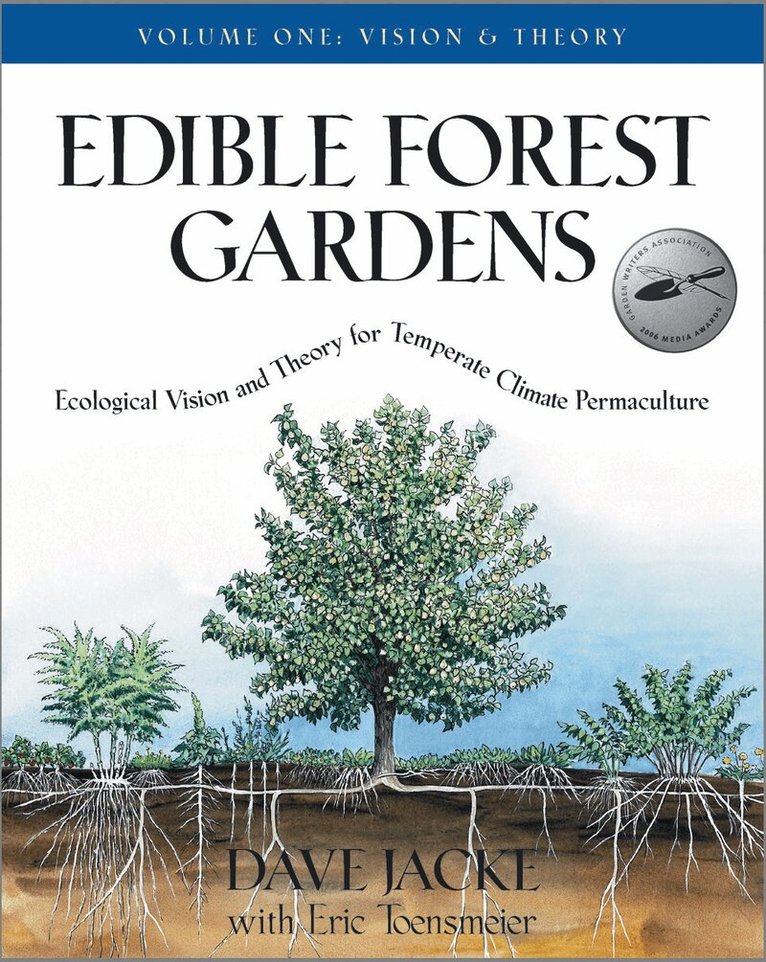
Edible Forest Gardens, Volume 1
Ecological Vision, Theory for Temperate Climate Permaculture
Inbunden, Engelska, 2005
588 kr
Skickas inom 7-10 vardagar
Edible Forest Gardens is a groundbreaking two-volume work that spells out and explores the key concepts of forest ecology and applies them to the needs of natural gardeners in temperate climates. Volume I lays out the vision of the forest garden and explains the basic ecological principles that make it work. In Volume II, Dave Jacke and Eric Toensmeier move on to practical considerations: concrete ways to design, establish, and maintain your own forest garden. Along the way they present case studies and examples, as well as tables, illustrations, and a uniquely valuable "plant matrix" that lists hundreds of the best edible and useful species.Taken together, the two volumes of Edible Forest Gardens offer an advanced course in ecological gardening--one that will forever change the way you look at plants and your environment.
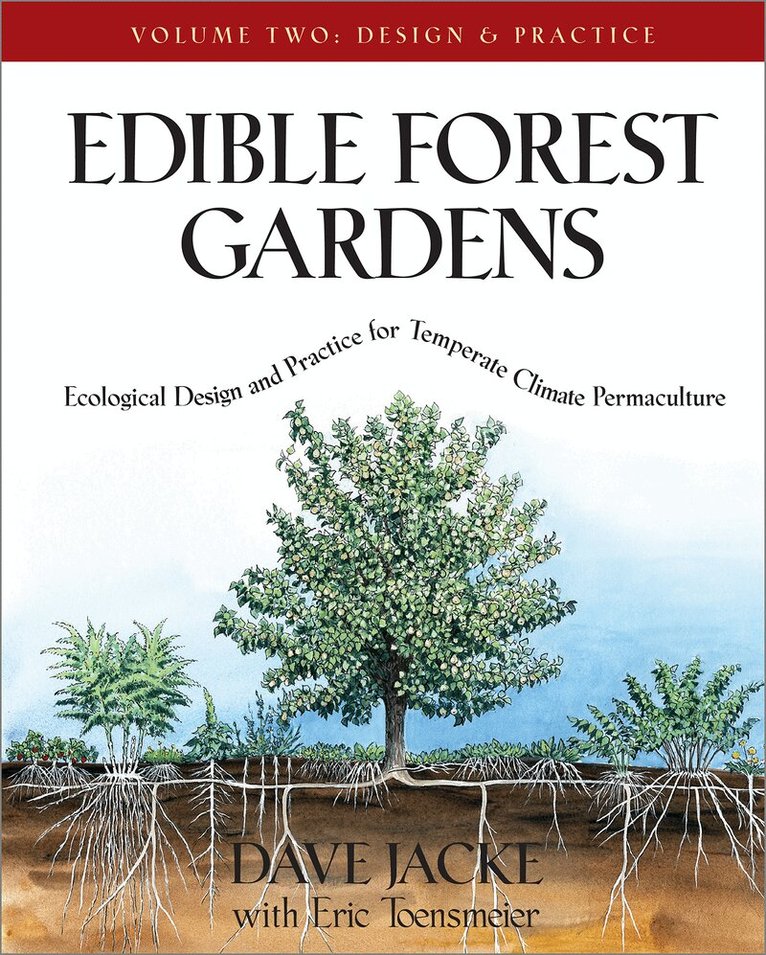
Edible Forest Gardens, Volume II
Ecological Design And Practice for Temperate-Climate Permaculture
Inbunden, Engelska, 2005
588 kr
Skickas inom 7-10 vardagar
Edible Forest Gardens is a groundbreaking two-volume work that spells out and explores the key concepts of forest ecology and applies them to the needs of natural gardeners in temperate climates. Volume I lays out the vision of the forest garden and explains the basic ecological principles that make it work. In Volume II, Dave Jacke and Eric Toensmeier move on to practical considerations: concrete ways to design, establish, and maintain your own forest garden. Along the way they present case studies and examples, as well as tables, illustrations, and a uniquely valuable "plant matrix" that lists hundreds of the best edible and useful species.Taken together, the two volumes of Edible Forest Gardens offer an advanced course in ecological gardening--one that will forever change the way you look at plants and your environment.