Eric Weisbard - Böcker
Visar alla böcker från författaren Eric Weisbard. Handla med fri frakt och snabb leverans.
11 produkter
11 produkter
2 171 kr
Kommande
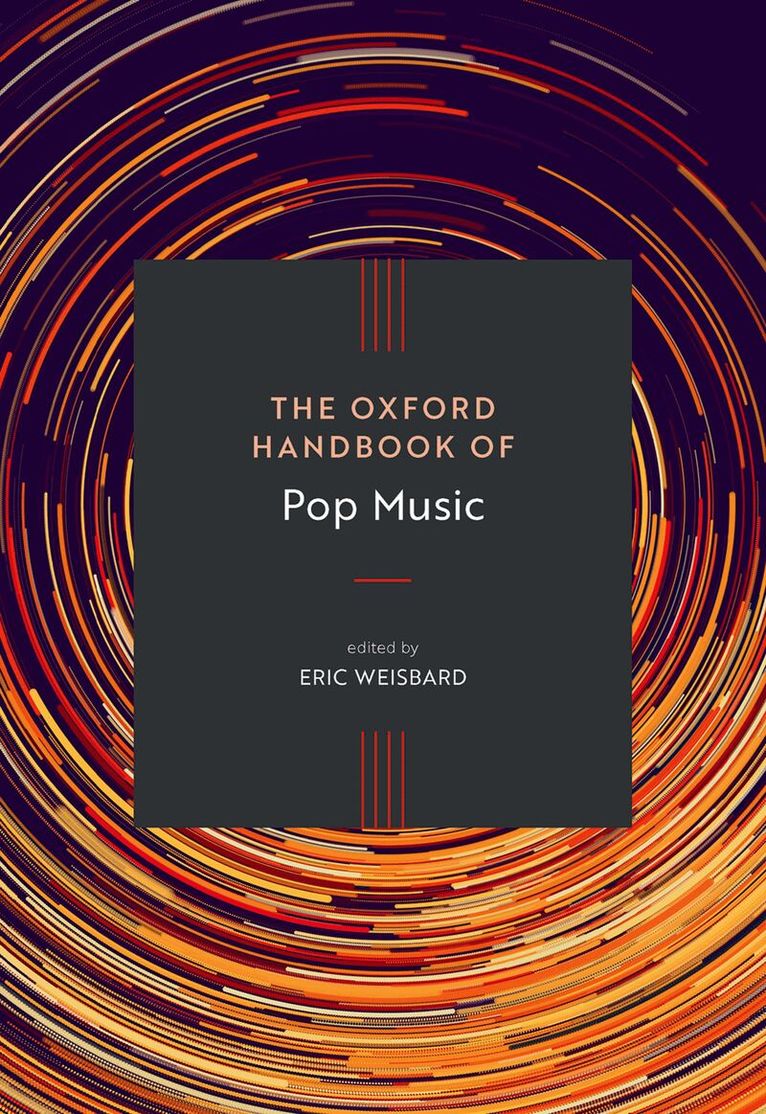
Pop music, by definition, is commercial music: motivated by profit more than artistry, changing to fit the needs of audiences and industry, not codes of genre, seeking a mainstream appeal that forbids too much fussiness about aesthetic absolutes. This resistance to firm definition beyond ledger sheets has left no precise field of pop studies to glean from. Nevertheless, academics and writers continue to pursue this shifting field of study, approaching pop music with a rigorous and critical eye. Famously, these studies have yielded the phrase "poptimism," a disposition to correct for the anti-mainstream biases of what, by contrast, is deemed "rockism."The Oxford Handbook of Pop Music uncovers pop music studies within popular music studies. Featuring an international roster of authors from academic and non-academic disciplines, it tracks the origin points, formal staples, identity intersections, and 21st century matriculation of Top 40 music and all its kindred forms as an increasingly global and self-aware enterprise.This volume features chapters on racy 19th-century sheet music, Thailand's pleng string 1980s, Eurovision, the coded influence of Black gay men on pop, disability and pop, Spanish-language pop's breakthrough, streaming's consumer politics, TikTok virality, and much more. Overall, the wide-reaching genre of pop has long represented the easiest entry points for outsiders to sanctioned taste and cultural capital. Non-white performers, women and LGBTQ artists, immigrants and amateurs: pop has welcomed them all to the stage and the spotlight.
535 kr
Skickas inom 3-6 vardagar
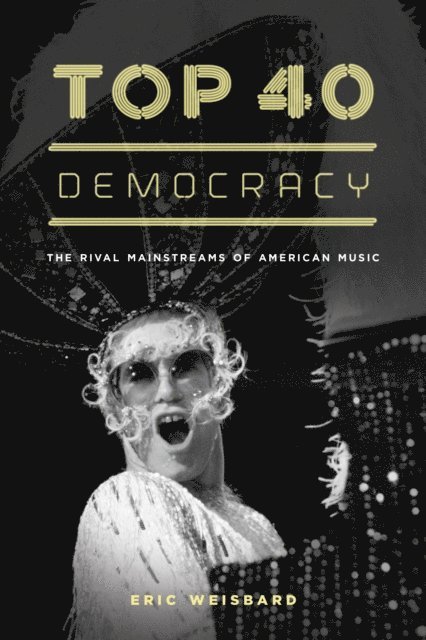
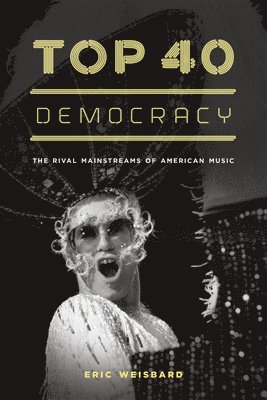
If you drive into any American city with the car stereo blasting, you'll undoubtedly find radio stations representing R&D/hip-hop, country, Top 40, adult contemporary, rock, and Latin, each playing hit after hit within that musical format. American music has created an array of rival mainstreams, complete with charts in multiple categories. Love it or hate it, the world that radio made has steered popular music and provided the soundtrack of American life for more than half a century. In Top 40 Democracy, Eric Weisbard studies the evolution of this multicentered pop landscape, along the way telling the stories of the Isley Brothers, Dolly Parton, A&M Records, and Elton John, among others. He sheds new light on the upheavals in the music industry over the past fifteen years and their implications for the audiences the industry has shaped. Weisbard focuses in particular on formats-constructed mainstreams designed to appeal to distinct populations-showing how taste became intertwined with class, race, gender, and region.While many historians and music critics have criticized the segmentation of pop radio, Weisbard finds that the creation of multiple formats allowed different subgroups to attain a kind of separate majority status - for example, even in its most mainstream form, the R&B of the Isley Brothers helped to create a sphere where black identity was nourished. Music formats became the one reliable place where different groups of Americans could listen to modern life unfold from their distinct perspectives. The centers of pop, it turns out, were as complicated, diverse, and surprising as the cultural margins. Weisbard's stimulating book is a tour de force, shaking up our ideas about the mainstream music industry in order to tease out the cultural importance of all performers and songs.
363 kr
Skickas inom 10-15 vardagar
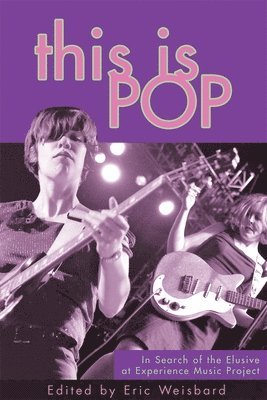
A range of genres, rooted in local impulses, reaching global audiences; a main prop of commercial culture and an art form open to aspirants and fans from every background: About the vast and diverse topic of pop, scholars and critics, journalists and musicians have much to say, but rarely to each other. A crossover venture begun at Seattle's Experience Music Project, this book captures the academic and the critical, the musical and the literary in an impromptu dialogue that suggests the breadth and vitality of pop inquiry today. This Is Pop illustrates what can happen when the best of scholarship, criticism, and pop's inherent unruliness intersect. Robert Christgau and Gary Giddins, pivotal critics, encounter Simon Frith and Robert Walser, pioneers in the study of popular music. Luc Sante and Geoffrey O'Brien write about sound with the same prose elegance they apply to noir or New York streetlife. Musicians Carrie Brownstein and Sarah Dougher, both active in the riot grrl and rock scenes of the Pacific Northwest, examine how audience responses affect their craft. John Darnielle, of the Mountain Goats and the idiosyncratic zine Last Plane to Jakarta, attends to the web postings of hair metal fans. From film tracks to Merle Travis, from Ray Davies to rock infighting, from indie poetry to the Carly Simon Principle of pop sincerity, this book reflects the welter of ambition, style, and meaning that draw us to pop in the first place. The result is a collection as cluttered with treasures as a good music store.
1 286 kr
Skickas inom 7-10 vardagar
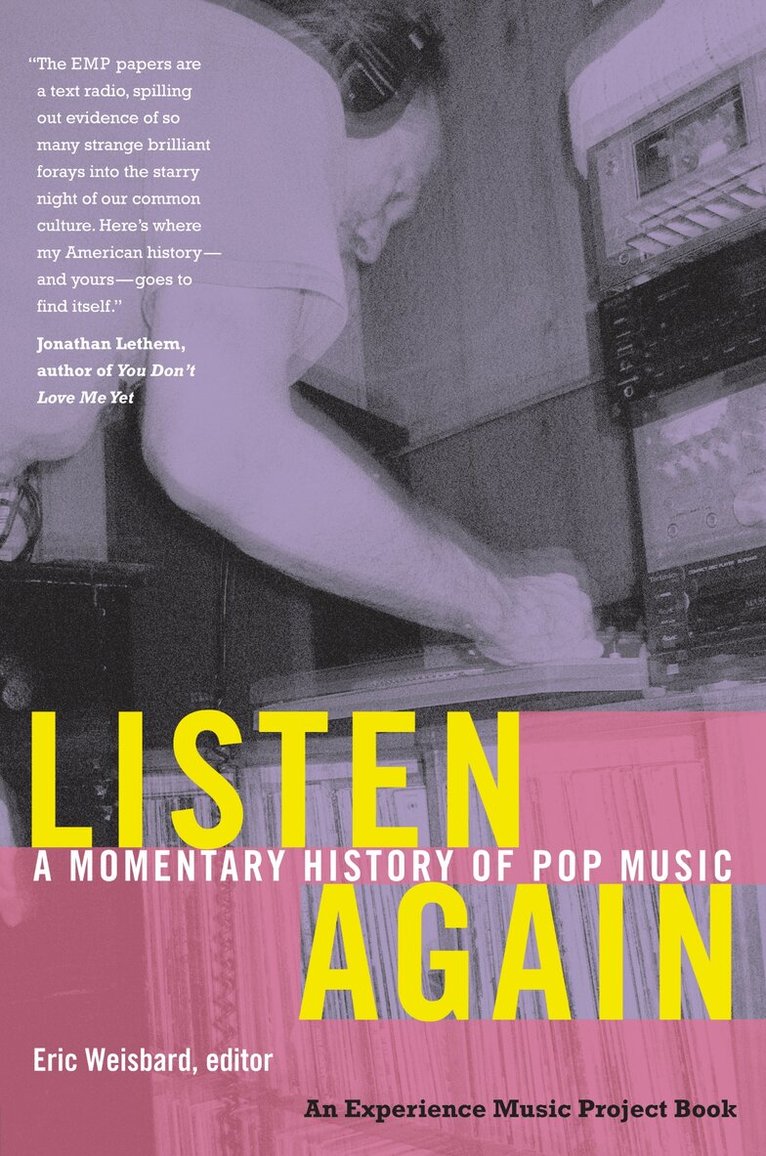
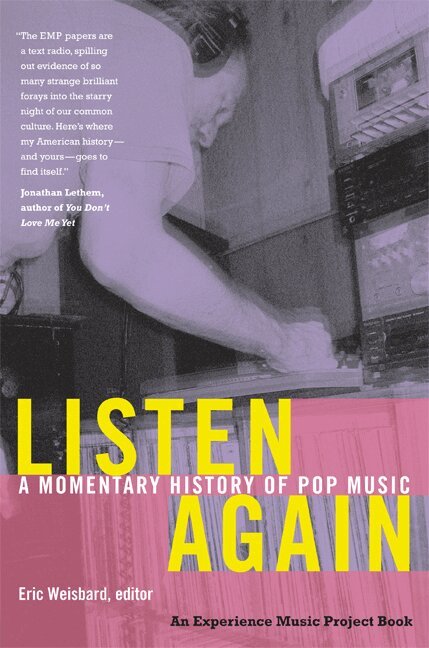
Arguing that pop music turns on moments rather than movements, the essays in Listen Again pinpoint magic moments from a century of pop eclecticism, looking at artists who fall between genre lines, songs that sponge up influences from everywhere, and studio accidents with unforeseen consequences. Listen Again collects some of the finest presentations from the celebrated Experience Music Project Pop Conference, where journalists, musicians, academics, and other culturemongers come together once each year to stretch the boundaries of pop music culture, criticism, and scholarship.Building a history of pop music out of unexpected instances, critics and musicians delve into topics from the early-twentieth-century black performer Bert Williams’s use of blackface, to the invention of the Delta blues category by a forgotten record collector named James McKune, to an ER cast member’s performance as the Germs’ front man Darby Crash at a Germs reunion show. Cuban music historian Ned Sublette zeroes in on the signature riff of the garage-band staple “Louie, Louie.” David Thomas of the pioneering punk band Pere Ubu honors one of his forebears: Ghoulardi, a late-night monster-movie host on Cleveland-area TV in the 1960s. Benjamin Melendez discusses playing in a band, the Ghetto Brothers, that Latinized the Beatles, while leading a South Bronx gang, also called the Ghetto Brothers. Michaelangelo Matos traces the lineage of the hip-hop sample “Apache” to a Burt Lancaster film. Whether reflecting on the ringing freedom of an E chord or the significance of Bill Tate, who performed once in 1981 as Buddy Holocaust and was never heard from again, the essays reveal why Robert Christgau, a founder of rock criticism, has called the EMP Pop Conference “the best thing that’s ever happened to serious consideration of pop music.”Contributors. David Brackett, Franklin Bruno, Daphne Carr, Henry Chalfant, Jeff Chang, Drew Daniel, Robert Fink, Holly George-Warren, Lavinia Greenlaw, Marybeth Hamilton, Jason King, Josh Kun, W. T. Lhamon, Jr., Greil Marcus, Michaelangelo Matos, Benjamin Melendez, Mark Anthony Neal, Ned Sublette, David Thomas, Steve Waksman, Eric Weisbard
375 kr
Skickas inom 7-10 vardagar
Arguing that pop music turns on moments rather than movements, the essays in Listen Again pinpoint magic moments from a century of pop eclecticism, looking at artists who fall between genre lines, songs that sponge up influences from everywhere, and studio accidents with unforeseen consequences. Listen Again collects some of the finest presentations from the celebrated Experience Music Project Pop Conference, where journalists, musicians, academics, and other culturemongers come together once each year to stretch the boundaries of pop music culture, criticism, and scholarship.Building a history of pop music out of unexpected instances, critics and musicians delve into topics from the early-twentieth-century black performer Bert Williams’s use of blackface, to the invention of the Delta blues category by a forgotten record collector named James McKune, to an ER cast member’s performance as the Germs’ front man Darby Crash at a Germs reunion show. Cuban music historian Ned Sublette zeroes in on the signature riff of the garage-band staple “Louie, Louie.” David Thomas of the pioneering punk band Pere Ubu honors one of his forebears: Ghoulardi, a late-night monster-movie host on Cleveland-area TV in the 1960s. Benjamin Melendez discusses playing in a band, the Ghetto Brothers, that Latinized the Beatles, while leading a South Bronx gang, also called the Ghetto Brothers. Michaelangelo Matos traces the lineage of the hip-hop sample “Apache” to a Burt Lancaster film. Whether reflecting on the ringing freedom of an E chord or the significance of Bill Tate, who performed once in 1981 as Buddy Holocaust and was never heard from again, the essays reveal why Robert Christgau, a founder of rock criticism, has called the EMP Pop Conference “the best thing that’s ever happened to serious consideration of pop music.”Contributors. David Brackett, Franklin Bruno, Daphne Carr, Henry Chalfant, Jeff Chang, Drew Daniel, Robert Fink, Holly George-Warren, Lavinia Greenlaw, Marybeth Hamilton, Jason King, Josh Kun, W. T. Lhamon, Jr., Greil Marcus, Michaelangelo Matos, Benjamin Melendez, Mark Anthony Neal, Ned Sublette, David Thomas, Steve Waksman, Eric Weisbard
375 kr
Skickas inom 7-10 vardagar
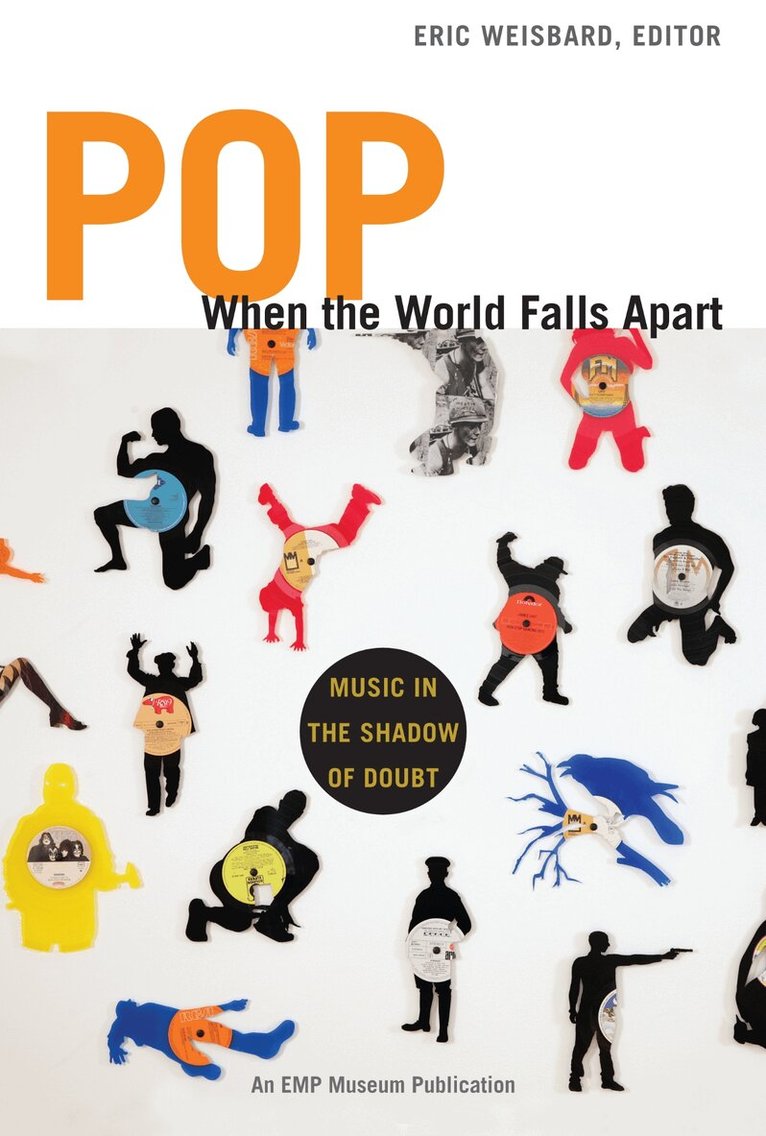
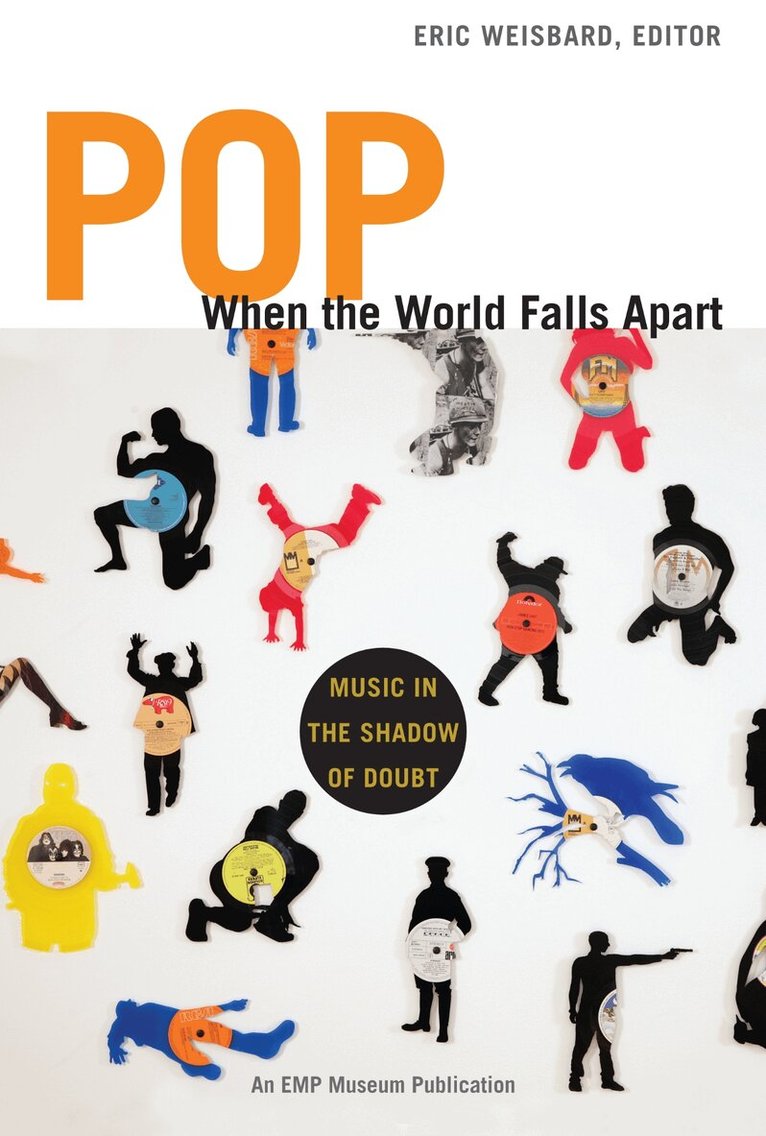
Hearing Elvis Presley, Bob Dylan once said, was “like busting out of jail.” But what happens when popular music isn’t as simple as rock-and-roll rebellion? How does pop respond to such events as a decade-long war in Iraq and Hurricane Katrina? In Pop When the World Falls Apart, a diverse array of music writers, scholars, and enthusiasts reflect on popular music’s role-as commentary, as refuge, and as rallying cry-in times of military conflict, social upheaval, and cultural crisis. Drawn from presentations at the annual Experience Music Project Pop Conference-hailed by Robert Christgau as “the best thing that’s ever happened to serious consideration of pop music”-the essays in this book include inquiries into the sonic dimension of war in Iraq; the cultural life of jazz in post-Katrina New Orleans; Isaac Hayes’s reappropriation of a country song, “By the Time I Get to Phoenix,” as a symbol of black nationalism; and punk rock pranks played on record execs looking for the next big thing in central Virginia. Offering a diverse range of voices, perspectives, and approaches, this volume mirrors the eclecticism of pop itself.Contributors: Larry Blumenfeld , Austin Bunn, Nate Chinen, J. Martin Daughtry, Brian Goedde, Michelle Habell-PallÁn, Jonathan Lethem, Eric Lott, Kembrew McLeod, Elena Passarello, Diane Pecknold, David Ritz, Carlo Rotella, Scott Seward, Tom Smucker, Greg Tate, Karen Tongson, Alexandra T. Vazquez, Oliver Wang, Eric Weisbard, Carl Wilson
111 kr
Skickas
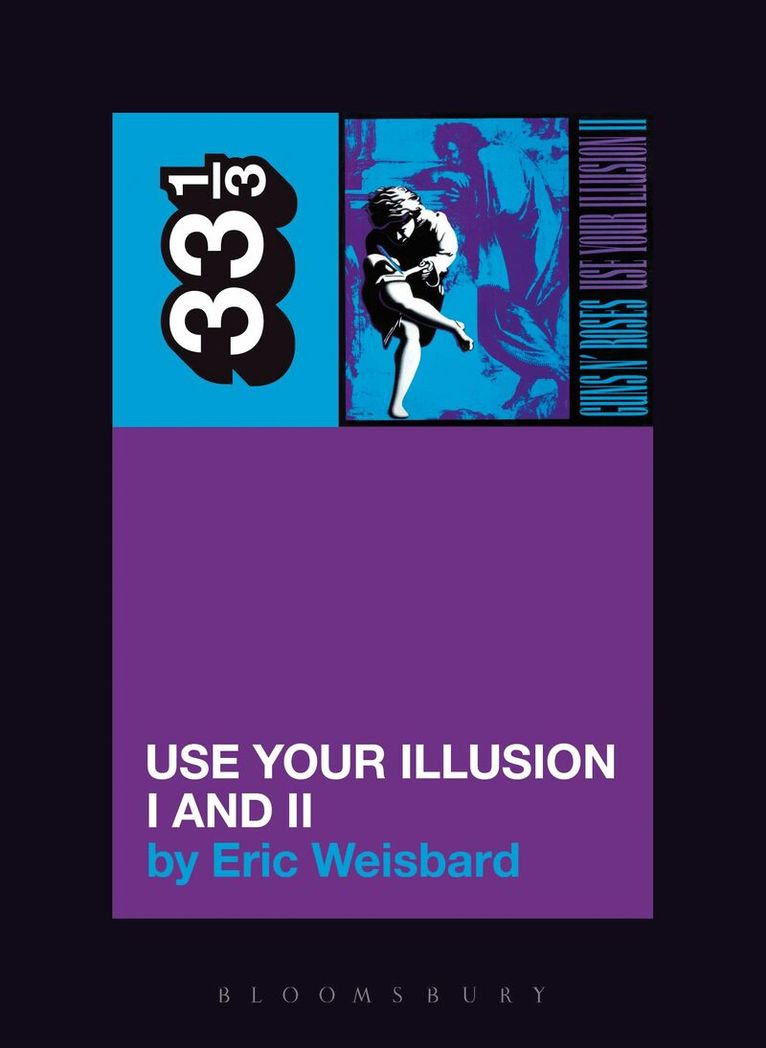
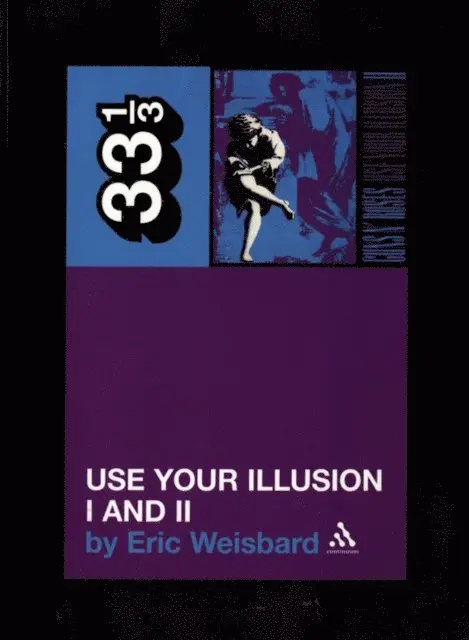
It was the season of the blockbuster. Between August 12 and November 26 1991, a whole slew of acts released albums that were supposed to sell millions of copies in the run-up to Christmas. Metallica, Michael Jackson, Pearl Jam, Nirvana, Garth Brooks, MC Hammer, and U2 - all were competing for the attention of the record-buying public at the same time. But perhaps the most attention-seeking act of all was Guns N' Roses. Their albums "Use Your Illusion I & II", released on the same day, were both 75-minute sprawlers with practically the same cover design - an act of colossal arrogance. On one level, it worked. The albums claimed the top two chart positions and ultimately sold 7 million copies each in the US alone. On another level, it was a disaster. This was an album that Axl Rose has been unable to follow-up in fifteen years. It signalled the end of "Guns N' Roses", of heavy metal on the Sunset Strip and the entire 1980s model of blockbuster pop/rock promotion. "Use Your Illusion" marked the end of rock as mass culture.In this book, Eric Weisbard shows how the album has matured into a work whose baroque excesses now have something to teach us about pop and the platforms it raises and lowers, about a man who suddenly found himself praised to the firmament for every character trait that had hitherto marked him as an irredeemable loser.
1 422 kr
Skickas inom 7-10 vardagar
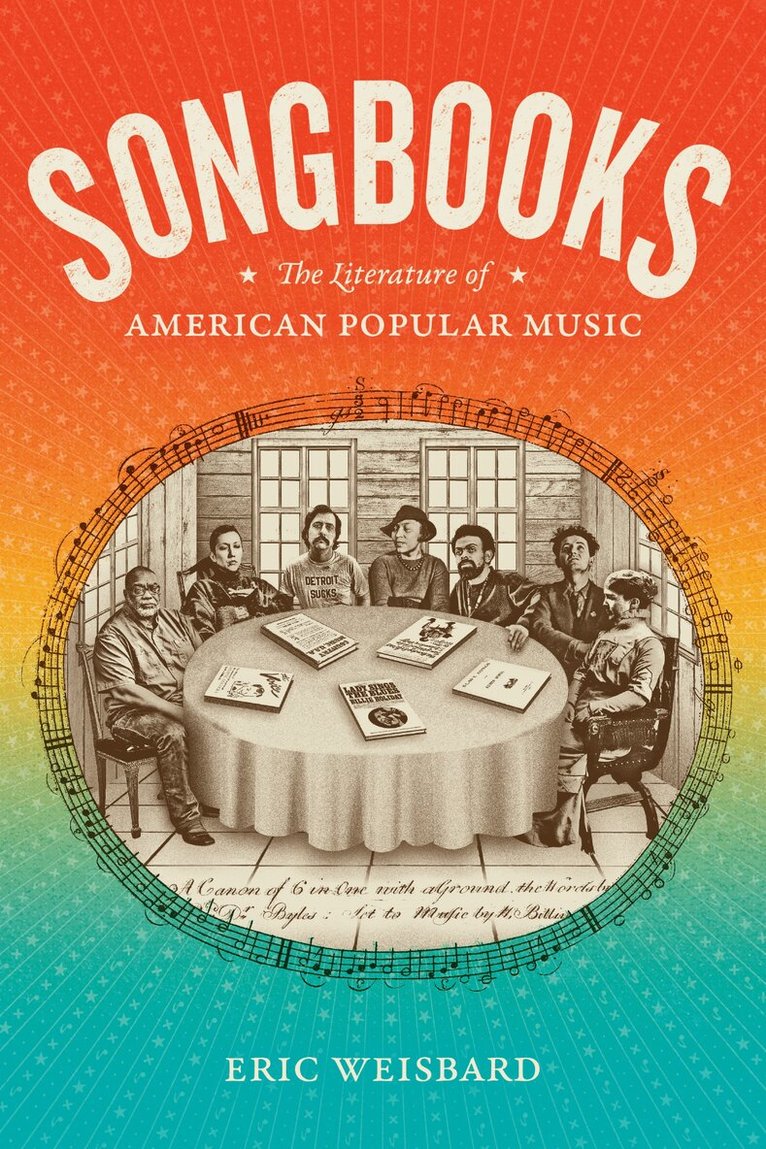
In Songbooks, critic and scholar Eric Weisbard offers a critical guide to books on American popular music from William Billings's 1770 New-England Psalm-Singer to Jay-Z's 2010 memoir Decoded. Drawing on his background editing the Village Voice music section, coediting the Journal of Popular Music Studies, and organizing the Pop Conference, Weisbard connects American music writing from memoirs, biographies, and song compilations to blues novels, magazine essays, and academic studies. The authors of these works are as diverse as the music itself: women, people of color, queer writers, self-educated scholars, poets, musicians, and elites discarding their social norms. Whether analyzing books on Louis Armstrong, the Beatles, and Madonna; the novels of Theodore Dreiser, Gayl Jones, and Jennifer Egan; or varying takes on blackface minstrelsy, Weisbard charts an alternative history of American music as told through its writing. As Weisbard demonstrates, the most enduring work pursues questions that linger across time period and genre-cultural studies in the form of notes on the fly, on sounds that never cease to change meaning.
306 kr
Skickas inom 7-10 vardagar
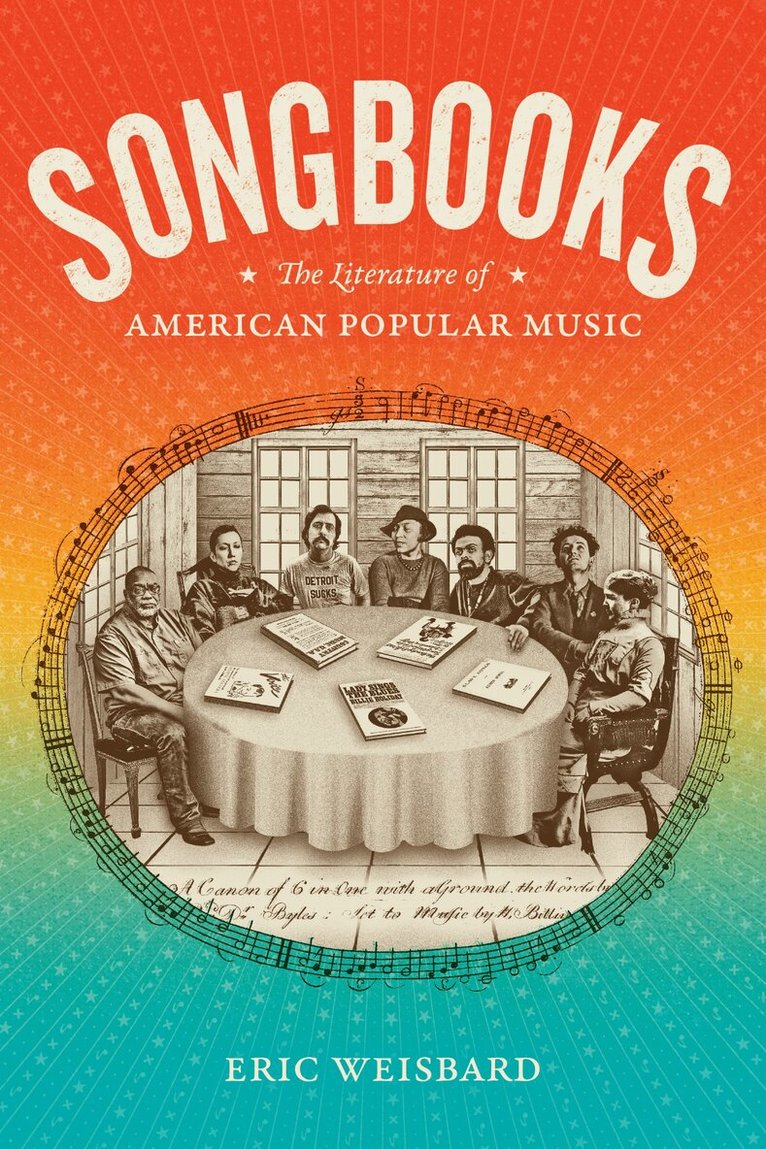
In Songbooks, critic and scholar Eric Weisbard offers a critical guide to books on American popular music from William Billings's 1770 New-England Psalm-Singer to Jay-Z's 2010 memoir Decoded. Drawing on his background editing the Village Voice music section, coediting the Journal of Popular Music Studies, and organizing the Pop Conference, Weisbard connects American music writing from memoirs, biographies, and song compilations to blues novels, magazine essays, and academic studies. The authors of these works are as diverse as the music itself: women, people of color, queer writers, self-educated scholars, poets, musicians, and elites discarding their social norms. Whether analyzing books on Louis Armstrong, the Beatles, and Madonna; the novels of Theodore Dreiser, Gayl Jones, and Jennifer Egan; or varying takes on blackface minstrelsy, Weisbard charts an alternative history of American music as told through its writing. As Weisbard demonstrates, the most enduring work pursues questions that linger across time period and genre-cultural studies in the form of notes on the fly, on sounds that never cease to change meaning.
Hound Dog
A Song by BigMama Thornton and Interpreted by Elvis Presley and Others
Inbunden, Engelska, 2023
932 kr
Skickas inom 7-10 vardagar
Many listeners first heard "Hound Dog" when Elvis Presley's single topped the pop, country, and R&B charts in 1956. But some fans already knew the song from Big Mama Thornton's earlier recording, a giant but exclusively R&B hit. In Hound Dog Eric Weisbard examines the racial, commercial, and cultural ramifications of Elvis's appropriation of a Black woman's anthem. He rethinks the history and influences of rock music in light of Rolling Stone's replacement of Presley's "Hound Dog" with Thornton's version in its 2021 "500 Greatest Songs of All Time" list. Taking readers from Presley and Thornton to Patti Page's "Doggie in the Window," the Stooges' "I Wanna Be Your Dog," and other dog ditties, Weisbard uses "Hound Dog" to reflect on one of rock's fundamental dilemmas: the whiteness of the wail.
Hound Dog
A Song by BigMama Thornton and Interpreted by Elvis Presley and Others
Häftad, Engelska, 2023
211 kr
Skickas inom 7-10 vardagar
Many listeners first heard "Hound Dog" when Elvis Presley's single topped the pop, country, and R&B charts in 1956. But some fans already knew the song from Big Mama Thornton's earlier recording, a giant but exclusively R&B hit. In Hound Dog Eric Weisbard examines the racial, commercial, and cultural ramifications of Elvis's appropriation of a Black woman's anthem. He rethinks the history and influences of rock music in light of Rolling Stone's replacement of Presley's "Hound Dog" with Thornton's version in its 2021 "500 Greatest Songs of All Time" list. Taking readers from Presley and Thornton to Patti Page's "Doggie in the Window," the Stooges' "I Wanna Be Your Dog," and other dog ditties, Weisbard uses "Hound Dog" to reflect on one of rock's fundamental dilemmas: the whiteness of the wail.