3 686 kr
Skickas inom 10-15 vardagar
3 686 kr
Skickas inom 10-15 vardagar
2 073 kr
Skickas inom 10-15 vardagar
3 332 kr
Skickas inom 10-15 vardagar
925 kr
Läs direkt efter köp
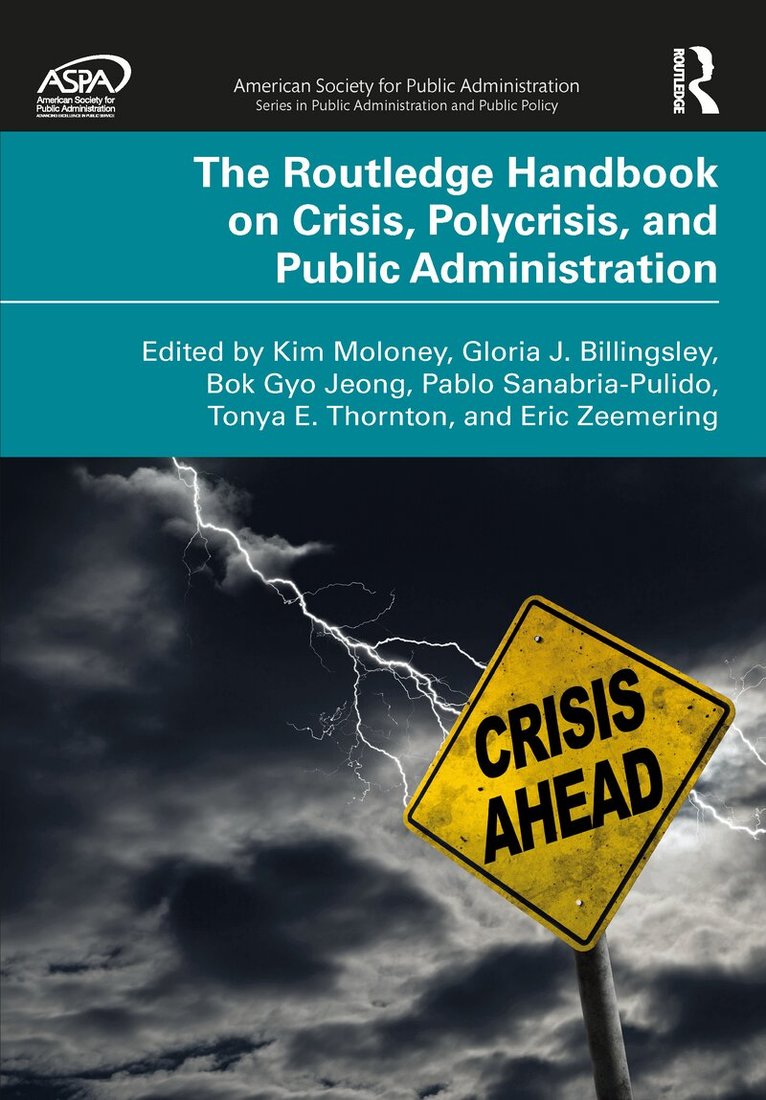
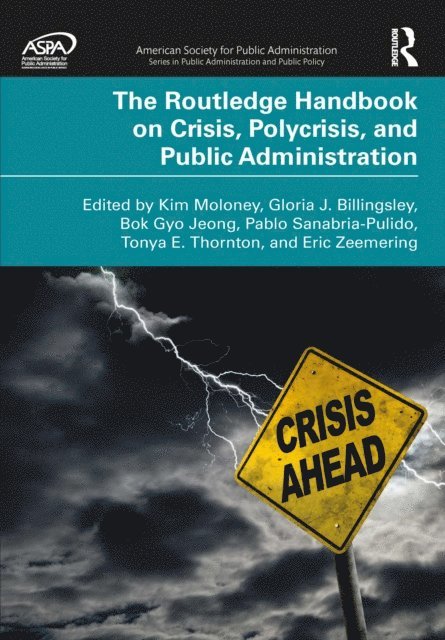
This volume considers how local, national, and global crises with differing durations, sizes, and impacts challenge the public sector to respond.
Within the public administration and policy disciplines, there has been limited recognition about the nature of, linkages among, and the response options for crises and polycrises, when more than one crisis, emergency, disaster, or catastrophe (whether human-caused or natural) simultaneously impacts citizens in one geographical location. This handbook gathers experts from different fields to explore how each crisis challenges human capacity, information technology, and communication capabilities, and how public leaders must respond. These expert contributions are grouped within five thematic sections:
Structures in Crisis: A North-South Dialogue, to engage national and global perspectives on how political, social, and economic structures respond during crises Agents in Crisis: A Cross-Actor Dialogue, on how agents respond to crises Human Capital and Information Technology in Crisis, exploring how these resources interact during crises Public Sector Communication in Crisis, examining issues of government and governance in effective crisis communication Practitioners in Crisis, a reminder to the discipline that important context and realities are missed if practitioner realities are overlooked.Chapters in the book engage 23 countries and one overseas dependency along with 14 crisis events. Eighteen chapters are focused on one crisis event while ten chapters directly or indirectly engage polycrises.
As crises and polycrises become a constancy of our time, this volume will be of great interest to students, researchers, and practitioners of public administration and public policy.
922 kr
Läs direkt efter köp
This volume considers how local, national, and global crises with differing durations, sizes, and impacts challenge the public sector to respond.
Within the public administration and policy disciplines, there has been limited recognition about the nature of, linkages among, and the response options for crises and polycrises, when more than one crisis, emergency, disaster, or catastrophe (whether human-caused or natural) simultaneously impacts citizens in one geographical location. This handbook gathers experts from different fields to explore how each crisis challenges human capacity, information technology, and communication capabilities, and how public leaders must respond. These expert contributions are grouped within five thematic sections:
Structures in Crisis: A North-South Dialogue, to engage national and global perspectives on how political, social, and economic structures respond during crises Agents in Crisis: A Cross-Actor Dialogue, on how agents respond to crises Human Capital and Information Technology in Crisis, exploring how these resources interact during crises Public Sector Communication in Crisis, examining issues of government and governance in effective crisis communication Practitioners in Crisis, a reminder to the discipline that important context and realities are missed if practitioner realities are overlooked.Chapters in the book engage 23 countries and one overseas dependency along with 14 crisis events. Eighteen chapters are focused on one crisis event while ten chapters directly or indirectly engage polycrises.
As crises and polycrises become a constancy of our time, this volume will be of great interest to students, researchers, and practitioners of public administration and public policy.
2 448 kr
Läs direkt efter köp
Now in an extensively revised eleventh edition, Introducing Public Administration provides students with the conceptual foundation they need while introducing them to important trends in the discipline. This timeless textbook—blending historical accounts with contemporary events—examines the most important issues in the field of public administration through political, economic, social, and managerial perspectives. Its approach of using wide-ranging case discussion studies at the end of each chapter encourages students to think critically about the nature, purpose, and public value of public administration today. Comprehensively revised and refreshed by a new author team, the eleventh edition contains critical updates for the field:
An all-new chapter on nonprofit organizations and their role in cooperating with, supporting, and providing a growing number of government services. An all-new chapter on financing government services and debt, including a case study on tariffs. A thoroughly revised chapter on federalism and intergovernmental relations, with a case study on federal versus state roles in emergency management. A completely revised chapter on evaluation and accountability, with an extensive overview of evaluation processes and methods. A new prologue exploring the role of public administration in the COVID-19 pandemic. Careful examination throughout the book of recent court cases and legal decisions that impact government policymaking, administrative processes, and restructuring/reform efforts, with special attention given to the Trump administration’s second term.Complete with fully updated instructor support materials including teaching slides for each chapter, a chapter-by-chapter instructor’s manual and sample syllabus, student learning objectives, and self-test questions, Introducing Public Administration, Eleventh Edition is the ideal introduction to the discipline for first year graduate students as well as for the growing number of undergraduate public administration courses and programs.
2 448 kr
Läs direkt efter köp
Now in an extensively revised eleventh edition, Introducing Public Administration provides students with the conceptual foundation they need while introducing them to important trends in the discipline. This timeless textbook—blending historical accounts with contemporary events—examines the most important issues in the field of public administration through political, economic, social, and managerial perspectives. Its approach of using wide-ranging case discussion studies at the end of each chapter encourages students to think critically about the nature, purpose, and public value of public administration today. Comprehensively revised and refreshed by a new author team, the eleventh edition contains critical updates for the field:
An all-new chapter on nonprofit organizations and their role in cooperating with, supporting, and providing a growing number of government services. An all-new chapter on financing government services and debt, including a case study on tariffs. A thoroughly revised chapter on federalism and intergovernmental relations, with a case study on federal versus state roles in emergency management. A completely revised chapter on evaluation and accountability, with an extensive overview of evaluation processes and methods. A new prologue exploring the role of public administration in the COVID-19 pandemic. Careful examination throughout the book of recent court cases and legal decisions that impact government policymaking, administrative processes, and restructuring/reform efforts, with special attention given to the Trump administration’s second term.Complete with fully updated instructor support materials including teaching slides for each chapter, a chapter-by-chapter instructor’s manual and sample syllabus, student learning objectives, and self-test questions, Introducing Public Administration, Eleventh Edition is the ideal introduction to the discipline for first year graduate students as well as for the growing number of undergraduate public administration courses and programs.