
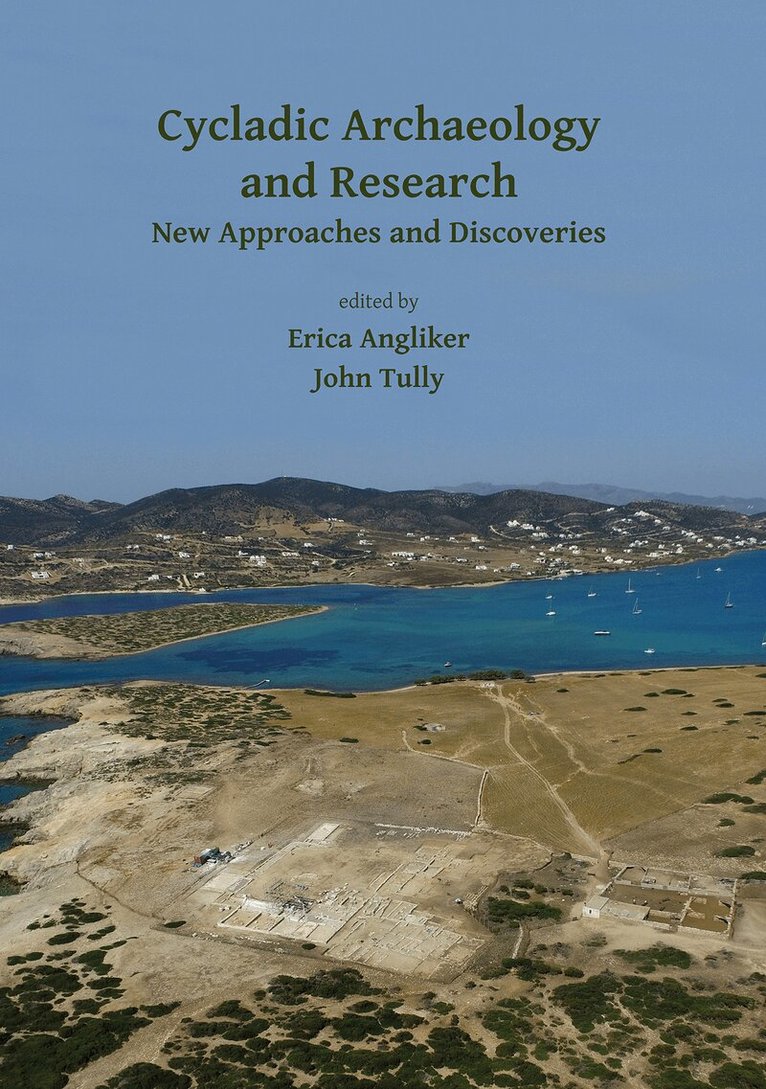
Cycladic Archaeology and Research: New approaches and discoveries' reflects the present exciting times in Cycladic archaeology. New excavations are bringing to light sanctuaries unmentioned by literary sources and inscriptions (e.g., Kythnos, Despotiko); new theoretical approaches to insularity and networks are radically changing our views of the Cyclades as geographic and cultural unit(s). Furthermore, the restoration and restudy of older sites (e.g., Delos, Paros, Naxos) are challenging old truths, updating chronologies and contexts throughout the Mediterranean and beyond. This volume is intended to share these recent developments with a broader, international audience. The essays have been carefully selected as representing some of the most important recent work and include significant previously-unpublished material. Individually, they cover archaeological sites and materials from across the Cycladic islands, and illustrate the diversity of the islands’ material culture across the Geometric, Archaic, Classical, Hellenistic, Roman, and Late Antique periods. Together, they share common themes such as the importance of connectivity, and the role of each island’s individual landscape and its resources in shaping human activity. The work they represent attests the ongoing appeal of the islands and of the islanders in the collective imagination, and demonstrates the scope for still further innovative work in the years ahead.

This volume examines the archaeology of small islands and the ways in which island communities have responded to environmental challenges across different regions and periods. The contributors examine the resilience of islanders in addressing these challenges, the solutions that they have devised, and instances in which resource depletion necessitated the abandonment of inhabited islands.The topics addressed include the demographic and social impacts of environmental changes on small islands and the influence of the unique environmental conditions on local cultures and range from the survey of small Aegean islands and strategies for managing water scarcity in the Iron Age Cyclades to Greek colonisation in the Adriatic, shell mound-building societies of southern Brazil, and community-based approaches to heritage and climate resilience in the Caribbean. The contributors consider religious practices, social organisation, economies, material culture and traditions. Together, the studies demonstrate the diverse roles played by small islands within wider cultural and economic networks and highlight their importance for understanding long-term human-environment relationships.
Cycladic Archaeology and Research: New approaches and discoveries' reflects the present exciting times in Cycladic archaeology. New excavations are bringing to light sanctuaries unmentioned by literary sources and inscriptions (e.g., Kythnos, Despotiko); new theoretical approaches to insularity and networks are radically changing our views of the Cyclades as geographic and cultural unit(s). Furthermore, the restoration and restudy of older sites (e.g., Delos, Paros, Naxos) are challenging old truths, updating chronologies and contexts throughout the Mediterranean and beyond. This volume is intended to share these recent developments with a broader, international audience. The essays have been carefully selected as representing some of the most important recent work and include significant previously-unpublished material. Individually, they cover archaeological sites and materials from across the Cycladic islands, and illustrate the diversity of the islands’ material culture across the Geometric, Archaic, Classical, Hellenistic, Roman, and Late Antique periods. Together, they share common themes such as the importance of connectivity, and the role of each island’s individual landscape and its resources in shaping human activity. The work they represent attests the ongoing appeal of the islands and of the islanders in the collective imagination, and demonstrates the scope for still further innovative work in the years ahead.
This volume examines the archaeology of small islands and the ways in which island communities have responded to environmental challenges across different regions and periods. The contributors examine the resilience of islanders in addressing these challenges, the solutions that they have devised, and instances in which resource depletion necessitated the abandonment of inhabited islands.The topics addressed include the demographic and social impacts of environmental changes on small islands and the influence of the unique environmental conditions on local cultures and range from the survey of small Aegean islands and strategies for managing water scarcity in the Iron Age Cyclades to Greek colonisation in the Adriatic, shell mound-building societies of southern Brazil, and community-based approaches to heritage and climate resilience in the Caribbean. The contributors consider religious practices, social organisation, economies, material culture and traditions. Together, the studies demonstrate the diverse roles played by small islands within wider cultural and economic networks and highlight their importance for understanding long-term human-environment relationships.