Erica Carter – författare
Visar alla böcker från författaren Erica Carter. Handla med fri frakt och snabb leverans.
16 produkter
Dietrich's Ghosts
The Sublime and the Beautiful in Third Reich Film
Av Erica Carter
Inbunden, 2007
1660 kr
Lägg i varukorg
This text looks at the star system under the Third Reich. Following the experiments of Weimar, much of cinema after 1933 became part of a wider Nazi backlash against modernism in all its forms. This study contributes to contemporary debates concerning the historical study of film spectatorship.
Dietrich's Ghosts
The Sublime and the Beautiful in Third Reich Film
Av Erica Carter
Häftad, 2007
533 kr
Lägg i varukorg
This text looks at the star system under the Third Reich. Following the experiments of Weimar, much of cinema after 1933 became part of a wider Nazi backlash against modernism in all its forms. This study contributes to contemporary debates concerning the historical study of film spectatorship.
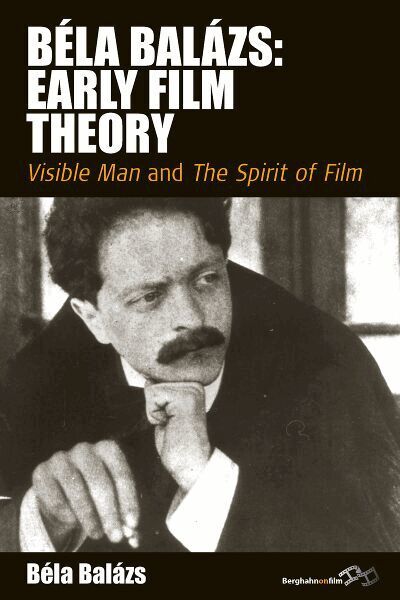
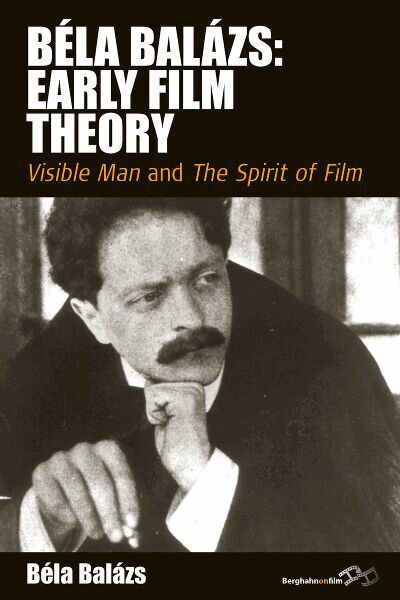
Béla Balázs: Early Film Theory
Visible Man and The Spirit of Film
Av Béla Balázs, Erica Carter m. fl.
Häftad, 2011
313 kr
Lägg i varukorg
Béla Balázs’s two works, Visible Man (1924) and The Spirit of Film (1930), are published here for the first time in full English translation. The essays offer the reader an insight into the work of a film theorist whose German-language publications have been hitherto unavailable to the film studies …
From the Beginning
Av Erica Carter
E-bok, 2016
67 kr
Lägg i varukorg
A long time ago, the sun, stars, ocean, mountains, and everything elseeven timedid not exist. So how did everything come from nothing? The straightforward, scientific explanations in this wonderful little book will help you answer that question, which may come from the youngsters in your life or …
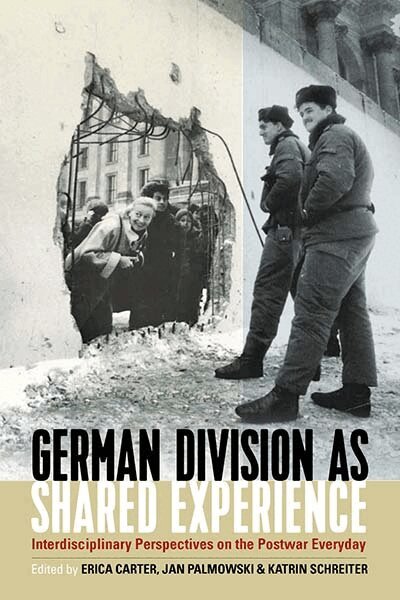
German Division as Shared Experience
Interdisciplinary Perspectives on the Postwar Everyday
Av Erica Carter, Jan Palmowski m. fl.
Inbunden, 2019
1979 kr
Lägg i varukorg
Despite the nearly three decades since German reunification, there remains little understanding of the ways in which experiences overlapped across East-West divides. German Division as Shared Experience considers everyday life across the two Germanies, using perspectives from history, literary and …
German Division as Shared Experience
Interdisciplinary Perspectives on the Postwar Everyday
Av Erica Carter, Jan Palmowski m. fl.
Häftad, 2023
543 kr
Lägg i varukorg
Despite the nearly three decades since German reunification, there remains little understanding of the ways in which experiences overlapped across East-West divides. German Division as Shared Experience considers everyday life across the two Germanies, using perspectives from history, literary and …
Dietrich's Ghosts
The Sublime and the Beautiful in Third Reich Film
Av Erica Carter
E-bok, 2019
579 kr
Lägg i varukorg
This text looks at the star system under the Third Reich. Following the experiments of Weimar, much of cinema after 1933 became part of a wider Nazi backlash against modernism in all its forms. This study contributes to contemporary debates concerning the historical study of film spectatorship.
Dietrich's Ghosts
The Sublime and the Beautiful in Third Reich Film
Av Erica Carter
E-bok, 2019
579 kr
Lägg i varukorg
This text looks at the star system under the Third Reich. Following the experiments of Weimar, much of cinema after 1933 became part of a wider Nazi backlash against modernism in all its forms. This study contributes to contemporary debates concerning the historical study of film spectatorship.
German Cinema Book
Av Tim Bergfelder, Erica Carter m. fl.
Häftad, 2020
608 kr
Lägg i varukorg
This comprehensively revised, updated and significantly extended edition introduces German film history from its beginnings to the present day, covering key periods and movements including early and silent cinema, Weimar cinema, Nazi cinema, the New German Cinema, the Berlin School, the cinema of …
Béla Balázs: Early Film Theory
Visible Man and The Spirit of Film
Av Béla Balázs, Erica Carter m. fl.
Inbunden, 2010
2040 kr
Lägg i varukorg
Béla Balázs’s two works, Visible Man (1924) and The Spirit of Film (1930), are published here for the first time in full English translation. The essays offer the reader an insight into the work of a film theorist whose German-language publications have been hitherto unavailable to the film studies …
Bela Balazs: Early Film Theory
<i>Visible Man</i> and <i>The Spirit of Film</i>
Av Rodney Livingstone, Erica Carter m. fl.
E-bok, 2010
276 kr
Lägg i varukorg
Béla Balázs’s two works, Visible Man (1924) and The Spirit of Film (1930), are published here for the first time in full English translation. The essays offer the reader an insight into the work of a film theorist whose German-language publications have been hitherto unavailable to the film studies …
German Cinema Book
Av Tim Bergfelder, Erica Carter m. fl.
E-bok, 2020
662 kr
Lägg i varukorg
This comprehensively revised, updated and significantly extended edition introduces German film history from its beginnings to the present day, covering key periods and movements including early and silent cinema, Weimar cinema, Nazi cinema, the New German Cinema, the Berlin School, the cinema of …
German Cinema Book
Av Tim Bergfelder, Erica Carter m. fl.
E-bok, 2020
662 kr
Lägg i varukorg
This comprehensively revised, updated and significantly extended edition introduces German film history from its beginnings to the present day, covering key periods and movements including early and silent cinema, Weimar cinema, Nazi cinema, the New German Cinema, the Berlin School, the cinema of …
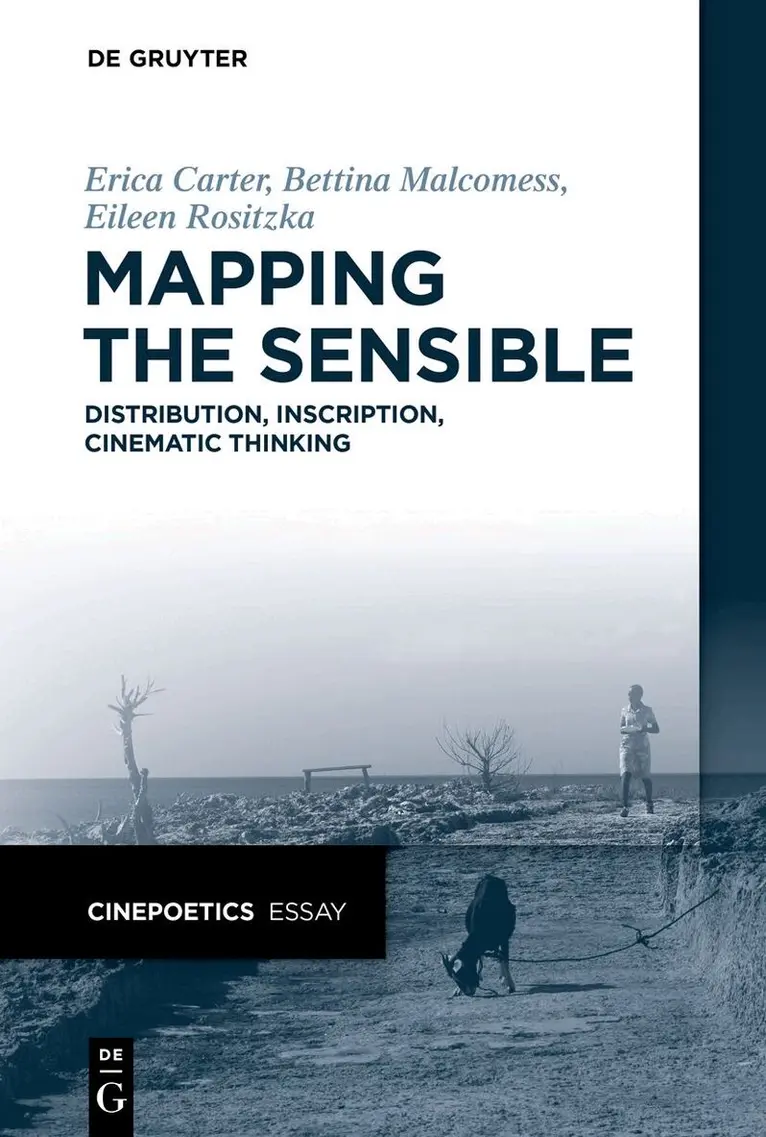
Mapping the Sensible
Distribution, Inscription, Cinematic Thinking
Av Erica Carter, Bettina Malcomess m. fl.
Häftad, 2022
272 kr
Lägg i varukorg
In academic and public discourse, 'mapping' has become a ubiquitous term for epistemic practices ranging from surveys of scholarly fields to processes of data collection, ordering and visualization. Mapping captures patterns of distribution, segregation and hierarchy across socio-cultural spaces …