Erick Guerra – författare
Visar alla böcker från författaren Erick Guerra. Handla med fri frakt och snabb leverans.
2 produkter
2 produkter
Häftad, Engelska, 2017
425 kr
Skickas inom 5-8 vardagar
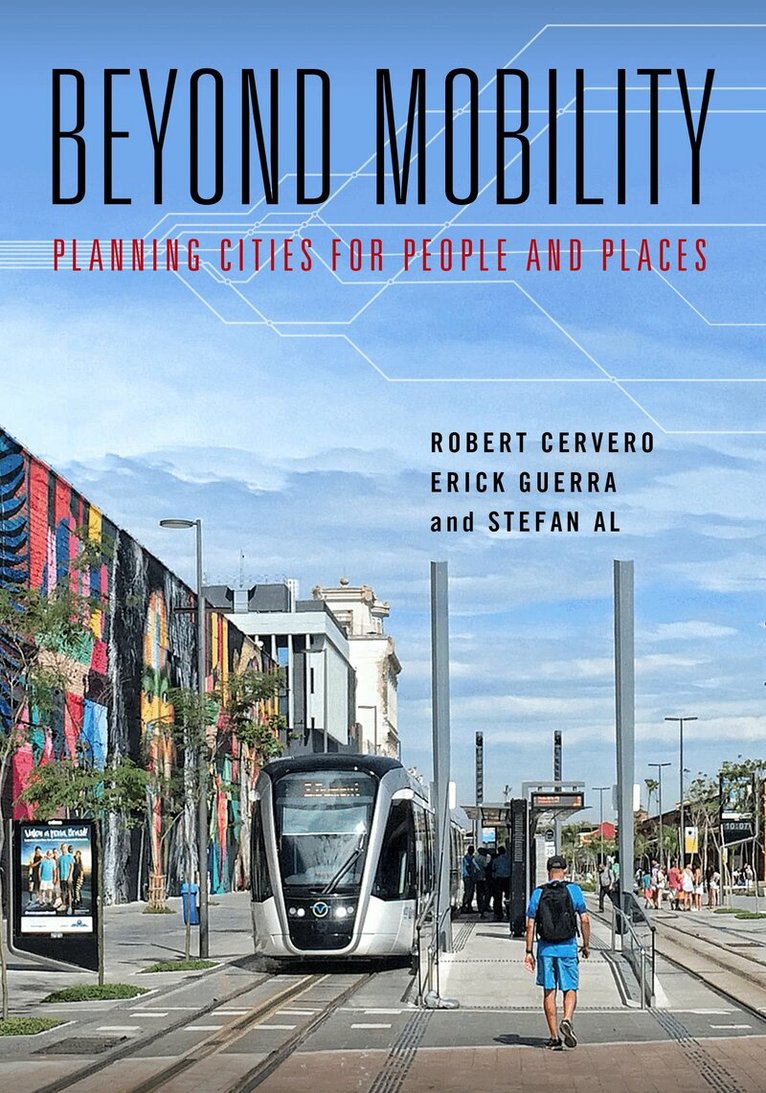
Cities across the globe have been designed with a primary goal of moving people around quickly--and the costs are becoming ever more apparent. The consequences are measured in smoggy air basins, sprawling suburbs, unsafe pedestrian environments, and despite hundreds of billions of dollars in investments, a failure to stem traffic congestion. Every year our current transportation paradigm generates more than 1.25 million fatalities directly through traffic collisions. Worldwide, 3.2 million people died prematurely in 2010 because of air pollution, four times as many as a decade earlier. Instead of planning primarily for mobility, our cities should focus on the safety, health, and access of the people in them. Beyond Mobility is about prioritizing the needs and aspirations of people and the creation of great places. This is as important, if not more important, than expediting movement. A stronger focus on accessibility and place creates better communities, environments, and economies.Rethinking how projects are planned and designed in cities and suburbs needs to occur at multiple geographic scales, from micro-designs (such as parklets), corridors (such as road-diets), and city-regions (such as an urban growth boundary). It can involve both software (a shift in policy) and hardware (a physical transformation). Moving beyond mobility must also be socially inclusive, a significant challenge in light of the price increases that typically result from creating higher quality urban spaces. There are many examples of communities across the globe working to create a seamless fit between transit and surrounding land uses, retrofit car-oriented suburbs, reclaim surplus or dangerous roadways for other activities, and revitalize neglected urban spaces like abandoned railways in urban centers. The authors draw on experiences and data from a range of cities and countries around the globe in making the case for moving beyond mobility. Throughout the book, they provide an optimistic outlook about the potential to transform places for the better.Beyond Mobility celebrates the growing demand for a shift in global thinking around place and mobility in creating better communities, environments, and economies.
Häftad, Engelska, 2025
300 kr
Skickas inom 5-8 vardagar
The world’s largest public works investment visible from space, the Interstate Highway System and the hundreds of thousands of miles of supporting roadways, are frequently hailed as a marvel and triumph of engineering. President Eisenhower’s 1956 Interstate Highway Act is often praised as a model of successful bipartisanship. Today, the extensive damage wreaked by the creation of the highway system and the ills of car dependency are more widely acknowledged. Congestion and traffic deaths remain endemic despite nearly three quarters a century of public policies and trillions of dollars spent with a primary stated goal of reducing congestion and improving traffic safety. The financing, governance, and construction models established by the 1956 act continue to influence what gets built today. In Overbuilt: The High Costs and Low Rewards of US Highway Construction, transportation planning expert Erick Guerra describes how the US roadway system became overbuilt, how public policy continues to encourage overbuilding, what the scale and consequences of overbuilding are, and how we can rethink our approach to highway building in the US. Guerra explains that the national propensity to build roadways is no longer official or intentional policy. Instead, overbuilding stems from the institutions, finance mechanisms, and evaluation metrics developed in the first half of the twentieth century. While more funds are set aside for transit, walking, biking, and beautification, the investment paradigm has not changed. Planners and engineers have not adjusted the tools they use to determine which roads should be built, rebuilt, or widened and why. The country has added more lanes of urban Interstate since declaring the Interstate system complete than prior to it. Despite having too much roadway, the country is still operating in construction mode, using the same basic approach used to finance and build the interstate system quickly, Guerra states. The interstate was completed more than three decades ago. Overbuilt argues convincingly that it is time to move on.