Erik Butler – författare
Visar alla böcker från författaren . Handla med fri frakt och snabb leverans.
11 produkter
11 produkter
Inbunden, Engelska, 2022
284 kr
Skickas
Häftad, Engelska, 2023
391 kr
Skickas inom 3-6 vardagar
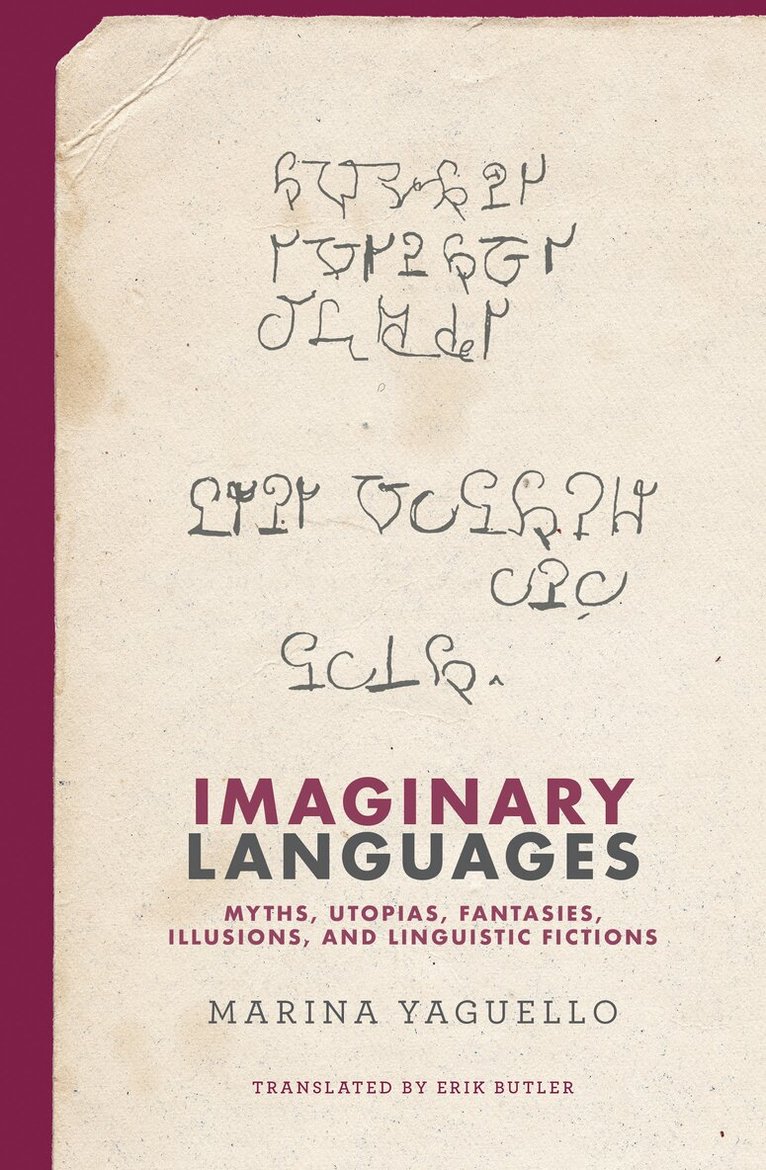
An exploration of the practice of inventing languages, from speaking in tongues to utopian schemes of universality to the discoveries of modern linguistics.In Imaginary Languages, Marina Yaguello explores the history and practice of inventing languages, from religious speaking in tongues to politically utopian schemes of universality to the discoveries of modern linguistics. She looks for imagined languages that are autonomous systems, complete unto themselves and meant for communal use; imaginary, and therefore unlike both natural languages and historically attested languages; and products of an individual effort to lay hold of language. Inventors of languages, Yaguello writes, are madly in love: they love an object that belongs to them only to the extent that they also share it with a community.Yaguello investigates the sources of imaginary languages, in myths, dreams, and utopias. She takes readers on a tour of languages invented in literature from the sixteenth to the twentieth century, including that in More’s Utopia, Leibniz’s “algebra of thought,” and Bulwer-Lytton’s linguistic fiction. She examines the linguistic fantasies (or madness) of Georgian linguist Nikolai Marr and Swiss medium Hélène Smith; and considers the quest for the true philosophical language. Yaguello finds two abiding (and somewhat contradictory) forces: the diversity of linguistic experience, which stands opposed to unifying endeavors, and, on the other hand, features shared by all languages (natural or not) and their users, which justifies the universalist hypothesis.Recent years have seen something of a boom in invented languages, whether artificial languages meant to facilitate international communication or imagined languages constructed as part of science fiction worlds. In Imaginary Languages (an updated and expanded version of the earlier Les Fous du langage, published in English as Lunatic Lovers of Language), Yaguello shows that the invention of language is above all a passionate, dizzying labor of love.
Häftad, Engelska, 2024
697 kr
Skickas inom 10-15 vardagar
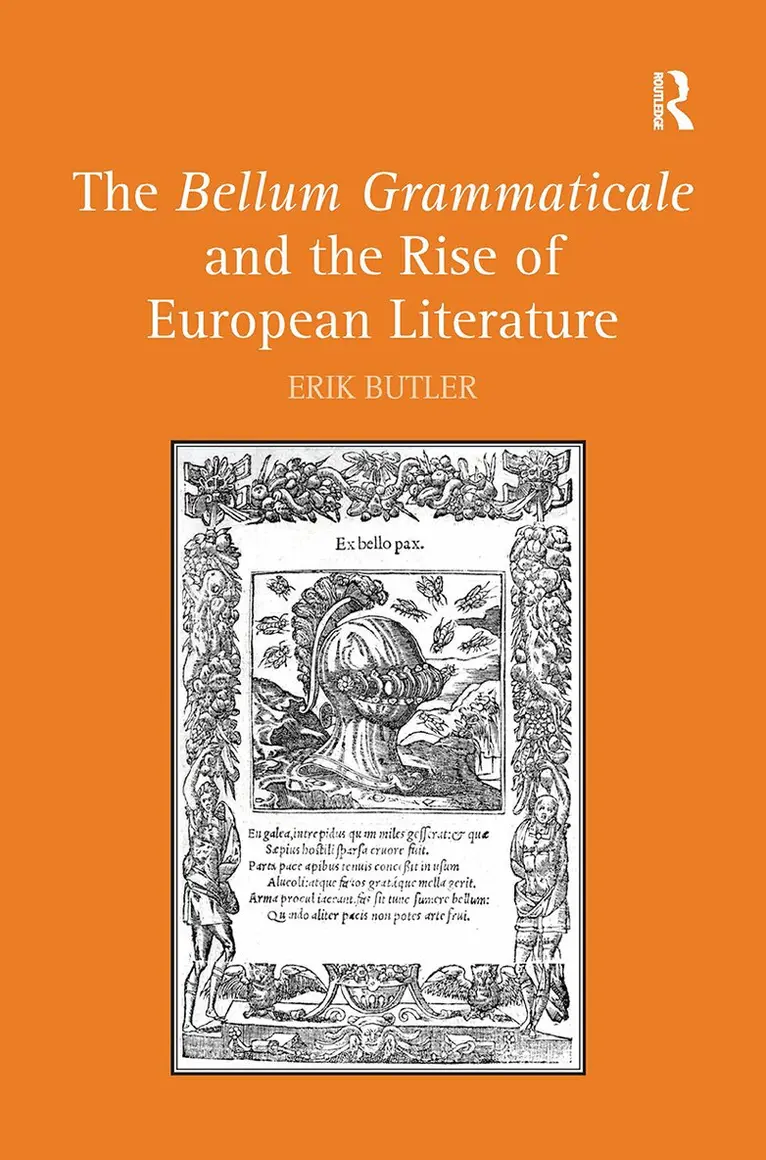
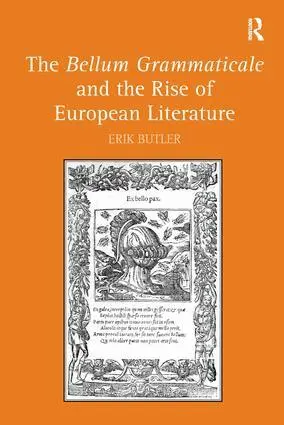
The now-forgotten genre of the bellum grammaticale flourished in the sixteenth- and seventeenth centuries as a means of satirizing outmoded cultural institutions and promoting new methods of instruction. In light of works written in Renaissance Italy, ancien régime France, and baroque Germany (Andrea Guarna's Bellum Grammaticale [1511], Antoine Furetière's Nouvelle allégorique [1658], and Justus Georg Schottelius' Horrendum Bellum Grammaticale [1673]), this study explores early modern representations of language as war. While often playful in form and intent, the texts examined address serious issues of enduring relevance: the relationship between tradition and innovation, the power of language to divide and unite peoples, and canon-formation. Moreover, the author contends, the "language wars" illuminate the shift from a Latin-based understanding of learning to the acceptance of vernacular erudition and the emergence of national literature.
E-bok
Engelska, 2016745 kr
Läs direkt efter köp
The now-forgotten genre of the bellum grammaticale flourished in the sixteenth- and seventeenth centuries as a means of satirizing outmoded cultural institutions and promoting new methods of instruction. In light of works written in Renaissance Italy, ancien régime France, and baroque Germany (Andrea Guarna''s Bellum Grammaticale [1511], Antoine Furetière''s Nouvelle allégorique [1658], and Justus Georg Schottelius'' Horrendum Bellum Grammaticale [1673]), this study explores early modern representations of language as war. While often playful in form and intent, the texts examined address serious issues of enduring relevance: the relationship between tradition and innovation, the power of language to divide and unite peoples, and canon-formation. Moreover, the author contends, the "language wars" illuminate the shift from a Latin-based understanding of learning to the acceptance of vernacular erudition and the emergence of national literature.
E-bok
PDF, Engelska, 2016745 kr
Läs direkt efter köp
The now-forgotten genre of the bellum grammaticale flourished in the sixteenth- and seventeenth centuries as a means of satirizing outmoded cultural institutions and promoting new methods of instruction. In light of works written in Renaissance Italy, ancien régime France, and baroque Germany (Andrea Guarna''s Bellum Grammaticale [1511], Antoine Furetière''s Nouvelle allégorique [1658], and Justus Georg Schottelius'' Horrendum Bellum Grammaticale [1673]), this study explores early modern representations of language as war. While often playful in form and intent, the texts examined address serious issues of enduring relevance: the relationship between tradition and innovation, the power of language to divide and unite peoples, and canon-formation. Moreover, the author contends, the "language wars" illuminate the shift from a Latin-based understanding of learning to the acceptance of vernacular erudition and the emergence of national literature.
Inbunden, Engelska, 2010
2 766 kr
Skickas inom 10-15 vardagar
The now-forgotten genre of the bellum grammaticale flourished in the sixteenth- and seventeenth centuries as a means of satirizing outmoded cultural institutions and promoting new methods of instruction. In light of works written in Renaissance Italy, ancien régime France, and baroque Germany (Andrea Guarna's Bellum Grammaticale [1511], Antoine Furetière's Nouvelle allégorique [1658], and Justus Georg Schottelius' Horrendum Bellum Grammaticale [1673]), this study explores early modern representations of language as war. While often playful in form and intent, the texts examined address serious issues of enduring relevance: the relationship between tradition and innovation, the power of language to divide and unite peoples, and canon-formation. Moreover, the author contends, the "language wars" illuminate the shift from a Latin-based understanding of learning to the acceptance of vernacular erudition and the emergence of national literature.
Del 54 - Studies in German Literature Linguistics and Culture
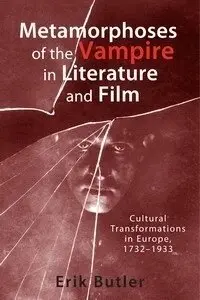
Metamorphoses of the Vampire in Literature and Film
Cultural Transformations in Europe, 1732-1933
Häftad, Engelska, 2011
332 kr
Skickas inom 5-8 vardagar
The first study to propose a unifying logic underlying the many and varied representations of the vampire in literature and culture.For the last three hundred years, fictions of the vampire have fed off anxieties about cultural continuity. Though commonly represented as a parasitic aggressor from without, the vampire is in fact a native of Europe, and its "metamorphoses," to quote Baudelaire, a distorted image of social transformation. Because the vampire grows strong whenever and wherever traditions weaken, its representations have multiplied with every political, economic, and technological revolution from the eighteenth century on. Today, in the age of globalization, vampire fictions are more virulent than ever, and the monster enjoys hunting grounds as vast as the international market. Metamorphoses of the Vampire explains why representations of vampirism began in the eighteenth century, flourished in the nineteenth, and came to eclipse nearly all other forms of monstrosity in the early twentieth century. Many of the works by French and German authors discussed here have never been presented to students and scholars in the English-speaking world. While there are many excellent studies that examine Victorian vampires, the undead in cinema, contemporary vampire fictions, and the vampire in folklore, until now no work has attempted to account for the unifying logic that underlies the vampire's many and often apparently contradictory forms.Erik Butler holds a PhDfrom Yale University and has taught at Emory University and Swarthmore College. His publications include The Bellum Gramaticale and the Rise of European Literature (2010) and a translation with commentary of Regrowth (Vidervuks) by the Soviet Jewish author Der Nister (2011).
Häftad, Engelska
116 kr
Skickas inom 5-8 vardagar
Inbunden, Engelska, 2021
327 kr
Skickas
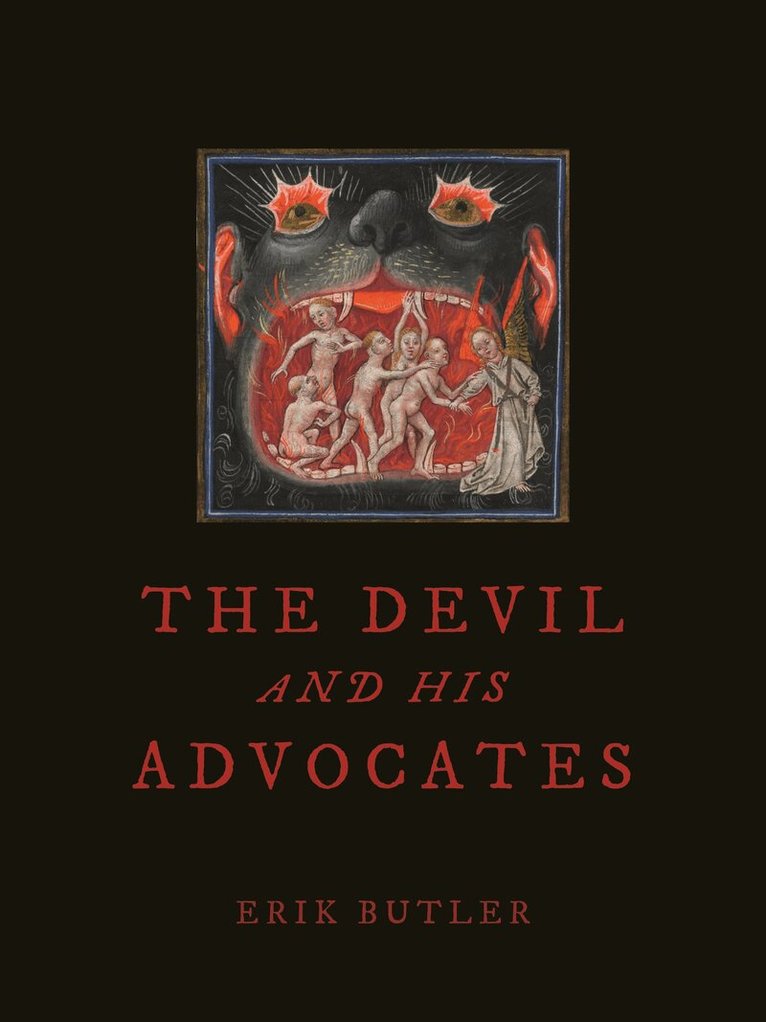
Satan is not God’s enemy in the Bible, and he’s not always bad – much less evil. Through the lens of the Old and New Testaments, Erik Butler explores the Devil through literature, theology, visual art, and music from antiquity up to the present, discussing canonical authors (Dante, Milton, Goethe) and a wealth of lesser-known sources. Since his first appearance in the Book of Job, Satan has pursued a single objective: to test human beings, whose moral worth and piety leave plenty of room for doubt. Satan can be manipulative, but at worst he facilitates what mortals are inclined to do, anyway. ‘The Devil made me do it’ does not hold up in the court of cosmic law. With wit and surprising examples, this book explains why.
Häftad, Engelska, 2023
268 kr
Skickas inom 5-8 vardagar
Inbunden, Engelska, 2022
350 kr
Tillfälligt slut
An exploration of the practice of inventing languages, from speaking in tongues to utopian schemes of universality to the discoveries of modern linguistics.In Imaginary Languages, Marina Yaguello explores the history and practice of inventing languages, from religious speaking in tongues to politically utopian schemes of universality to the discoveries of modern linguistics. She looks for imagined languages that are autonomous systems, complete unto themselves and meant for communal use; imaginary, and therefore unlike both natural languages and historically attested languages; and products of an individual effort to lay hold of language. Inventors of languages, Yaguello writes, are madly in love: they love an object that belongs to them only to the extent that they also share it with a community. Yaguello investigates the sources of imaginary languages, in myths, dreams, and utopias. She takes readers on a tour of languages invented in literature from the sixteenth to the twentieth century, including that in More’s Utopia, Leibniz’s “algebra of thought,” and Bulwer-Lytton’s linguistic fiction. She examines the linguistic fantasies (or madness) of Georgian linguist Nikolai Marr and Swiss medium Hélène Smith; and considers the quest for the true philosophical language. Yaguello finds two abiding (and somewhat contradictory) forces: the diversity of linguistic experience, which stands opposed to unifying endeavors, and, on the other hand, features shared by all languages (natural or not) and their users, which justifies the universalist hypothesis. Recent years have seen something of a boom in invented languages, whether artificial languages meant to facilitate international communication or imagined languages constructed as part of science fiction worlds. In Imaginary Languages (an updated and expanded version of the earlier Les Fous du langage, published in English as Lunatic Lovers of Language), Yaguello shows that the invention of language is above all a passionate, dizzying labor of love.