Erik Davis – författare
Visar alla böcker från författaren Erik Davis. Handla med fri frakt och snabb leverans.
12 produkter
12 produkter
Häftad, Engelska, 2025
351 kr
Skickas
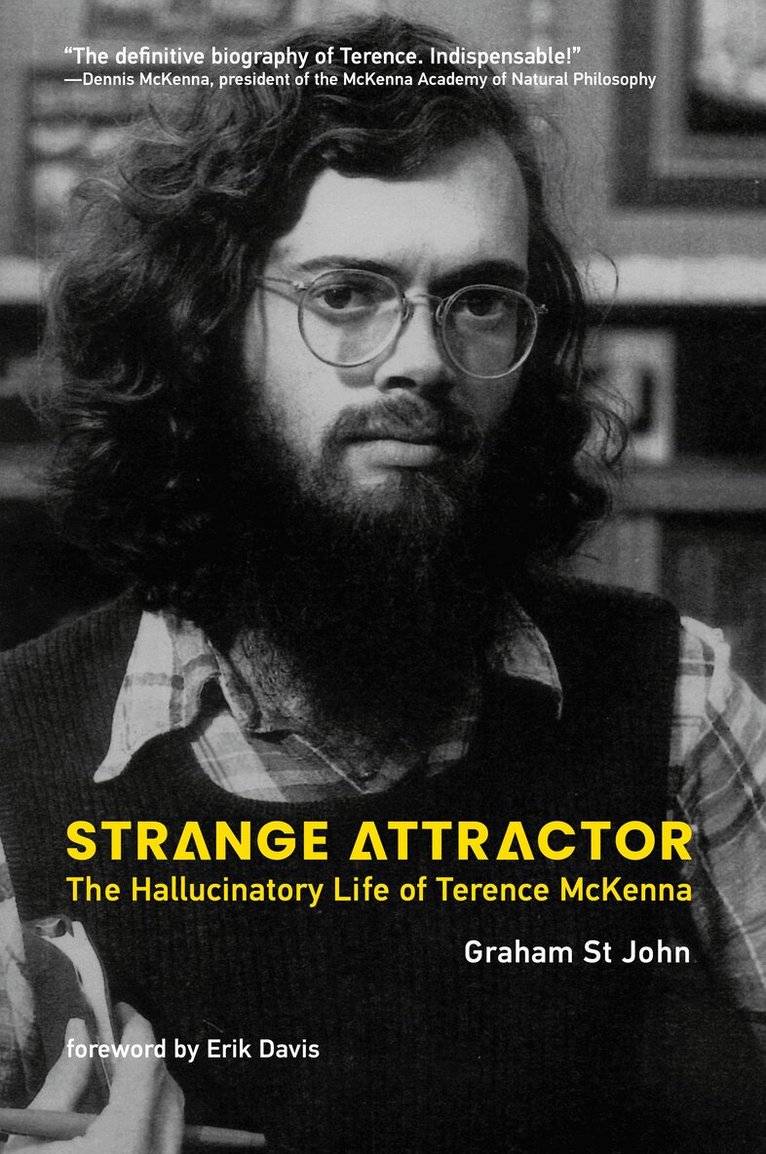
An intellectual biography of one of the most celebrated and yet least understood figures of the late twentieth century, Terence McKenna.A stand-up philosopher who made a unique contribution to science, humanism, and the hidden arts, Terence McKenna (1946–2000) was the twentieth century’s psychedelic Renaissance man. Perfecting his rugged philosophy on the role of psychedelics in evolution, consciousness, and time, McKenna was a riotous charmer who stalked the shadows, but also sought the iridescence. More than twenty years since his untimely passing, McKenna has an enduring magnetism across the virtual pop stream, in pervasive digitization, and within social media networks. In Strange Attractor, the first biography of this enigmatic figure, Graham St John detects the signal behind the noise.This book is an engaging chronicle of the life, works, and legacy of this brazen adventurer of the inner and outer dimensions, whose weird intelligence has affected multitudes and whose spirit continues to haunt the present. It draws on original documents and letters, features fifty two rare photographs and artworks, and shares previously untold stories from over eighty people. Neither glorifying nor disparaging its subject, Strange Attractor will appeal to those interested in the evolution of a psychedelic intellectual, and to those for whom McKenna’s wisdom endures.
Häftad, Engelska, 2023
277 kr
Skickas inom 3-6 vardagar
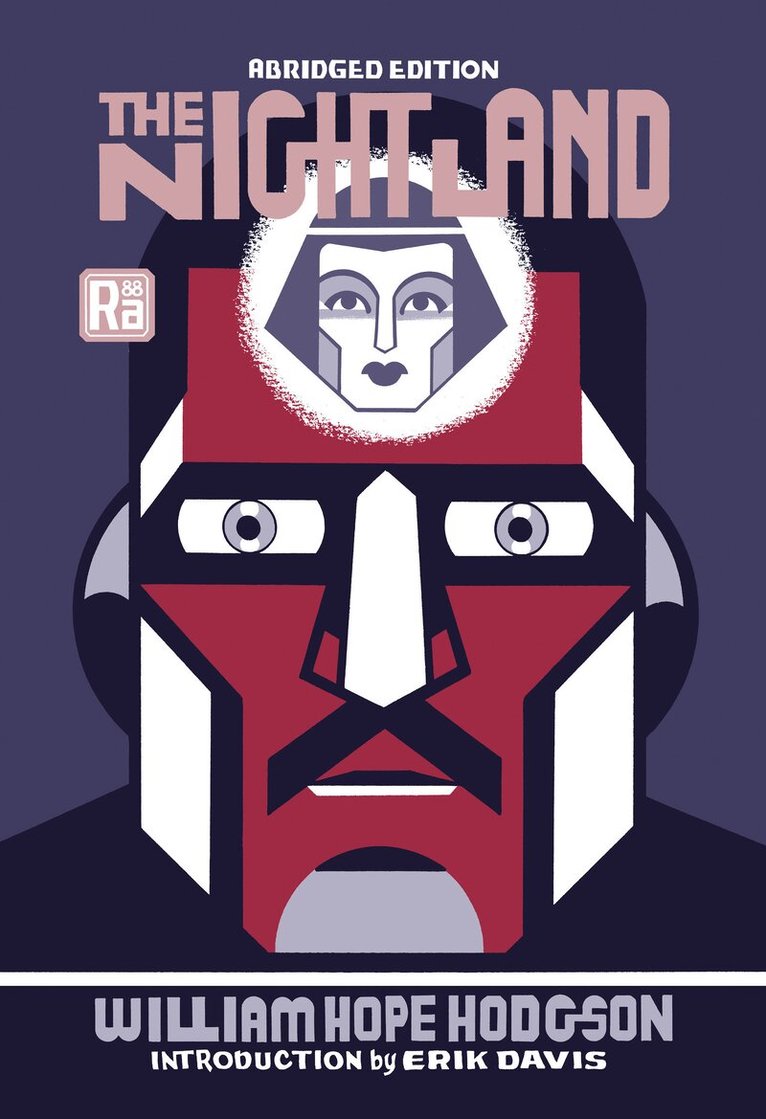
A romance of the far future, in which humankind has relocated underground, where it is beset by monsters from another dimension—but love leads on.In the far future, humankind’s survivors huddle below Earth’s frozen surface in a pyramidal fortress-city that, for centuries now, has been under siege by loathsome “Ab-humans,” enormous slugs and spiders, and malevolent “Watching Things” from another dimension. When our unnamed protagonist receives a telepathic distress signal from a woman whom (in a previous incarnation) he’d once loved, he sallies forth on an ill-advised rescue mission—into the fiend-haunted Night Land!“Like certain rare dreams,” C. S. Lewis wrote of Hodgson’s masterpiece, The Night Land can give “sensations we never had before and enlarge our conception of the range of possible experience.” H. P. Lovecraft agreed that this is “one of the most potent pieces of macabre imagination ever written.”William Hope Hodgson (1877–1918) was an English poet, sailor, bodybuilder, and weird fiction pioneer whose horror, fantastic, and proto-sf novels—in addition to The Night Land—include The Boats of the “Glen Carrig” (1907), The House on the Borderland (1908), and The Ghost Pirates (1909). He also wrote stories in the Sargasso Sea series, the Captain Gault series, and a series about the occult detective Carnacki.
Häftad, Engelska, 2005
129 kr
Skickas
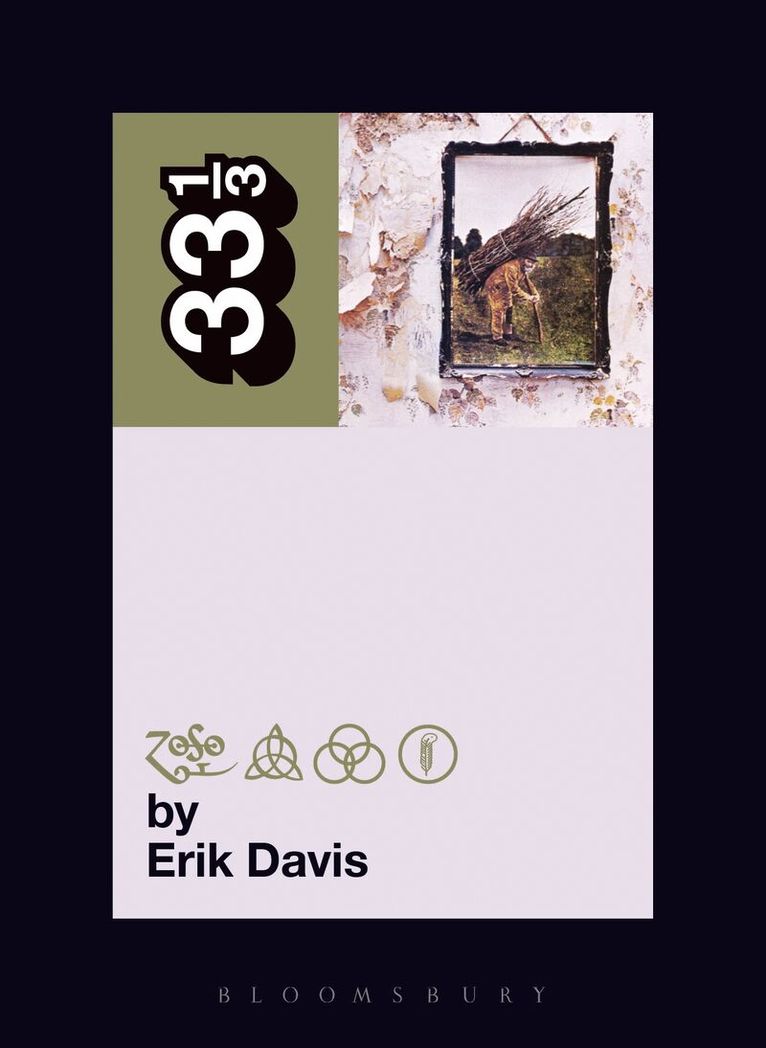
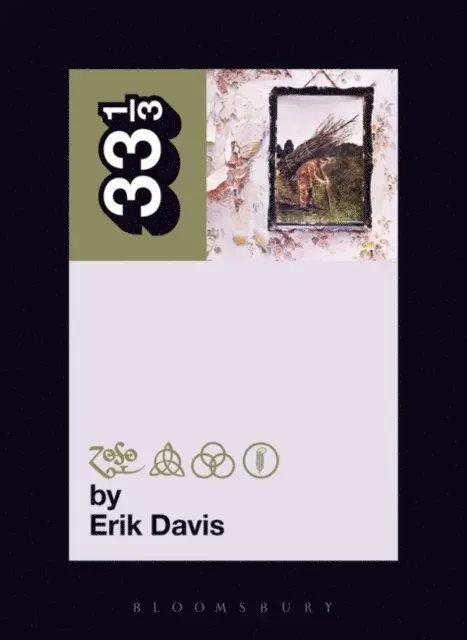
In this wickedly entertaining and thoroughly informed homage to one of rock music's towering pinnacles, Erik Davis investigates the magic—black or otherwise—that surrounds this album. Carefully peeling the layers from each song, Davis reveals their dark and often mystical roots—and leaves the reader to decide whether [FOUR SYMBOLS] is some form of occult induction or just an inspired, brilliantly played rock album.Excerpt:Stripping Led Zeppelin's famous name off the fourth record was an almost petulant attempt to let their Great Work symbolically stand on its own two feet. But the wordless jacket also lent the album charisma. Fans hunted for hidden meanings, or, in failing to find them, sensed a strange reflection of their own mute refusal to communicate with the outside world. This helped to create one of the supreme paradoxes of rock history: an esoteric megahit, a blockbuster arcanum. Stripped of words and numbers, the album no longer referred to anything but itself: a concrete talisman that drew you into its world, into the frame. All the stopgap titles we throw at the thing are lame: Led Zeppelin IV, [Untitled], Runes, Zoso, Four Symbols. In an almost Lovecraftian sense, the album was nameless, a thing from beyond, charged with manna. And yet this uncanny fetish was about as easy to buy as a jockstrap.
E-bok
Engelska, 2005156 kr
Läs direkt efter köp
In this wickedly entertaining and thoroughly informed homage to one of rock music''s towering pinnacles, Erik Davis investigates the magic-black or otherwise-that surrounds this album. Carefully peeling the layers from each song, Davis reveals their dark and often mystical roots-and leaves the reader to decide whether [FOUR SYMBOLS] is some form of occult induction or just an inspired, brilliantly played rock album.Excerpt:Stripping Led Zeppelin''s famous name off the fourth record was an almost petulant attempt to let their Great Work symbolically stand on its own two feet. But the wordless jacket also lent the album charisma. Fans hunted for hidden meanings, or, in failing to find them, sensed a strange reflection of their own mute refusal to communicate with the outside world. This helped to create one of the supreme paradoxes of rock history: an esoteric megahit, a blockbuster arcanum. Stripped of words and numbers, the album no longer referred to anything but itself: a concrete talisman that drew you into its world, into the frame. All the stopgap titles we throw at the thing are lame: Led Zeppelin IV, [Untitled], Runes, Zoso, Four Symbols. In an almost Lovecraftian sense, the album was nameless, a thing from beyond, charged with manna. And yet this uncanny fetish was about as easy to buy as a jockstrap.
E-bok
PDF, Engelska, 2005156 kr
Läs direkt efter köp
In this wickedly entertaining and thoroughly informed homage to one of rock music''s towering pinnacles, Erik Davis investigates the magic-black or otherwise-that surrounds this album. Carefully peeling the layers from each song, Davis reveals their dark and often mystical roots-and leaves the reader to decide whether [FOUR SYMBOLS] is some form of occult induction or just an inspired, brilliantly played rock album.Excerpt:Stripping Led Zeppelin''s famous name off the fourth record was an almost petulant attempt to let their Great Work symbolically stand on its own two feet. But the wordless jacket also lent the album charisma. Fans hunted for hidden meanings, or, in failing to find them, sensed a strange reflection of their own mute refusal to communicate with the outside world. This helped to create one of the supreme paradoxes of rock history: an esoteric megahit, a blockbuster arcanum. Stripped of words and numbers, the album no longer referred to anything but itself: a concrete talisman that drew you into its world, into the frame. All the stopgap titles we throw at the thing are lame: Led Zeppelin IV, [Untitled], Runes, Zoso, Four Symbols. In an almost Lovecraftian sense, the album was nameless, a thing from beyond, charged with manna. And yet this uncanny fetish was about as easy to buy as a jockstrap.
Häftad, Engelska, 2015
199 kr
Skickas
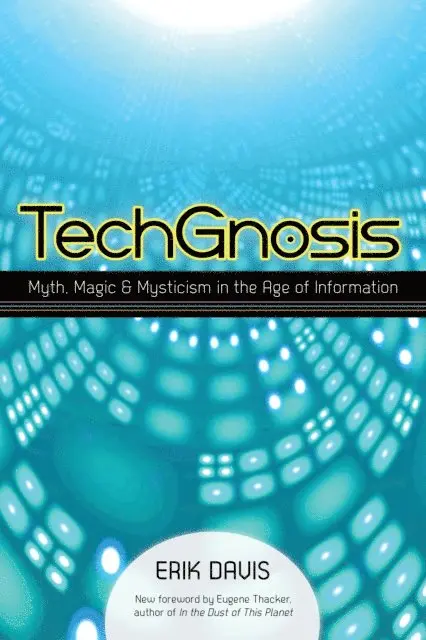
TechGnosis is a cult classic of media studies that straddles the line between academic discourse and popular culture; it appeals to both those secular and spiritual, to fans of cyberpunk and hacker literature and culture as much as new-thought adherents and spiritual seekers How does our fascination with technology intersect with the religious imagination? In TechGnosis—a cult classic now updated and reissued with a new afterword—Erik Davis argues that while the realms of the digital and the spiritual may seem worlds apart, esoteric and religious impulses have in fact always permeated (and sometimes inspired) technological communication. Davis uncovers startling connections between such seemingly disparate topics as electricity and alchemy; online roleplaying games and religious and occult practices; virtual reality and gnostic mythology; programming languages and Kabbalah. The final chapters address the apocalyptic dreams that haunt technology, providing vital historical context as well as new ways to think about a future defined by the mutant intermingling of mind and machine, nightmare and fantasy.
E-bok
Engelska, 2015233 kr
Läs direkt efter köp
How does our fascination with technology intersect with the religious imagination? In TechGnosis—a cult classic now updated and reissued with a new afterword—Erik Davis argues that while the realms of the digital and the spiritual may seem worlds apart, esoteric and religious impulses have in fact always permeated (and sometimes inspired) technological communication. Davis uncovers startling connections between such seemingly disparate topics as electricity and alchemy; online roleplaying games and religious and occult practices; virtual reality and gnostic mythology; programming languages and Kabbalah. The final chapters address the apocalyptic dreams that haunt technology, providing vital historical context as well as new ways to think about a future defined by the mutant intermingling of mind and machine, nightmare and fantasy.From the Trade Paperback edition.
Häftad, Engelska, 2011
238 kr
Skickas inom 5-8 vardagar
E-bok
Engelska, 2011129 kr
Läs direkt efter köp
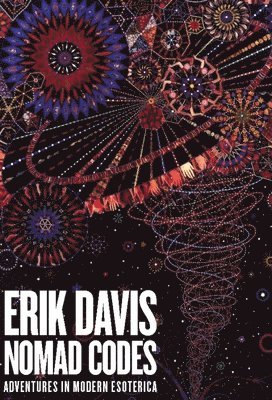
In these wide-ranging essays, Erik Davis explores the codes—spiritual, cultural, and embodied—that people use to escape the limitation of their lives and enrich their experience of the world. These include Asian religious traditions and West African trickster gods, Western occult and esoteric lore, postmodern theory and psychedelic science, as well as festival scenes such as Burning Man (of which Davis is the best-known chronicler). Articles on media technology further explore themes Davis took up in his acclaimed book Techgnosis, while his profiles of West Coast poets, musicians, and mystics extend the California terrain he previously mapped in The Visionary State. Whether his subject is collage art or the “magickal realism” of horror writer H.P. Lovecraft, transvestite Burmese spirit mediums or Ufology, tripster king Terence McKenna or dub maestro Lee Perry, Davis writes with keen yet skeptical sympathy, intellectual subtlety and wit, and unbridled curiosity.The common thread running through all these pieces is what Davis calls “modern esoterica,” which he describes in his preface as a ‘no-man’s-land located somewhere between anthropology and mystical pulp, between the zendo and the metal club, between cultural criticism and extraordinary experience, whether psychedelic, or yogic, or technological.” Such an ambiguous and startling landscape demands that the intrepid adventurer shed any territorial claims and go nomad. Davis wanders with sharp eyes and an open mind, which is why Peter Lamborn Wilson calls him “the best of all guides to modern American spirituality.”
Häftad, Engelska, 2025
362 kr
Kommande
Inbunden, Engelska, 2019
381 kr
Tillfälligt slut
Häftad, Engelska, 2022
247 kr
Tillfälligt slut
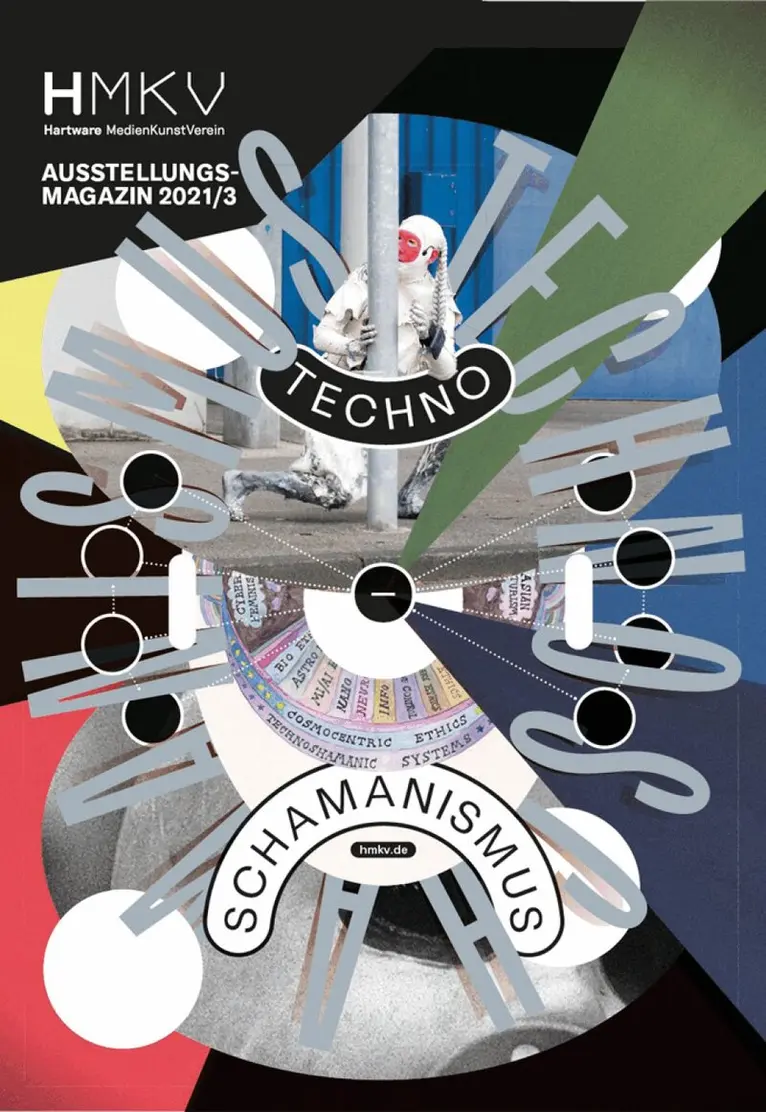
This catalogue for a show at HMKV Dortmund explores techno-shamanism in the arts today, taking Joseph Beuys, who cultivated the figure of the shaman throughout his career, as the starting point. In addition to viewing shamanism itself as a form of technology, this artistic approach uses (speculative) technology as a way of discovering shamanic powers. Contemporary artists are updating Beuys’s strategies and themes for the digital age, deploying many of the same tropes. These acquired iconic status in Beuys’s oeuvre, and were aimed at healing and transforming society, cultivating a spiritual approach to the environment, and subverting power structures and the logic of capitalism. The positions introduced here combine aspects that appear diametrically opposed: technology and shamanism, technical progress and esotericism, rational modernism and the mystical tradition. Today’s artistic alchemists are engaged in a quest for “rare-earth elements” and metals, a fusion of the environment, technology, and artificial intelligence in order to create a technical/mythological description of the cosmos. Included here are works by: Morehshin Allahyari, Joseph Beuys, Mariechen Danz, Anja Dornieden & Juan David González Monroy, Lucile Olympe Haute, knowbotiq, Sahej Rahal, Tabita Rezaire, Jana Kerima Stolzer & Lex Rütten, Transformella (aLifveForm fed and cared for by JP Raether), Suzanne Treister, Anton Vidokle.Text in English and German.