Erik Grimmer-Solem – författare
Visar alla böcker från författaren . Handla med fri frakt och snabb leverans.
4 produkter
4 produkter
Inbunden, Engelska, 2003
4 277 kr
Skickas inom 5-8 vardagar
Social science and social reform flourished in Imperial Germany, and the historical economist Gustav Schmoller made fundamental contributions to both. Despite this, historians have neglected him. Questioning the term 'German Historical School' associated with Schmoller, Grimmer-Solem reveals the European context of Schmoller's thought and the influence of empiricism, statistics, and advances in the natural sciences on his choice of methods. By exploring the social context in detail, he deomonstrates how the nexus of young scholars around Schmoller fundamentally transformed German economics into a tool of social reform which was directly relevant to the many 'social questions' raised by rapid industrialization and urbanization in Germany in the 1860s. These reform efforts were novel in that they put forth the idea that inequality and poverty were ills emerging from the division of labour which society had an obligation to remedy. As a result, an awareness of the social implications of individual economic action emerged which proved remarkably useful for the development of social policy. Although the dissemination of this reform message influenced public opinion and put social reform on the political agenda, Grimmer-Solem shows that Schmoller and his colleagues remained a beleaguered group, attacked from all political directions. His investigation brings the fissures within German liberalism into sharp relief, revealing the persistence of a potent ideal of classlessness that fundamentally shaped German social policy. Grimmer-Solem makes a unique and much-needed contribution to our understanding of the thought and milieu of Gustav Schmoller, the origins of social reform, and the development of the social sciences in Germany. The resulting volume addreses central questions in the historiography of the German Empire, of relevance to all German, European, social, and intellectual historians.
Inbunden, Engelska, 2019
684 kr
Skickas inom 7-10 vardagar
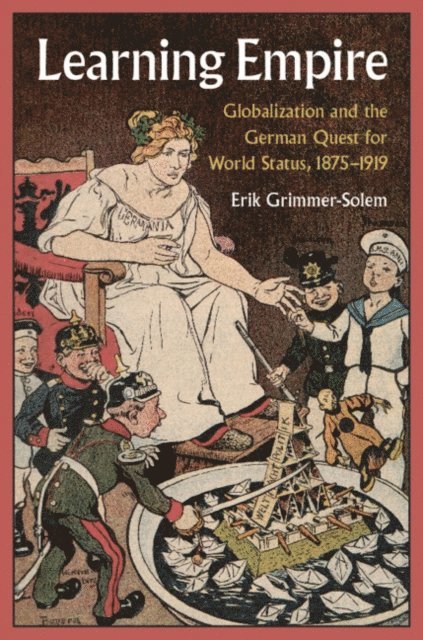
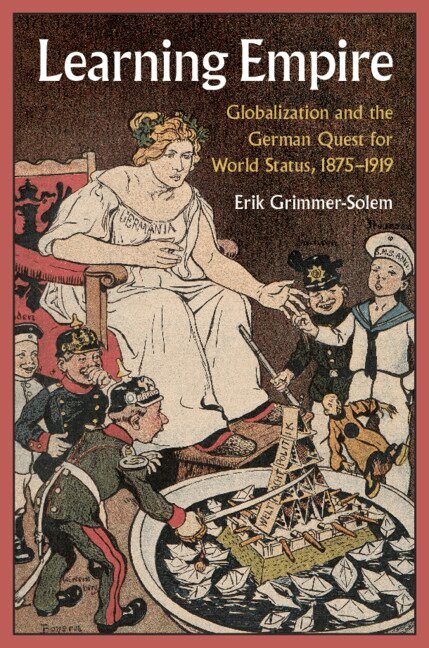
The First World War marked the end point of a process of German globalization that began in the 1870s, well before Germany acquired a colonial empire or extensive overseas commercial interests. Structured around the figures of five influential economists who shaped the German political landscape, Learning Empire explores how their overseas experiences shaped public perceptions of the world and Germany's place in it. These men helped define a German liberal imperialism that came to influence the 'world policy' (Weltpolitik) of Kaiser Wilhelm, Chancellor Bülow, and Admiral Tirpitz. They devised naval propaganda, reshaped Reichstag politics, were involved in colonial and financial reforms, and helped define the debate over war aims in the First World War. Looking closely at German worldwide entanglements, Learning Empire recasts how we interpret German imperialism, the origins of the First World War, and the rise of Nazism, inviting reflection on the challenges of globalization in the current century.
E-bok
PDF, Engelska, 2019618 kr
Läs direkt efter köp
The First World War marked the end point of a process of German globalization that began in the 1870s, well before Germany acquired a colonial empire or extensive overseas commercial interests. Structured around the figures of five influential economists who shaped the German political landscape, Learning Empire explores how their overseas experiences shaped public perceptions of the world and Germany''s place in it. These men helped define a German liberal imperialism that came to influence the ''world policy'' (Weltpolitik) of Kaiser Wilhelm, Chancellor Bülow, and Admiral Tirpitz. They devised naval propaganda, reshaped Reichstag politics, were involved in colonial and financial reforms, and helped define the debate over war aims in the First World War. Looking closely at German worldwide entanglements, Learning Empire recasts how we interpret German imperialism, the origins of the First World War, and the rise of Nazism, inviting reflection on the challenges of globalization in the current century.
Häftad, Engelska, 2021
509 kr
Skickas inom 7-10 vardagar
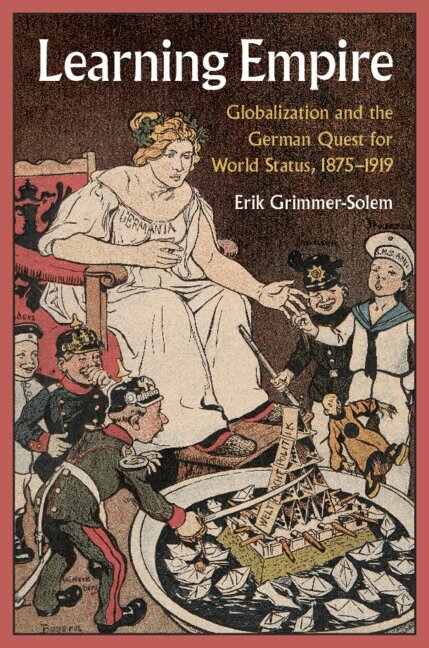
The First World War marked the end point of a process of German globalization that began in the 1870s, well before Germany acquired a colonial empire or extensive overseas commercial interests. Structured around the figures of five influential economists who shaped the German political landscape, Learning Empire explores how their overseas experiences shaped public perceptions of the world and Germany's place in it. These men helped define a German liberal imperialism that came to influence the 'world policy' (Weltpolitik) of Kaiser Wilhelm, Chancellor Bülow, and Admiral Tirpitz. They devised naval propaganda, reshaped Reichstag politics, were involved in colonial and financial reforms, and helped define the debate over war aims in the First World War. Looking closely at German worldwide entanglements, Learning Empire recasts how we interpret German imperialism, the origins of the First World War, and the rise of Nazism, inviting reflection on the challenges of globalization in the current century.