786 kr
Skickas
786 kr
Skickas
350 kr
Läs direkt efter köp
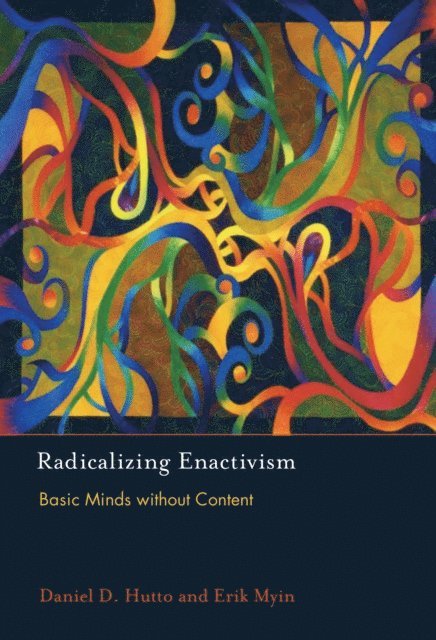
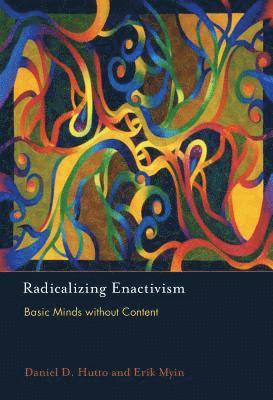
A book that promotes the thesis that basic forms of mentality—intentionally directed cognition and perceptual experience—are best understood as embodied yet contentless.
Most of what humans do and experience is best understood in terms of dynamically unfolding interactions with the environment. Many philosophers and cognitive scientists now acknowledge the critical importance of situated, environment-involving embodied engagements as a means of understanding basic minds—including basic forms of human mentality. Yet many of these same theorists hold fast to the view that basic minds are necessarily or essentially contentful—that they represent conditions the world might be in. In this book, Daniel Hutto and Erik Myin promote the cause of a radically enactive, embodied approach to cognition that holds that some kinds of minds—basic minds—are neither best explained by processes involving the manipulation of contents nor inherently contentful. Hutto and Myin oppose the widely endorsed thesis that cognition always and everywhere involves content. They defend the counter-thesis that there can be intentionality and phenomenal experience without content, and demonstrate the advantages of their approach for thinking about scaffolded minds and consciousness.
402 kr
Läs direkt efter köp
An extended argument that cognitive phenomena—perceiving, imagining, remembering—can be best explained in terms of an interface between contentless and content-involving forms of cognition.
Evolving Enactivism argues that cognitive phenomena—perceiving, imagining, remembering—can be best explained in terms of an interface between contentless and content-involving forms of cognition. Building on their earlier book Radicalizing Enactivism, which proposes that there can be forms of cognition without content, Daniel Hutto and Erik Myin demonstrate the unique explanatory advantages of recognizing that only some forms of cognition have content while others—the most elementary ones—do not. They offer an account of the mind in duplex terms, proposing a complex vision of mentality in which these basic contentless forms of cognition interact with content-involving ones.
Hutto and Myin argue that the most basic forms of cognition do not, contrary to a currently popular account of cognition, involve picking up and processing information that is then used, reused, stored, and represented in the brain. Rather, basic cognition is contentless—fundamentally interactive, dynamic, and relational. In advancing the case for a radically enactive account of cognition, Hutto and Myin propose crucial adjustments to our concept of cognition and offer theoretical support for their revolutionary rethinking, emphasizing its capacity to explain basic minds in naturalistic terms. They demonstrate the explanatory power of the duplex vision of cognition, showing how it offers powerful means for understanding quintessential cognitive phenomena without introducing scientifically intractable mysteries into the mix.
509 kr
Skickas inom 5-8 vardagar
503 kr
Skickas inom 3-6 vardagar
Second of a three-volume series of the "Journal of Consciousness Studies", which asks if it is possible to take a natural science approach to art and uncover general laws of aesthetic experience, or is that taking reductionism too far?
What is art? What is beauty? How do they relate? Where does consciousness come in? What about truth? And can science help us with issues of this kind? Because such questions go to the very heart of current conflicts about Western value systems, they are unlikely to receive definitive answers. But they are still very much worth exploring - which is precisely the purpose of this collection of papers (Journal of Consciousness Studies, 7, No.8/9), with particular attention to the relationships between art and science.
258 kr
Skickas
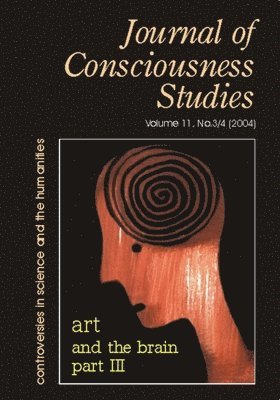
Third of a three-volume series of the "Journal of Consciousness Studies", which asks if it is possible to take a natural science approach to art and uncover general laws of aesthetic experience, or is that taking reductionism too far? The contributors to this volume include Semir Zeki, Nicholas Humphrey, VS Ramachandran & Erich Harth.
392 kr
Tillfälligt slut
286 kr
Tillfälligt slut