Erik Schleef - Böcker
Visar alla böcker från författaren Erik Schleef. Handla med fri frakt och snabb leverans.
6 produkter
6 produkter
2 166 kr
Skickas inom 10-15 vardagar
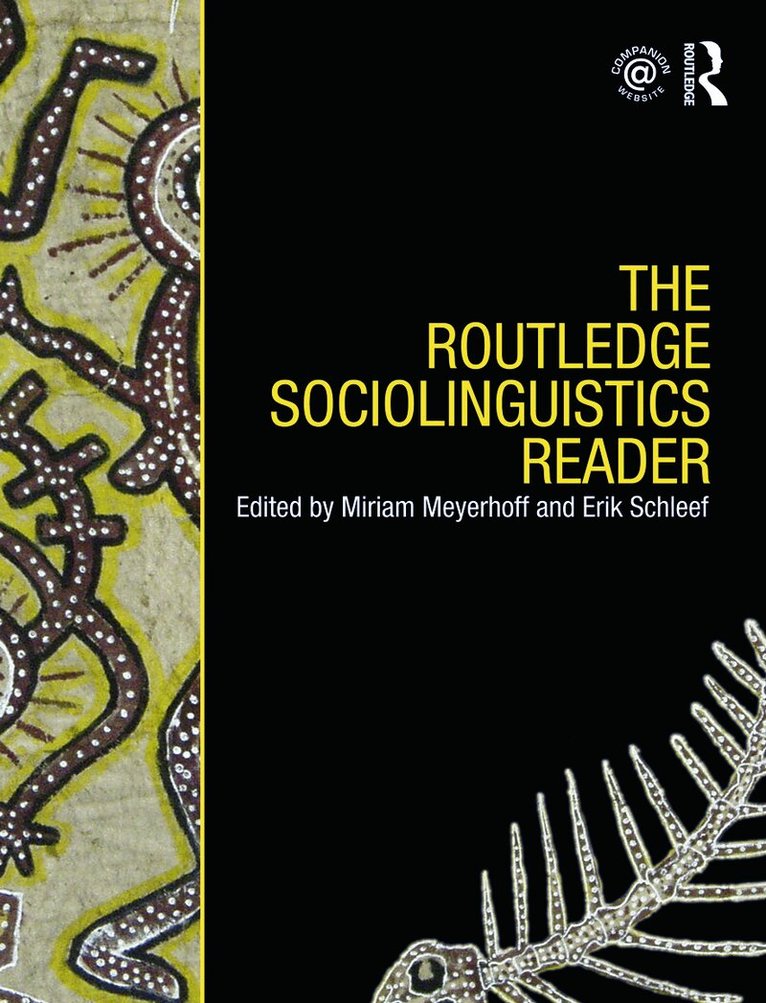
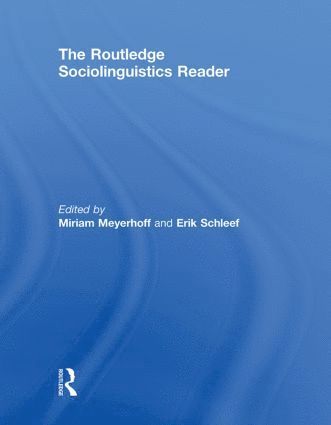
Both a companion to Introducing Sociolinguistics, Miriam Meyerhoff’s bestselling textbook, and a stand-alone Reader in sociolinguistics, this collection includes classic foundational readings and more recent innovative articles.Intended to be highly user-friendly, The Routledge Sociolinguistics Reader includes substantial section introductions, further reading, a reader’s guide on how to use the book and an introductory chapter providing advice on how to undertake qualitative and quantitative research. This introduction is supplemented by exercises focussing on data handling and collection.The Reader is divided into six sections and each section is thematically organised. Each reading is accessible to beginning students of sociolinguistics but the entire selection is assembled to also help advanced students focus on themes, principles and concepts that cut across different researchers' work. Beginning and advanced students are supported by Content Questions to assist understanding of essential features in the readings, and Concept Questions which help advanced students make connections across readings, apply theory to data, and critically engage with the readings. A companion website supports and connects the Reader and textbook with structured exercises, links to associated websites and video examples, plus an online glossary. The Routledge Sociolinguistics Reader is essential reading for students on courses in sociolinguistics, language and society, and language and variation.Authors: Allan Bell, Jennifer Hay, Stefanie Jannedy, Norma Mendoza-Denton, Qing Zhang, John Laver, Sachiko Ide, Dennis R. Preston, Thomas Purnell, William Idsardi, John Baugh, Gibson Ferguson, Isabelle Buchstaller, Jinny K. Choi, Don Kulick, Christopher Stroud, Jan-Peter Blom, John J. Gumperz, David Britain, Monica Heller, Ben Rampton, Miriam Meyerhoff, Nancy Niedzielski, William Labov, Rika Ito, Sali Tagliamonte, Gillian Sankoff, Hélène Blondeau, Peter Trudgill, Richard Cameron, Lesley Milroy, James Milroy, Paul Kerswill, Ann Williams, Terttu Nevalainen, Penelope Eckert, Janet Holmes, Stephanie Schnurr, Niloofar Haeri, Elinor Ochs, Scott Fabius Kiesling, Rusty BarrettGo to www.routledge.com/textbooks/meyerhoff for online resources supporting The Routledge Sociolinguistics Reader and Introducing Sociolinguistics (Meyerhoff 2011)
794 kr
Skickas inom 10-15 vardagar
Both a companion to Introducing Sociolinguistics, Miriam Meyerhoff’s bestselling textbook, and a stand-alone Reader in sociolinguistics, this collection includes classic foundational readings and more recent innovative articles.Intended to be highly user-friendly, The Routledge Sociolinguistics Reader includes substantial section introductions, further reading, a reader’s guide on how to use the book and an introductory chapter providing advice on how to undertake qualitative and quantitative research. This introduction is supplemented by exercises focussing on data handling and collection.The Reader is divided into six sections and each section is thematically organised. Each reading is accessible to beginning students of sociolinguistics but the entire selection is assembled to also help advanced students focus on themes, principles and concepts that cut across different researchers' work. Beginning and advanced students are supported by Content Questions to assist understanding of essential features in the readings, and Concept Questions which help advanced students make connections across readings, apply theory to data, and critically engage with the readings. A companion website supports and connects the Reader and textbook with structured exercises, links to associated websites and video examples, plus an online glossary. The Routledge Sociolinguistics Reader is essential reading for students on courses in sociolinguistics, language and society, and language and variation.Authors: Allan Bell, Jennifer Hay, Stefanie Jannedy, Norma Mendoza-Denton, Qing Zhang, John Laver, Sachiko Ide, Dennis R. Preston, Thomas Purnell, William Idsardi, John Baugh, Gibson Ferguson, Isabelle Buchstaller, Jinny K. Choi, Don Kulick, Christopher Stroud, Jan-Peter Blom, John J. Gumperz, David Britain, Monica Heller, Ben Rampton, Miriam Meyerhoff, Nancy Niedzielski, William Labov, Rika Ito, Sali Tagliamonte, Gillian Sankoff, Hélène Blondeau, Peter Trudgill, Richard Cameron, Lesley Milroy, James Milroy, Paul Kerswill, Ann Williams, Terttu Nevalainen, Penelope Eckert, Janet Holmes, Stephanie Schnurr, Niloofar Haeri, Elinor Ochs, Scott Fabius Kiesling, Rusty BarrettGo to www.routledge.com/textbooks/meyerhoff for online resources supporting The Routledge Sociolinguistics Reader and Introducing Sociolinguistics (Meyerhoff 2011)
489 kr
Tillfälligt slut
First published in 2012. Routledge is an imprint of Taylor & Francis, an informa company.
505 kr
Skickas inom 10-15 vardagar
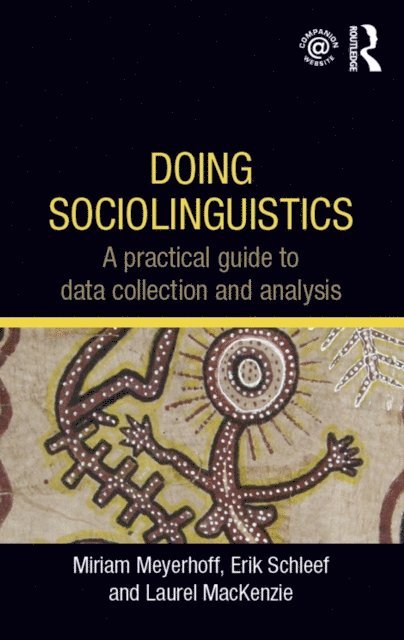
Doing Sociolinguistics: A practical guide to data collection and analysis provides an accessible introduction and guide to the methods of data collection and analysis in the field of sociolinguistics. It offers students the opportunity to engage directly with some of the foundational and more innovative work being done in the quantitative or variationist paradigm. Divided into sixteen short chapters, Doing Sociolinguistics: can be used as a core text in class or as an easy reference whilst undertaking research walks readers through the different phases of a sociolinguistic project, providing all the knowledge and skills students will need to conduct their own analyses of language features excerpts from key research articles; exercises with real data from the authors’ own research; sample answers to the exercises; and further reading is supported by the Routledge Sociolinguistics Companion website (www.routledge.com/textbooks/meyerhoff) which features further online exercises with sound files.Designed to function as both a core text for methods classes in sociolinguistics and as a companion to the Routledge textbook Introducing Sociolinguistics, this book will be essential reading for all students studying and researching in this area.
1 540 kr
Skickas inom 10-15 vardagar
Doing Sociolinguistics: A practical guide to data collection and analysis provides an accessible introduction and guide to the methods of data collection and analysis in the field of sociolinguistics. It offers students the opportunity to engage directly with some of the foundational and more innovative work being done in the quantitative or variationist paradigm. Divided into sixteen short chapters, Doing Sociolinguistics: can be used as a core text in class or as an easy reference whilst undertaking research walks readers through the different phases of a sociolinguistic project, providing all the knowledge and skills students will need to conduct their own analyses of language features excerpts from key research articles; exercises with real data from the authors’ own research; sample answers to the exercises; and further reading is supported by the Routledge Sociolinguistics Companion website (www.routledge.com/textbooks/meyerhoff) which features further online exercises with sound files.Designed to function as both a core text for methods classes in sociolinguistics and as a companion to the Routledge textbook Introducing Sociolinguistics, this book will be essential reading for all students studying and researching in this area.
Del 9 - Historical Sociolinguistics
Double Standards
Codified Norms and Norms of Usage in European Languages (1600–2020)
Häftad, Engelska, 2025
741 kr
Skickas inom 5-8 vardagar
Standardisation is not a natural form of language change. The aim of such efforts is usually to create a largely uniform standard, often backed by a strong standard language ideology. However, standard languages are sometimes Janus-faced. Additional standard varieties emerge, leading to situations with «double standards» or even «multiple standards».This volume brings together fifteen contributions on «double standards» in twelve languages – and various standard varieties thereof – from three language families, thus providing a novel comparative view on standardisation. Three main aspects of the «double standards» concept are identified: the descriptive vs prescriptive notion of standards, the coexistence of standard varieties in pluricentric or pluriareal settings, and the impact of the cohabitation of several standards in native or foreign language teaching.